

NASA tapped commercial company Relativity Space to fly its next big Mars science project, which aims to help better protect astronaut landings in the future.
Read more Florida could soon ban undocumented students from public universities, colleges
The Aeolus mission, which will take a global survey of Martian winds, temperatures, dust and clouds, would launch on Relativity’s in-development Terran R rocket from Cape Canaveral Space Force Station’s Launch Complex 16, aiming for liftoff in 2028.
Relativity would also build the spacecraft housing the Aeolus suite of scientific tools, which would fly to the planet during the Earth-to-Mars transfer window that runs shortest about every two years.
Relativity Space, which was founded in 2015, has not launched anything for more than three years, but has aspirations to return to Space Coast flight before the end of 2026. Its lone launch of a majority 3D-printed Terran 1 rocket lifted off in March 2023 as a proof of concept from LC-16. The company soon after shut down that smaller rocket’s production plans in favor of the larger Terran R while also building out bigger facilities on the Cape.
Funding issues slowed company progress before Eric Schmidt, the former Google executive chair, invested and made himself CEO.
Progress in May at the Canaveral site included completion of the water tower rising to 305 feet as construction continues to build out the lighting protection towers. Structural work on the horizontal integration facility adjacent the new launch pad has been completed, and its now getting outfitted with operational equipment including a 220,000-pound bridge crane within the facility’s clean room.
The rocket itself is moving through testing phases at NASA’s Stennis Space Center for its first and upper stages as well as the company’s Aeon R engines.
Read more Florida says AIDS drug program could need more money
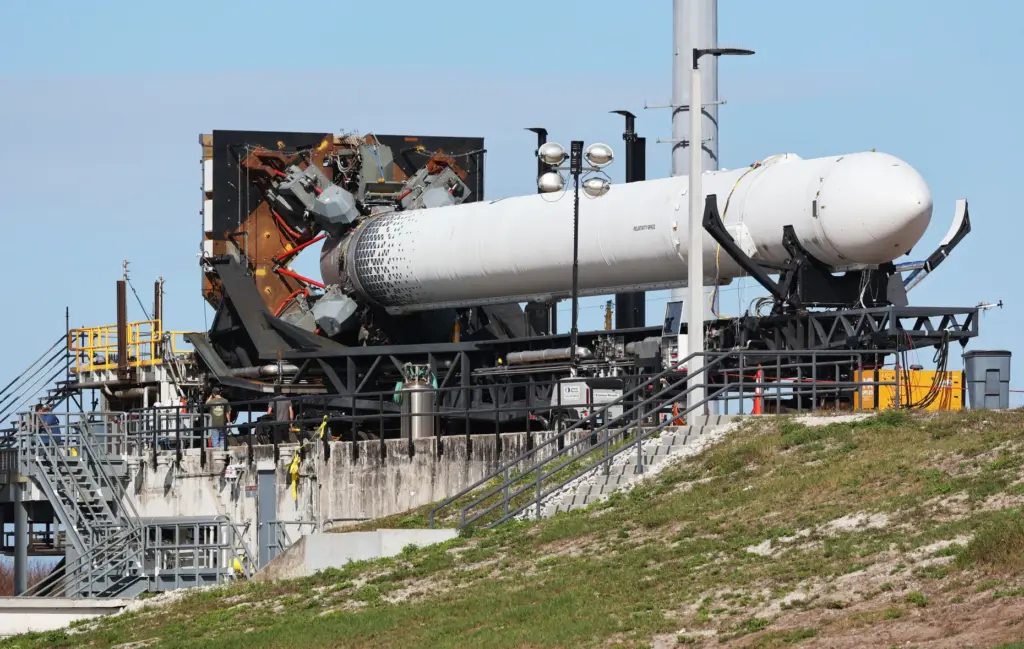 A Terran 1 rocket in the Transporter Erector at Launch Complex 16 —during a tour of Relativity Space at Cape Canaveral Space Force Station on Tuesday, Dec. 6, 2022. (Ricardo Ramirez Buxeda/Orlando Sentinel)
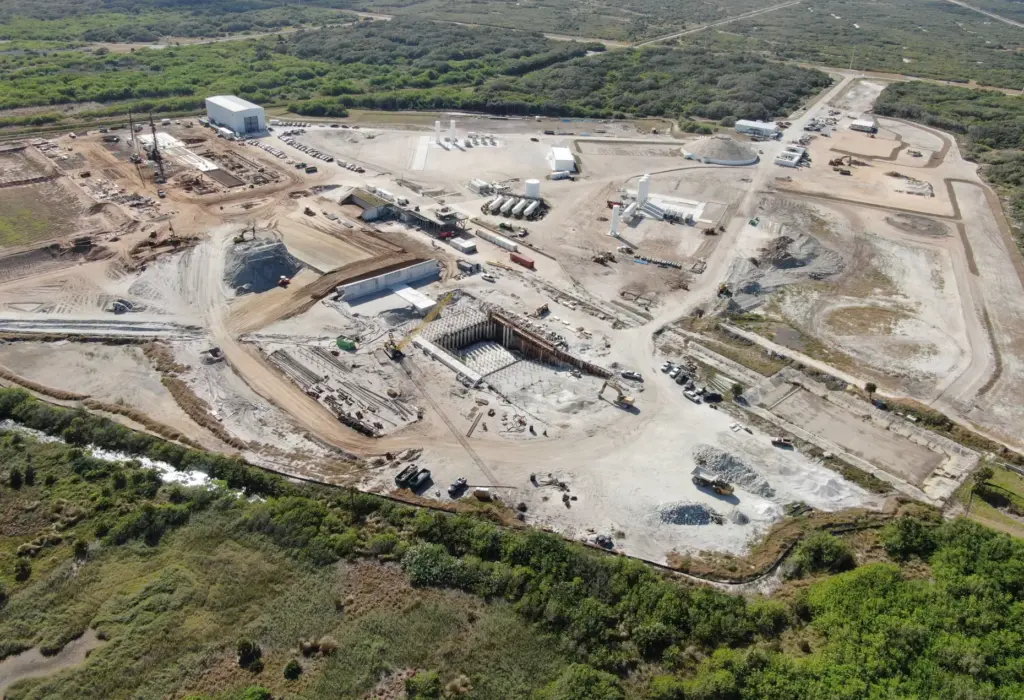 Relativity Space works to build a new launch pad at Cape Canaveral Space Force Station’s Launch Complex 16 to support its Terran R rocket aiming for a debut launch by the end of 2026. (Courtesy/Relativity Space)
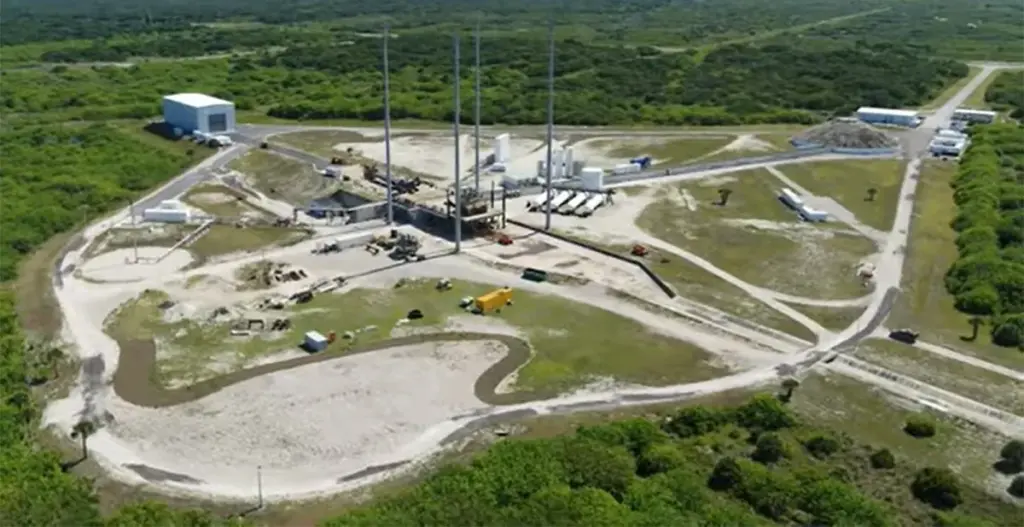 Relativity SpaceRelativity Space will be using Launch Complex 16 at Cape Canaveral Space Force Station for launches of its 3D-printed Terran 1 rockets.
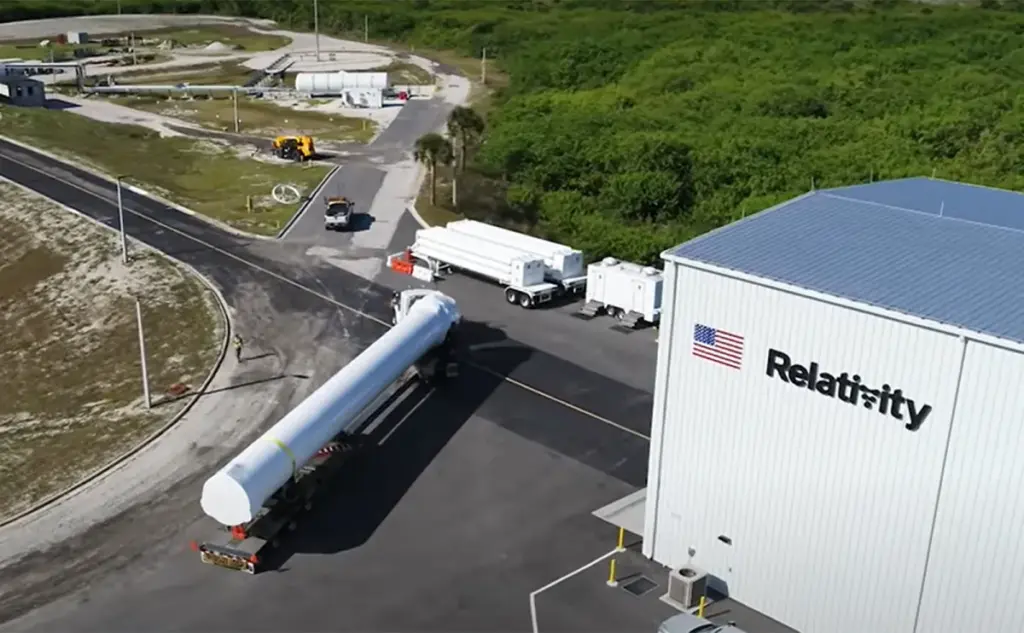 Relativity SpaceThe first stage of the Relativity Space Terran 1 rocket arrives to its facility at Launch Complex 16 at Cape Canaveral Space Force Station in June 2022.
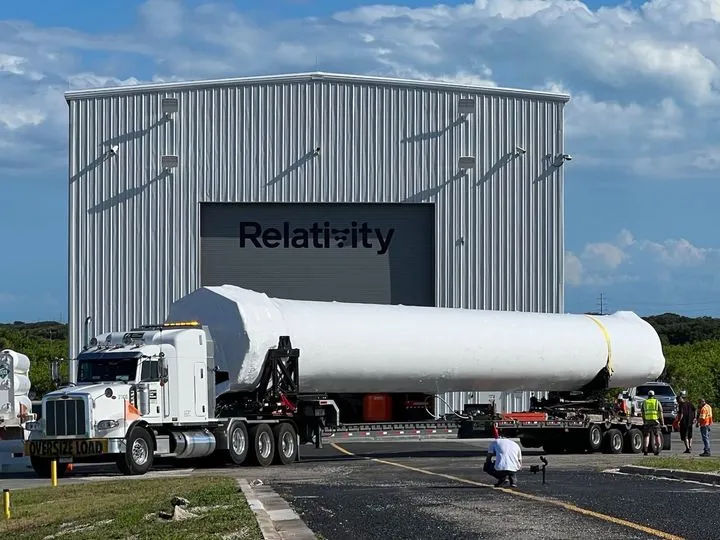 Relativity SpaceThe first stage of the Relativity Space Terran 1 rocket arrives to its facility at Launch Complex 16 at Cape Canaveral Space Force Station in June 2022.
NASA’s announcement Wednesday held at Relativity’s Long Beach, California headquarters, gives the company some headwind as it progresses back to launch operations.
“Public-private partnerships like this are a force multiplier for science,” said NASA Administrator Jared Isaacman. “By pairing NASA’s world‑class instruments with commercial innovation and investment, we can deliver more science, more often, and reduce the time it takes to get essential data into the hands of researchers preparing for future human missions to Mars.”
The partnership falls under NASA’s first six-year reimbursable Space Act Agreement. NASA officials said the agreement calls for Relativity to reimburse NASA an estimated $25 million for the agency to carry out its side of the deal, which includes “development and delivery of the instrument suite, instrument integration and testing, operations support for one Martian year, data pipeline development and additional tasks such as issue resolution, reviews, quality assurance, and documentation.”
That means NASA will still head up building the structure housing four instruments to measure the four aspects of the Martian climate. The goal is be able to create usable models for dust, winds, temperature and seasonal atmospheric behavior, which could reduce risk for future crewed and uncrewed Martian landings.
Design and construction of the payload will be run out of NASA’s Ames Research Center in California, while Relativity Space will manage spacecraft development and mission operations. NASA aims to gather data from the mission for at least one Martian year, which is about 687 days on Earth. NASA will also develop a means of raw data processing so it can be transmitted back to Earth.
“As NASA’s Innovation Center of Excellence, Ames is committed to delivering the technologies, capabilities, and creative partnerships that enable the agency’s boldest missions,” said Ames Center Director Eugene Tu. “Aeolus reflects how innovative collaboration accelerates science and strengthens the foundation needed for one day landing humans on Mars.”
Read more Pictures: Orlando Magic introduce new coach Sean Sweeney