
Neil Armstrong and Buzz Aldrin were backup crew for Apollo 8. Their next flight made them the first two men to step foot on the moon.
Read more Attractions draw grown-up audiences with youthful pursuits
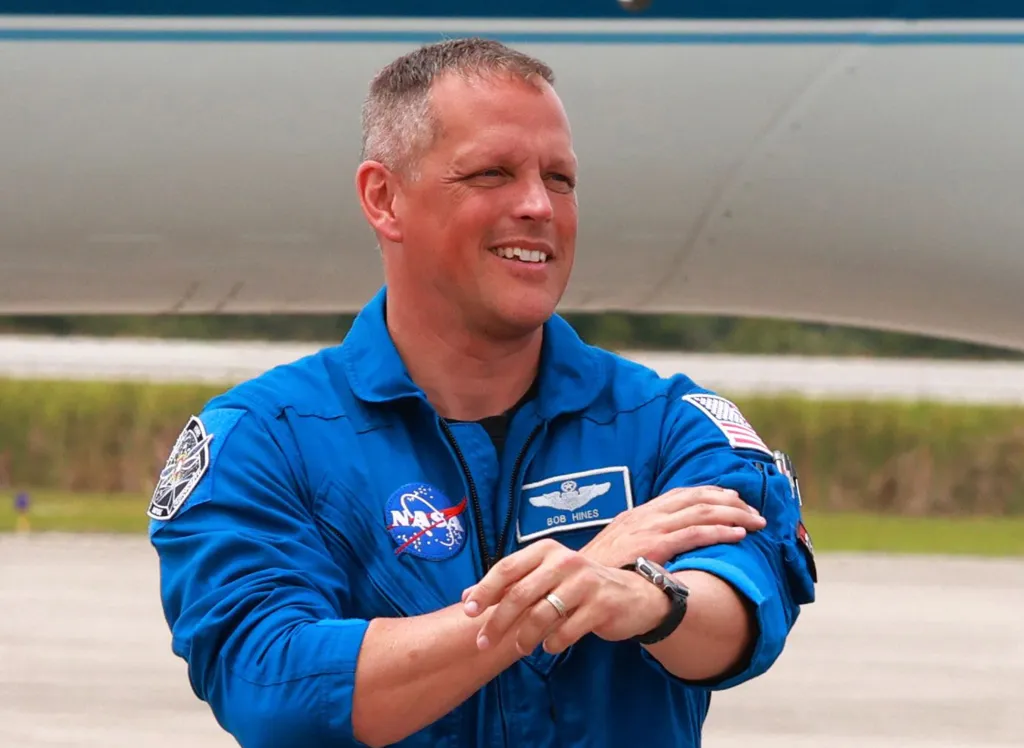
The role of backup has traditionally set up astronauts to be named prime crew for successive NASA’s missions, something that bodes well for Air Force Col. Bob “Farmer” Hines, who was designated the sole backup for all four astronauts assigned to fly on next year’s Artemis III mission.
One of those four is Andre Douglas, himself most recently NASA’s backup astronaut for this year’s Artemis II lunar flyby mission. While Artemis III will be a low-Earth orbit flight to test out the Orion spacecraft’s ability to dock with lunar landers, Artemis IV looks to return humans to the moon for the first time since Apollo 17 in 1972.
That could mean Hines may be among the front runners to fly on Artemis IV, and may be among those chosen to venture down to lunar surface, although that crew won’t be named until after the completion of Artemis III.
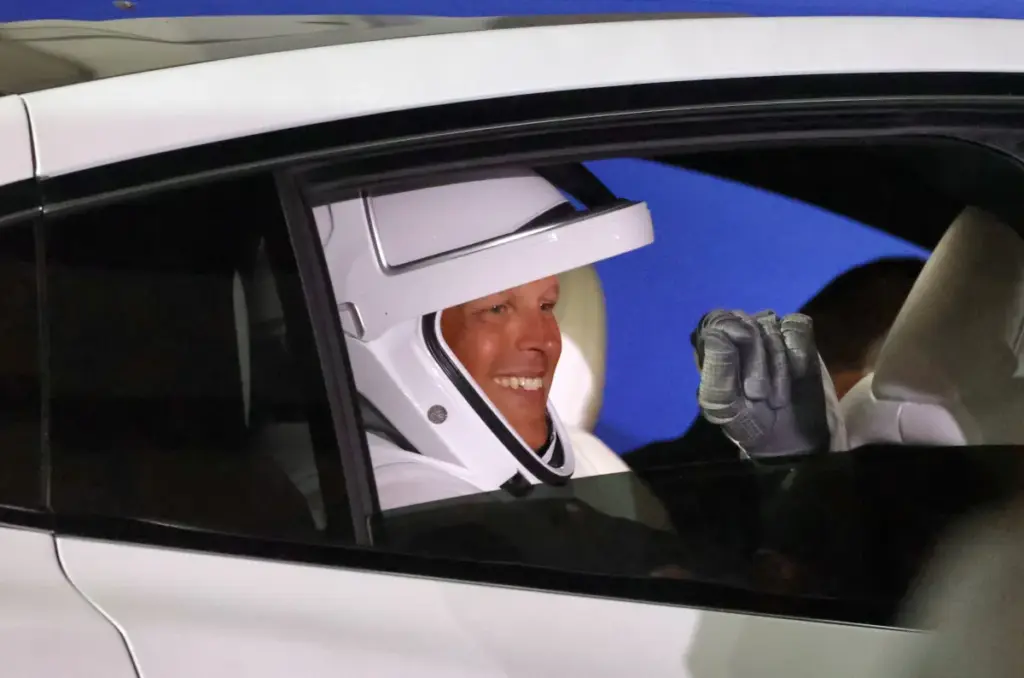 Joe Burbank/Orlando SentinelNASA astronaut Robert Hines says goodbye to family and friends as Crew-4 departs to Launch Complex 39-A to prepare for liftoff to the International Space Station onboard a SpaceX Falcon 9 rocket from Kennedy Space Center, Fla. Wednesday, April 27, 2022. (Joe Burbank/Orlando Sentinel)
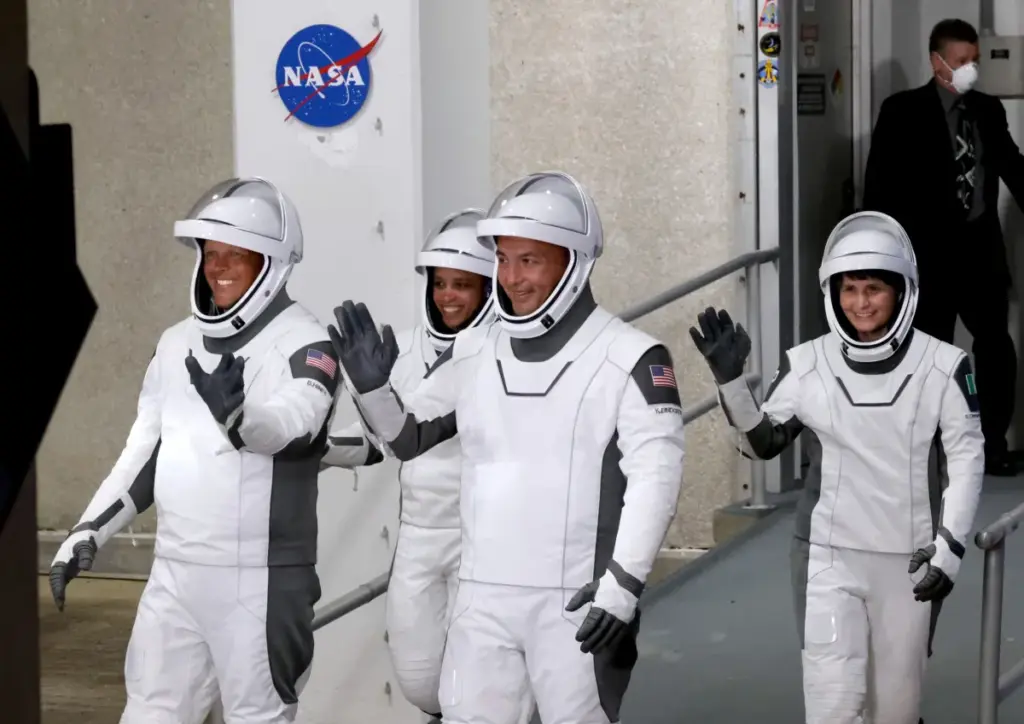 Joe Burbank/Orlando SentinelThe astronauts of the NASA Crew-4 mission head to Launch Complex 39-A to prepare for liftoff to the International Space Station onboard a SpaceX Falcon 9 rocket from Kennedy Space Center, Fla. Wednesday, April 27, 2022. From left, NASA astronauts Robert Hines, Jessica Watkins; Kjell Lindgren and ESA astronaut Samantha Cristoforetti. (Joe Burbank/Orlando Sentinel)
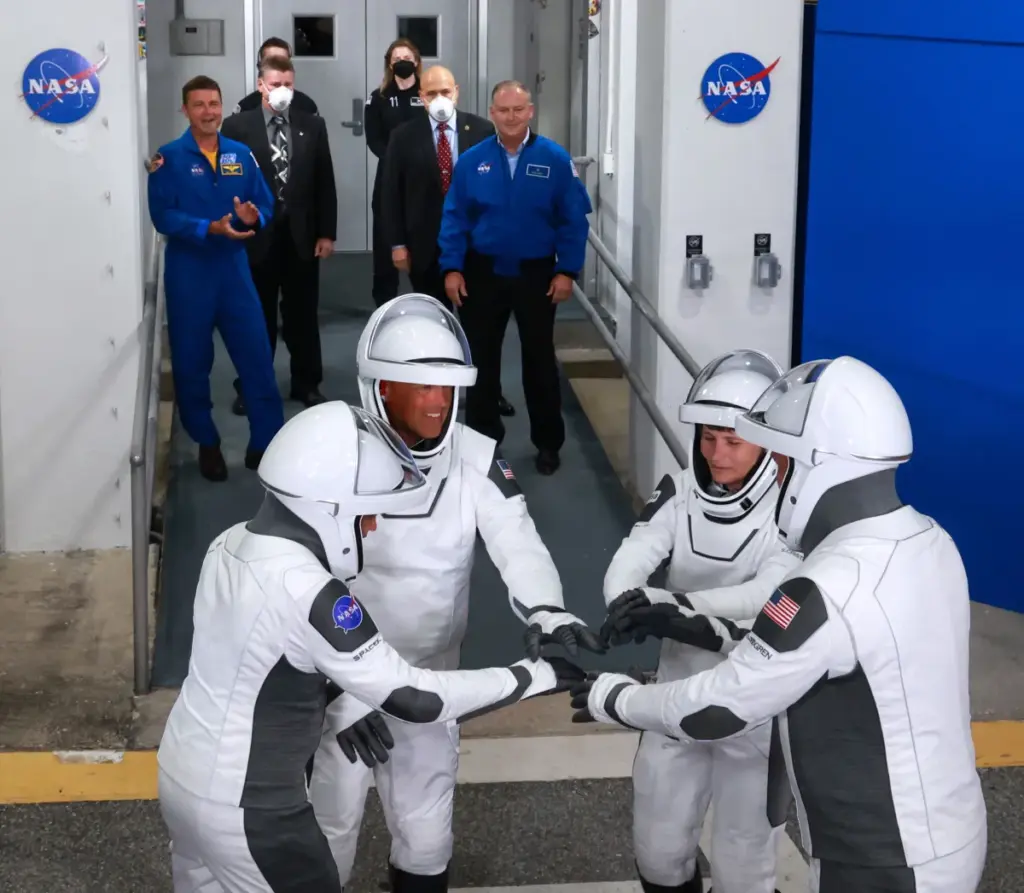 Joe Burbank/Orlando SentinelThe astronauts of the NASA Crew-4 mission gather for a group cheer before heading to Launch Complex 39-A to prepare for liftoff to the International Space Station onboard a SpaceX Falcon 9 rocket from Kennedy Space Center, Fla. Wednesday, April 27, 2022. From left, NASA astronauts Robert Hines and Jessica Watkins; ESA astronaut Samantha Cristoforetti; and NASA astronaut Kjell Lindgren. (Joe Burbank/Orlando Sentinel)
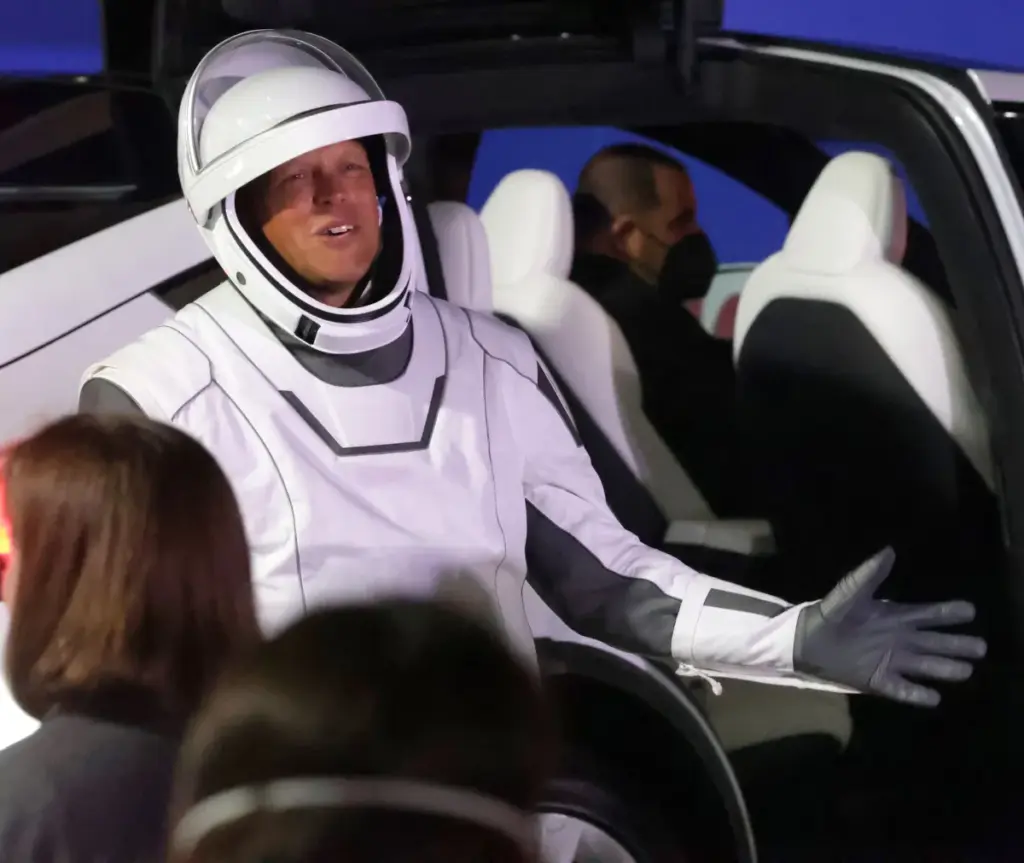 Joe Burbank/Orlando SentinelNASA astronaut Robert Hines talks to family members as Crew-4 departs to Launch Complex 39-A to prepare for liftoff to the International Space Station onboard a SpaceX Falcon 9 rocket from Kennedy Space Center, Fla. Wednesday, April 27, 2022. (Joe Burbank/Orlando Sentinel)
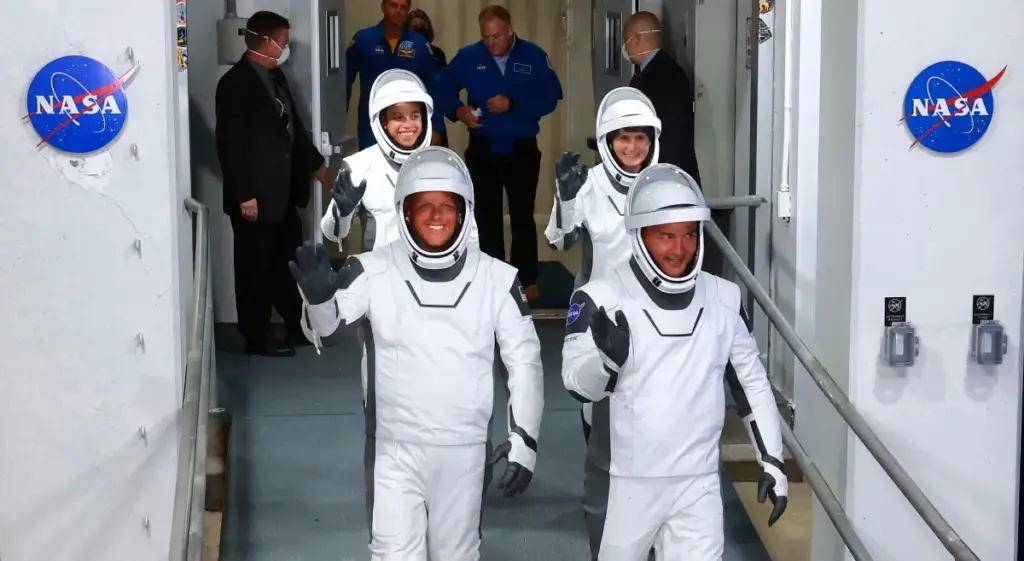 Joe Burbank/Orlando SentinelThe astronauts of the NASA Crew-4 mission head to Launch Complex 39-A to prepare for liftoff to the International Space Station on board a SpaceX Falcon 9 rocket from Kennedy Space Center on Wednesday, April 27, 2022. From left, NASA astronauts Robert Hines, Kjell Lindgren and Jessica Watkins; ESA astronaut Samantha Cristoforetti.
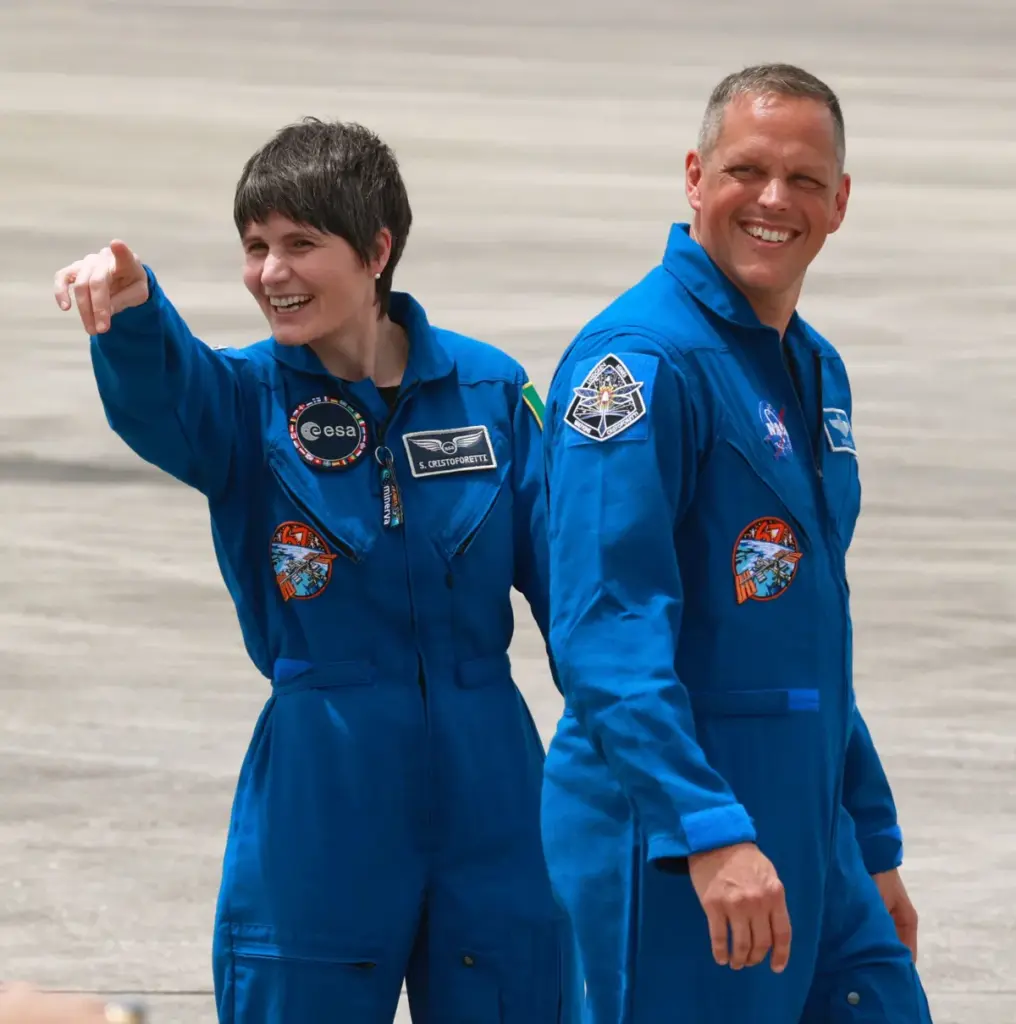 Joe Burbank/Orlando SentinelSpaceX Crew-4 astronauts Samantha Cristoforetti and Robert Hines wave during their arrival at Kennedy Space Center, Monday, April 18, 2022. Crew-4 is the fourth NASA Commercial Crew operational flight and will launch early Saturday from Launch Complex 39-A at KSC. (Joe Burbank/Orlando Sentinel)
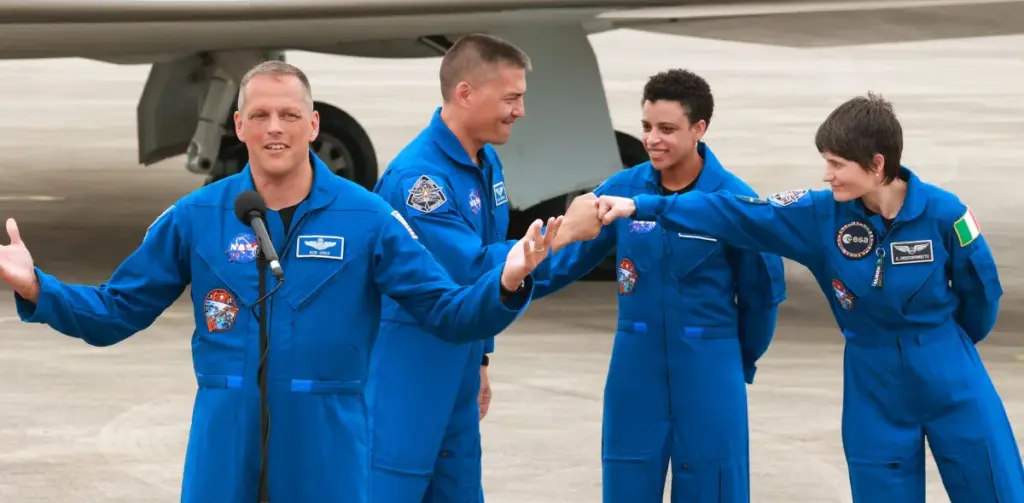 Joe Burbank/Orlando SentinelSpaceX Crew-4 astronauts enjoy a light moment while answering questions during their arrival at Kennedy Space Center, Monday, April 18, 2022. From left, NASA astronauts Robert Hines, Kjell Lindgren, and Jessica Watkins; and ESA astronaut Samantha Cristoforetti. Crew-4 is the fourth NASA Commercial Crew operational flight and will launch early Saturday from Launch Complex 39-A at KSC. (Joe Burbank/Orlando Sentinel)
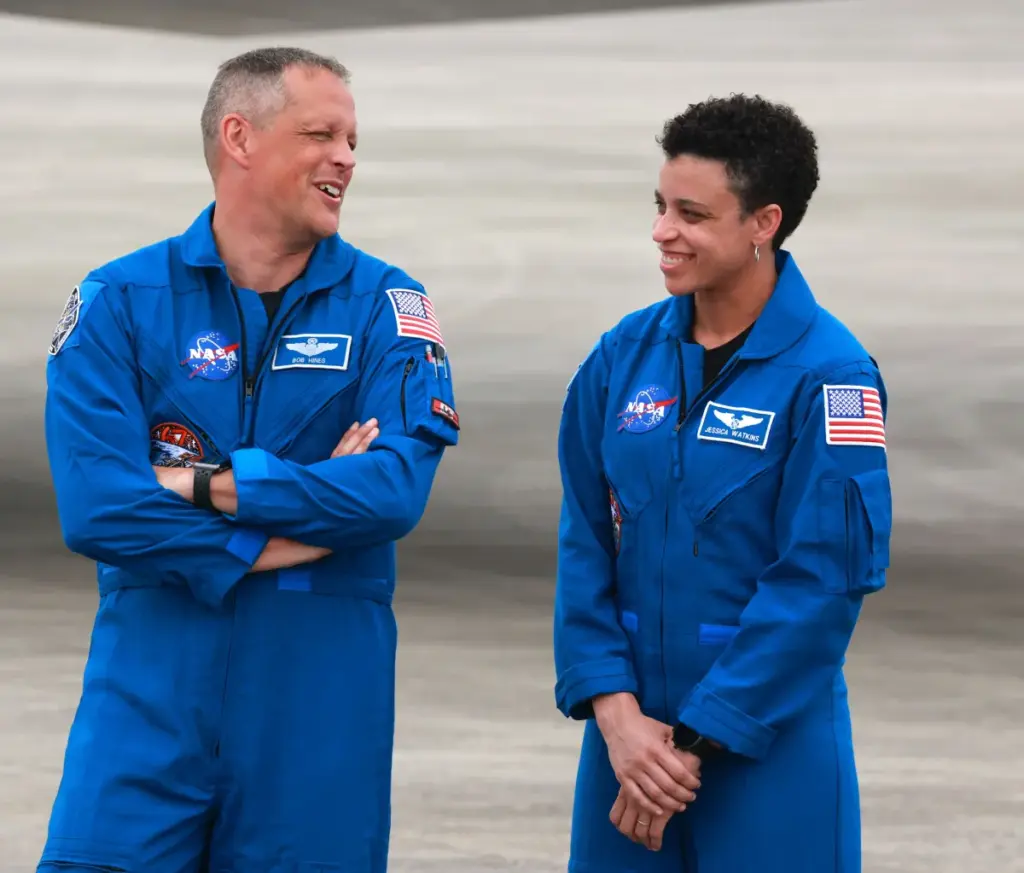 Joe Burbank/Orlando SentinelSpaceX Crew-4 astronauts Robert Hines and Jessica Watkins chat during their arrival at Kennedy Space Center, Monday, April 18, 2022. Crew-4 is the fourth NASA Commercial Crew operational flight and will launch early Saturday from Launch Complex 39-A at KSC. (Joe Burbank/Orlando Sentinel)
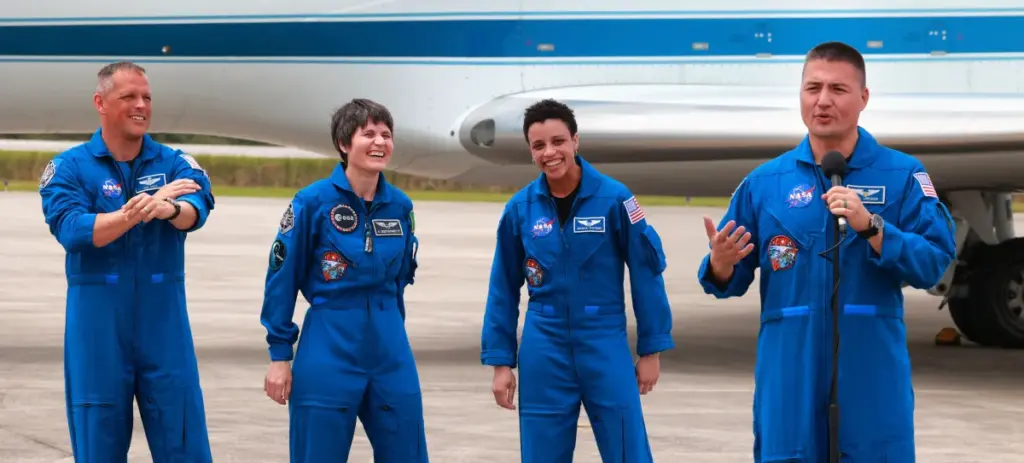 Joe Burbank/Orlando SentinelSpaceX Crew-4 astronauts enjoy a light moment while answering questions during their arrival at Kennedy Space Center, Monday, April 18, 2022. From left, NASA astronaut Robert Hines; ESA astronaut Samantha Cristoforetti; and NASA astronauts Jessica Watkins and Kjell Lindgren. Crew-4 is the fourth NASA Commercial Crew operational flight and will launch early Saturday from Launch Complex 39-A at KSC. (Joe Burbank/Orlando Sentinel)
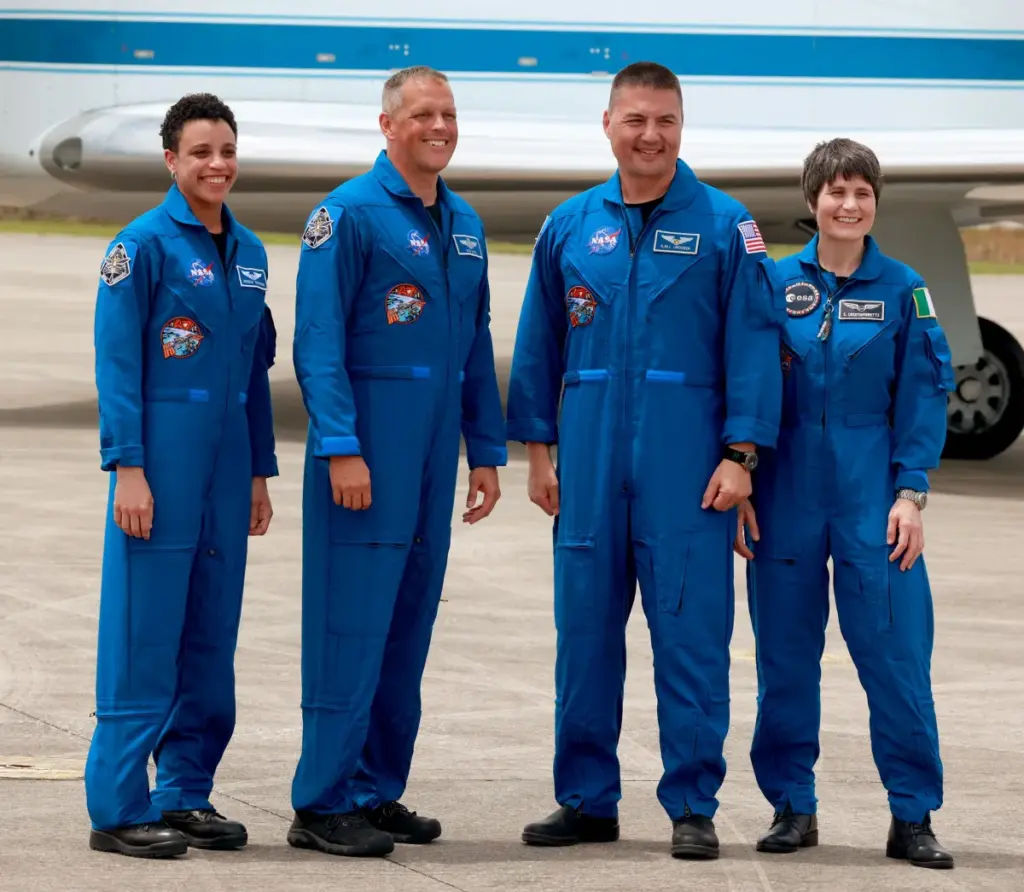 Joe Burbank/Orlando SentinelSpaceX Crew-4 astronauts arrive at Kennedy Space Center, Monday, April 18, 2022. From left, NASA astronauts essica Watkins, Robert Hines; and Kjell Lindgren; and ESA astronaut Samantha Cristoforetti. Crew-4 is the fourth NASA Commercial Crew operational flight and will launch early Saturday from Launch Complex 39-A at KSC. (Joe Burbank/Orlando Sentinel)
Hines, 51, a member of the class of 2017 astronauts, has one mission under his belt as pilot on SpaceX Crew-4 in 2022, during which he spent 170 days on the International Space Station.
He has more than 4,000 flight hours on 50 different types of aircraft, and will train alongside the Artemis III quartet.
“It is incredibly humbling, because I don’t think we’ve ever [had one person identified as a backup for every spot on a crew] before in NASA,” Hines said during an interview published by the Air Force. “To have the organization put that trust in me is really humbling. There’s a lot of responsibility, and I certainly take that seriously.”
He will need to understand the roles of mission commander, pilot and mission specialist, and if any of the four crew were to become ill or not be able to launch next year, Hines would take on that role.
“At least early on in the training, my focus will be on the skills that the commander is learning,” Hines said. “Then I just need to make sure I’m branching off and understanding all the other crews’ roles and responsibilities as well.”
If he doesn’t fly, he will have learned all of the aspects needed to fly an Orion mission as well as the intricacies of how Orion will dock with one or both of the two human landing system spacecraft being developed by Blue Origin and SpaceX.
He will also be working with the new spacesuits being developed by Axiom Space that will be worn by astronauts to the lunar surface. A test version of it is aiming to fly on Artemis III as well.
“We have the Orion spacecraft, and we’ll be working with two different companies for new lunar landers — it’ll be the first time they will have flown,” Hines said. “We’ll have to learn about those, and then, as we look forward to future Artemis missions, we’ll have new spacesuits to work on the moon with. Those are developmental programs — lunar rovers, habitats, tools, all the things that we’ll be working with on the surface of the moon. All those things will be new and continuously changing, and so that skill set of test and development is valuable.”
Hines earned an aerospace engineering degree from Boston University in 1997 before joining the Air Force. During his career he has flown 76 combat missions on F-15E Strike Eagle and other aircraft.
He touted the prevalence of test pilot experience on the Artemis missions, with both Artemis III commander Randy Bresnik and the European Space Agency’s Luca Parmitano of the Italian Air Force assigned.
“The amazing thing about Artemis is truly stepping back into exploration, which NASA made its name doing, and exploration, by its very nature, is doing things that no one’s ever done before,” he said. “We certainly need all the other skill sets too, but for these early missions, test pilots are front and center.”
Read more Class of 2026: Osceola County’s valedictorians & salutatorians
Hines spent a large amount of his time recently as part of the joint test team for NASA’s Commercial Crew Program and holds a unique place in history.
He was on board the space station when the first uncrewed version of Boeing’s Starliner spacecraft docked.
“Nobody stepped inside. I floated inside,” he told the Sentinel in a 2024 interview.
He said his crewmates were gracious enough to let him take on the christening of sorts.
“We had agreed early on that as a new guy, this was a good project for me to kind of take on. And so I was the lead for the Starliner mission,” he said. “I got to open the hatch and go in and kind of lead that mission, it was pretty cool.”
Hines’ role on the test team ran through the launch of Starliner with the Crew Flight Test crew in June 2024, which ultimately did send humans to the space station, although issues with the spacecraft’s propulsion led NASA to decided to fly it home without crew.
Despite its problems, he appreciated the spacecraft as a pilot himself, especially with its reliance on human input compared to SpaceX’s Crew Dragons.
“I see it kind of as a pilot spacecraft. When you sit in there, it feels like an aircraft and it has the kind of operational philosophy that those of us that grew up in aviation, that we’re used to,” he said.
He said at the time he was ready for an eventual second spaceflight assignment, but he has a different approach to assignments than his fellow astronauts.
“I definitely know that those of us that came up through the test pilot community, we certainly see our roles a little bit different because we see our roles as facilitating the development of these new vehicles, new suits and those kinds of things,” he said. “And so to me, that is a successful and fulfilling career, being able to help shepherd those things along to be successful, and eventually get humans back to the moon.”
His take has been shaped by conversations with some of those involved with the Apollo missions.
“I remember talking with them, and how I always thought that they were so lucky to have been even a small part of the Apollo program to get people back to the moon,” he said. “And now I sit here, and I have to pinch myself to realize that that’s what we’re all doing. Every single one of us right now are part of the Artemis program and getting us back to the moon and eventually to Mars. And so being an enabler to make that happen is really cool.”
So while he would be happy with any spaceflight assignment, he was also fine with his support roles.
“Certainly, I love flying in space, but less than 1% of our job is the time that we’re actually in space. So I expect I’ll get another spaceflight at some point,” he said. “I would think that’s coming up here in the next couple of years, but I’m not getting any younger, either. So we’ll see what happens.”