
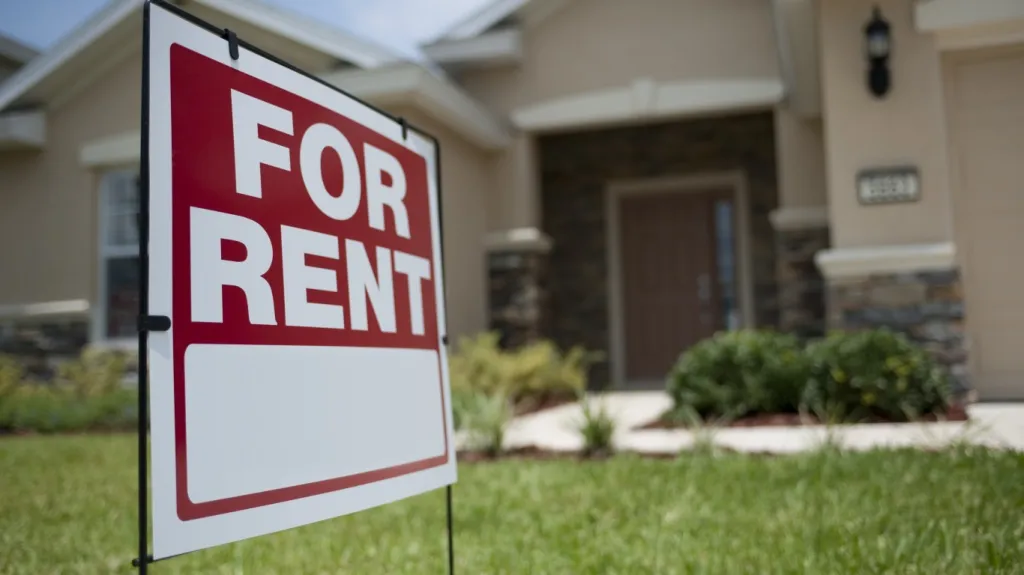
Some renters may face higher costs if Florida voters approve property tax cuts on the November ballot — dealing another blow to housing affordability, real estate experts say.
Read more Artemis III backup astronaut in prime spot to be chosen for moon landing mission
To make up for tax-cut losses, local governments might raise tax rates on non-homesteaded properties, which could include rental properties, said Ken Johnson, the chair of real estate and professor of finance at the University of Mississippi and the founder of Florida Atlantic University’s Real Estate Initiative.
“Local governments could raise the (tax) rates on those landlords, which in turn will raise the rents,” Johnson said. “So this shortfall could end up being borne, at least in part, by renters, making renting all the more difficult than it already is.”
If at least 60% of voters approve the measure, the homestead exemption in Florida would increase to $150,000 in 2027 and $250,000 in 2028. That ultimately could save some homeowners thousands of dollars.
Some government officials say the cuts threaten crucial funding for local services and even could dissolve smaller communities that lack diverse tax bases. In recent weeks, some cities already have discussed the possibility of raising the tax rate as a way to help offset losses.
These savings to homeowners could come at the expense of Florida’s renters, many of whom “are paying much more than homeowners on a monthly basis,” said Kelly Powell, the CEO of Community Partners of South Florida, a housing development organization.
According to a 2025 University of Florida study, more than 900,000 renters were considered low-income and cost-burdened, meaning at least 40% of their income went to rent.
“We already know that rents are outrageous, where homeowners tend to have more of a fixed mortgage,” Powell said. “Many of our homeowners have had (mortgages) for years, so it’s a bit more controllable. It’s going to be a situation where renters have lost a space of their voice.”
How renters could be affected
If voters approve the plan, cities, counties and special taxing districts would stand to lose nearly $5 billion the first year, and nearly $12 billion in the fifth year, according to state economists’ recent projections.
Powell said local governments would likely have less money to support affordable-housing programs or fund down-payment assistance, all of which helps people acquire and keep homes.
“It’s kind of a cycle issue. It’s going to help the homeowner, which is great, right? I’m a homeowner. I understand. So it helps the homeowner, but it does have a ripple effect. And so we may see rents go up for renters,” she said. “We’re continually seeing that people are already unable to pay rents. There is not enough affordable rental housing supply. There will be less funds to support people in need.”
Read more Attractions draw grown-up audiences with youthful pursuits
The Florida Apartment Association, which represents 80% of apartment homes and 74% of all apartment communities in Florida, said in a statement to the South Florida Sun Sentinel that property taxes are one of the largest operating expenses for rental housing providers.
“Any reforms to Florida’s property tax system should carefully consider the potential impact proposed changes could have on rental housing and millions of renters. To that end, the apartment industry is grateful that this ballot proposal included some protections for non-homesteaded properties,” the association said.
Part of the measure would decrease the cap on annual assessment increases on non-homestead properties, from 10% to 5%, which would help businesses.
The association added that concern remains about local governments finding ways to shift the revenue burden to commercial properties, including rental housing. The association “supports efforts to improve Florida’s tax system, but policymakers at the state and local level should ensure potential reforms do not create unintended consequences for renters and housing providers, which could further strain housing affordability across the state.”
Aubrey Jewett, a University of Central Florida political scientist, said the cost increases renters could face is “Economics 101.”
“If costs go up, somebody has to pay for them. And for most landlords, they’re not going to be able to just eat the increase,” Jewett said.
“It’s not about greed. … The rental housing industry is a business like any other, and they have to pay their expenses and make a decent profit in order to continue providing their service.”
Johnson said shifting the tax load onto renters won’t be enough to offset the total loss in revenue, which could lead to higher sales tax, utility tax and municipality fees, all of which also affects homeowners.
“This looks like it’s going to be pretty much a zero-sum game,” he said. “All these things will have to be paid for.”
Read more Class of 2026: Osceola County’s valedictorians & salutatorians
He later added, “There really aren’t any free lunches here.”