
One of the best things about local government is this: If Floridians disagree with something elected leaders plan to do, they can let them know — right to their faces if they want.
Read more Space Coast launch schedule
And from what we’ve seen, Orlando City Council members are due to get an earful Monday over a proposed ordinance that would sideline the city’s Historic Preservation Board for three years, a move residents fear would clear the way for demolition of some of Downtown Orlando’s most treasured landmarks.
Pedal to the metal
This ordinance was rolled out in a big hurry: City Council members found out about the proposed ordinance when they saw the first draft on June 1. It was scheduled for a first reading June 8, and council members approved it 6-1 despite many who showed up to plead with them not to proceed. The final vote is set for tomorrow’s council meeting.
The proposal would strip authority from the city’s Historic Preservation Board to review plans that would significantly alter or demolish historic structures in downtown Orlando — a restriction that would last at least three years. It’s being presented as part of the overall plan to recreate a downtown that is thriving with shops, offices, housing and entertainment.
But city officials haven’t really connected the dots, or provided the information that would help residents follow along. Questions are mounting: Which landmark buildings are obstructing downtown development? How has the historic board— which has worked with several developers on plans that would alter historic buildings, and which can be overridden by the City Council — become such an obstacle that it should be forced to the sidelines for three years? And why are officials tagging this as a “moratorium” when it looks a lot more like a city-enabled stampede, urging developers to push their plans through before the three-year period runs out?
These are the kinds of questions Orlando residents need answers to, though they also have a partial answer to that last question. We can see only one reason to ram something this big through, in such a hasty fashion. Somebody already has plans. Maybe more than one somebody. And the council is being asked to vote quickly, even though they — and Orlando residents — have no idea what those plans are or which landmarks will be lost forever.
Not so fast
The caution flags are flying, commissioners. It’s time to, at the least, tap the brakes on this one.
And if they need any more convincing, they should look to a letter-bomb that arrived from the state Division of Historic Resources June 11 and was shared with the Sentinel editorial board Saturday. It’s blunt and to the point: If the city passes this ordinance without giving the state 30 days notice, it could immediately lose its certification to receive money from at least one historic grant-funding source — and probably undermine its chances at other funding. This would be a major blow to historic preservation throughout the city, not just downtown.
The state’s email was sent to the city, but some commissioners say it wasn’t shared with them until the state emailed them individually. Via text, Mayor Buddy Dyer said city and state legal teams have talked, and that the ordinance presented Monday would not take effect until 30 days after passage to give the state and city time “to ensure the state has any information they need.”
Read more Is it worth it economically for US cities to host the World Cup?
If that’s the case, why not just put the ordinance on ice for 30 days?
This is not the way Orlando does business. In fact, the City Council deserves a great deal of credit for being responsive to residents when they have concerns about a course of action. That willingness to listen most recently manifested when city residents expressed strong misgivings about the city’s plan for major renovations of Leu Gardens. City staff paid attention — and have significantly scaled back the plan, scrapping a proposed waterfront restaurant and amphitheater. City leaders showed the same caution and sensitivity when planning the memorial to the 49 people killed at Pulse nightclub, creating the design in careful stages and soliciting public comment along the way.
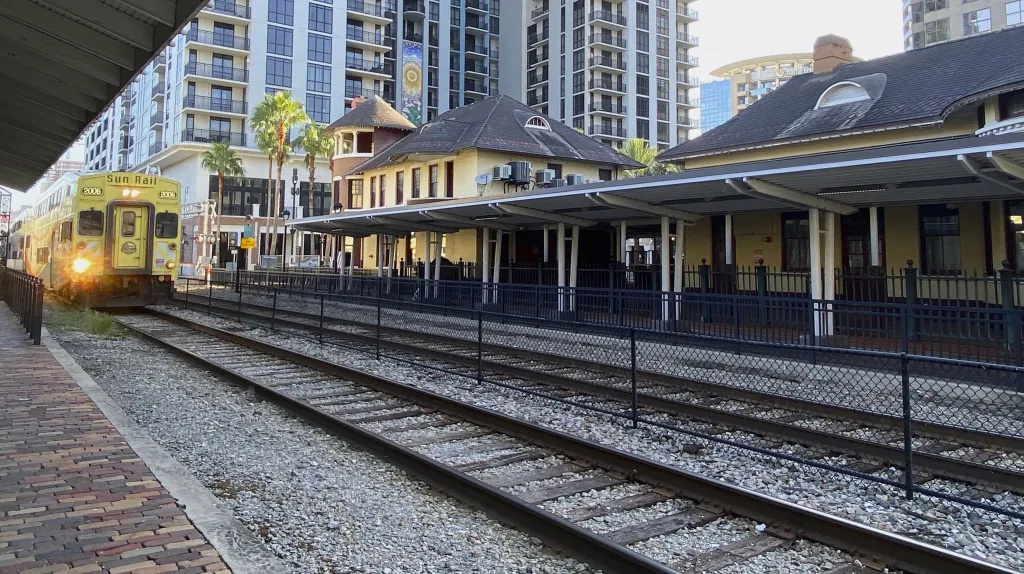
Now city officials are being asked to stomp the gas pedal on an ordinance that could speed the demise of some of downtown’s stateliest buildings — ones that help define its character, such as the old train station on Church Street, the Kress building and the Angebilt Hotel.
At the least, postpone
Without a doubt, many of the 60 downtown buildings that have been designated as historic need work. Some have been vacant for years. Some may be past saving.
But that’s a decision to be made on a one-by-one basis, with the ability to see what the city would be getting if it permitted the demolition. The preservation board is an important part of that process.
Commissioners are being asked to scrap that layer of protection. They are being asked to do it with scanty documentation, including proof that the Historic Preservation Board is causing unnecessary delay. They are being asked to do it without all the information they need to make the right decision, knowing there will be no going back. Once a landmark is destroyed, it’s gone forever.
We don’t see a way this particular proposal can move forward at tomorrow’s meeting. We’re hoping City Council members see things the same way.
The Orlando Sentinel Editorial Board consists of Opinion Editor Krys Fluker, Executive Editor Roger Simmons and Viewpoints Editor Jay Reddick. Use [email protected] to contact us.
Read more A lifetime of savings lost: How elder financial exploitation is challenging banks and families