
When a teacher from Puerto Rico enters Florida’s school system, the first surprise is not always the classroom. It is everything around it.
Read more ‘All sideshows:’ Bullhorn, prosthetic leg and upset in Florida GOP governor’s race
You arrive knowing how to teach. You have experience, preparation and the desire to do right by students. But very quickly, you realize that working in Florida means learning a new professional language, a different school structure and another way of understanding how education works day to day.
I felt that transition deeply when I began working in Florida as a music educator.
One of the first things that struck me was the structure. Music was not just a class tucked away somewhere in the school day. In many places, it was part of a broader fine arts system with more visible programs, stronger resources and clearer pathways for students. I remember walking into music classrooms in Florida and being genuinely surprised by how well-equipped they were. Not even in my own college years, while beginning graduate study in music education, had I seen classrooms with that kind of space, equipment and resources. It told me right away that music was being treated with a level of institutional support that felt different from what I had known.
But that was not the whole story.
Florida also asks teachers to adapt quickly. There are acronyms, procedures, district expectations, documentation requirements and professional norms that can leave even an experienced teacher feeling like a beginner again. You do not stop being a teacher when you arrive. But you do have to learn how to move inside a new system.
At the same time, I do not believe teachers from Puerto Rico come into Florida empty-handed. We bring something valuable with us. We bring creativity, resilience and the ability to do a great deal with limited resources. We bring a culture of effort that is often born from necessity. And many of us bring a deep respect for education as service.
Part of what I carried into Florida came long before I ever filled out an application or entered a new school. It came from watching my father, Edgardo Arlequín Vélez, who spent decades building school music programs in Puerto Rico with discipline, consistency and vision. As a child, I saw the visible part of that work: the performances, the uniforms, the admiration. As an adult and educator, I came to understand the hidden part: the hours, the repetition, the standards and the responsibility of shaping students while sustaining something larger than yourself.
That legacy mattered when I got to Florida.
Because once the newness of the system wears off, the real question is not whether a teacher can survive the transition. It is whether that teacher can adapt without losing the strengths that formed them.
Read more Editorial: Red flags are flying over Orlando’s hasty historic-preservation rule
I also noticed something else. More resources do not always create more urgency. In Florida, students often have more options, more activities and more support available to them. That is a real advantage. But sometimes, when so much is available, it can be easier to take opportunities for granted. In Puerto Rico, where resources are often more limited, students may develop a different kind of hunger and appreciation for what they have.
At the same time, I saw that schools in Florida often give more attention to communication, student backgrounds and personal needs. That broader support can be a real strength of the system.
In my own work, part of adapting meant refusing to think of music as only a scheduled class period. It meant helping build culture, creating continuity and, when needed, extending the work beyond the regular school day through after-school rehearsals and extra time with students. That mindset did not come from a manual. It came from years of seeing what it takes to build a serious program and then learning how to apply those values in a different environment.
Florida has much to offer teachers and students. But Florida also gains something when educators from Puerto Rico enter its schools. They bring lived experience, adaptability and a determination that can strengthen programs and enrich school communities.
That matters in Central Florida, where public schools serve students from many backgrounds and where strong teachers are asked to do more every year.
The challenge is to learn the new system without surrendering the best of what shaped you.
And in the end, that may be the most important thing a teacher discovers in Florida: adaptation does not require erasing yourself. Sometimes it means bringing your roots with you and learning how to plant them in Florida soil.
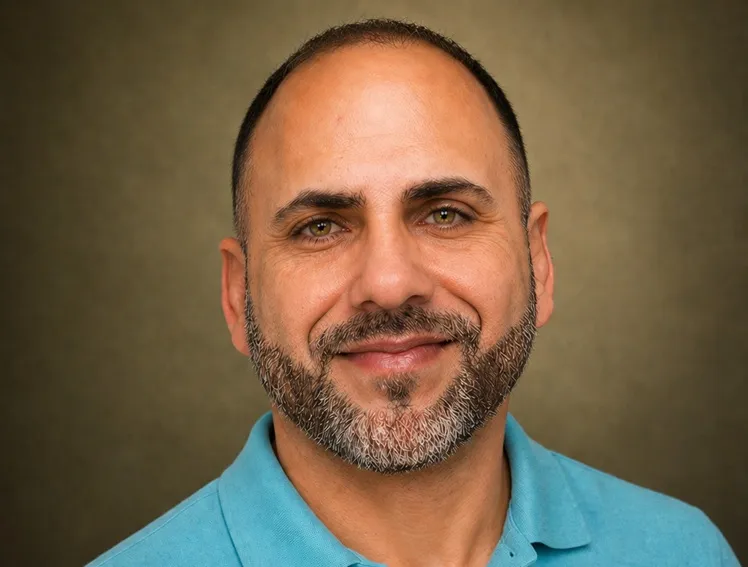
Raphael Arlequin Rivera of Orlando is an educator, musician and public servant whose work bridges music education, community leadership and cultural advocacy in Puerto Rico and Florida.
Read more Space Coast launch schedule