
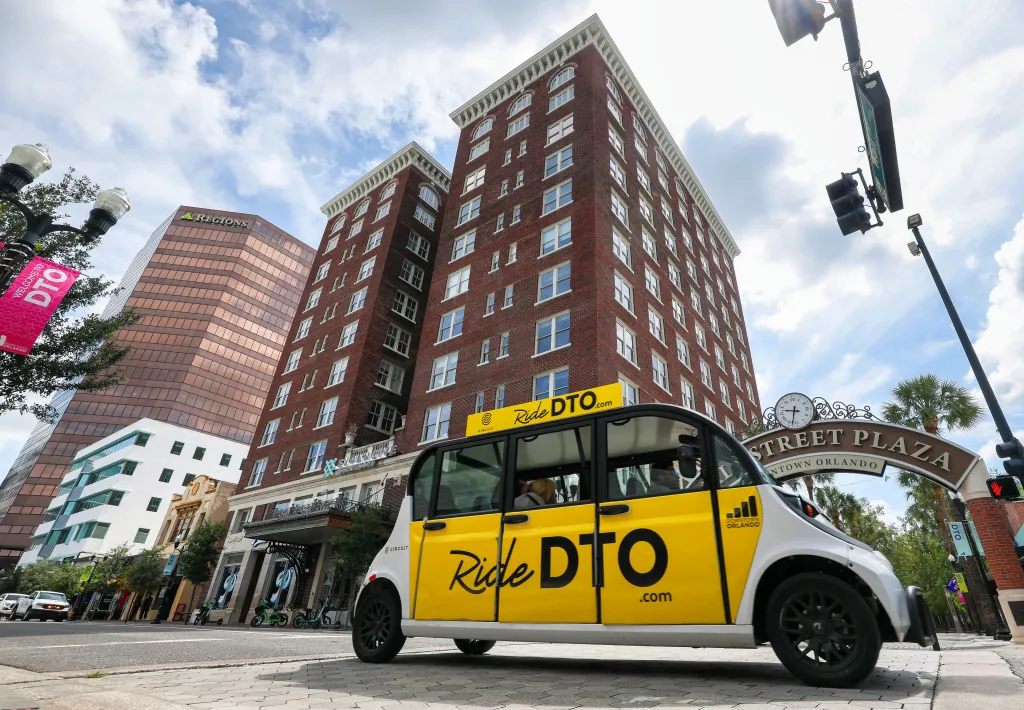
Orlando officials loosened the city’s rules on historic buildings Monday, a move they hope will kick off a new era of growth in Orlando’s core business district but one that preservationists called a potential death knell to decades of historic protections.
Read more Messi sets World Cup scoring record as defending champion Argentina advances to knockout stage
“The moratorium is temporary, but the changes are forever,” said Scott Sidler, a former Historic Preservation Board chairman. “Once a wrecking ball swings downtown, no future council can vote a building back.”
The four commissioners who backed the measure, however, said Orlando’s downtown urban core desperately needs a shot in the arm amid post-COVID closures.
“We have vacant properties, underutilized buildings, declining foot traffic,” said Commissioner Shan Rose, who represents the Historic District and backed the measure. “This is not about eliminating historic preservation.”
Under the three-year moratorium, development proposals within the current historic boundaries would no longer have to go in front of the city’s Historic Preservation Board – a citizens advisory panel tasked with rewarding a “certificate of appropriateness.” Instead, the Appearance Review Board, which takes a look at all other developments downtown, would handle the review.
City planners and developers contend the panel creates parallel and redundant review processes and is an impediment for growth. But board members say they’re working to protect downtown’s historic fabric, adding that they haven’t rejected a proposal in the district in five years and can be overridden by city council.
Orlando has six historic districts, and downtown – the first to be created in 1980 – is the only one featuring commercial properties. It spans eight blocks through the city core along Orange Avenue and includes roughly 60 buildings, including on Church and Pine Streets.
Under the ordinance, which will go into effect Aug. 10, city officials say they hope building owners don’t demolish historic buildings, but instead capitalize on a planned incentive program to revitalize them.
“The goal is adaptive reuse and revitalization of historic buildings,” City Planner Jason Burton said. “The goal is not demolition of historic buildings.”
His comments reflect one point of agreement between developers and preservationists: a hope for a better downtown. But Monday’s meeting revealed sharp disagreements with how to do so.
Craig Ustler, a developer behind Orlando’s Creative Village and other endeavors, said the problem is less about the Historic Preservation Board than the rules which govern it.
“I think we’re a little out of balance,” he said. “The vast majority of projects never make it to the HPB board … sadly, it’s becoming an impediment.”
Read more Florida’s unemployment rate holds steady in May
Katie Shook, who said she owns a home in a historic district, said the plan could provide a path for historic buildings downtown to have a longer lifespan, contending that currently downtown are “vacant store fronts and underutilized spaces.”
“We have to create conditions where historic places can continue to be lived in, worked in and played in,” she said.
Cindi Parker, a former Board member on the historic board, said she remembers the last time she was at city council when in 2003 the city approved the demolition of the Jaymont Block, which was knocked down literally within minutes to pave the way for The Plaza on Orange Avenue.
She recalled the Orlando Sentinel publishing a photo of its developer Cameron Kuhn pumping his fist in front of a pile of rubble after the contentious fight.
“When I hear of this moratorium that’s all I see – a pile of rubble and a developer in victory position,” Parker said. “Please don’t do that.”
Commissioners Patty Sheehan and Bakari Burns cast the two dissenting votes, and Tony Ortiz wasn’t in attendance.
Sheehan, a commissioner for 26 years, cast the lone dissenting vote on that 2003 proposal. She sharply disagreed with the latest plan to spur growth, presenting a slideshow making an impassioned plea to fight back the ordinance.
Through the city’s DTO Action Plan, she said, the historic district had high grades from consultants for its walkability and appeal.
“They’re blaming 35 acres for the problem of 1,664 acres,” she said, citing the district’s size compared to that of the downtown Community Redevelopment Agency.
Since the initial vote June 8, Dyer and city commissioners received a letter from Florida’s Division of Historic Resources stating that if the city passed the ordinance without giving the state 30 days notice, it could lose a certification that enables the city to receive money from the state’s historic grant-funding source.
Dyer said the city has since changed the effective date of the ordinance to Aug. 10, which city attorneys believe will keep it in compliance. Dyer said over about five years, the city had received two $50,000 grants under that program.
Read more Patrols and nanobubbles continue at the Reflecting Pool as Trump looks for a renovation do-over