
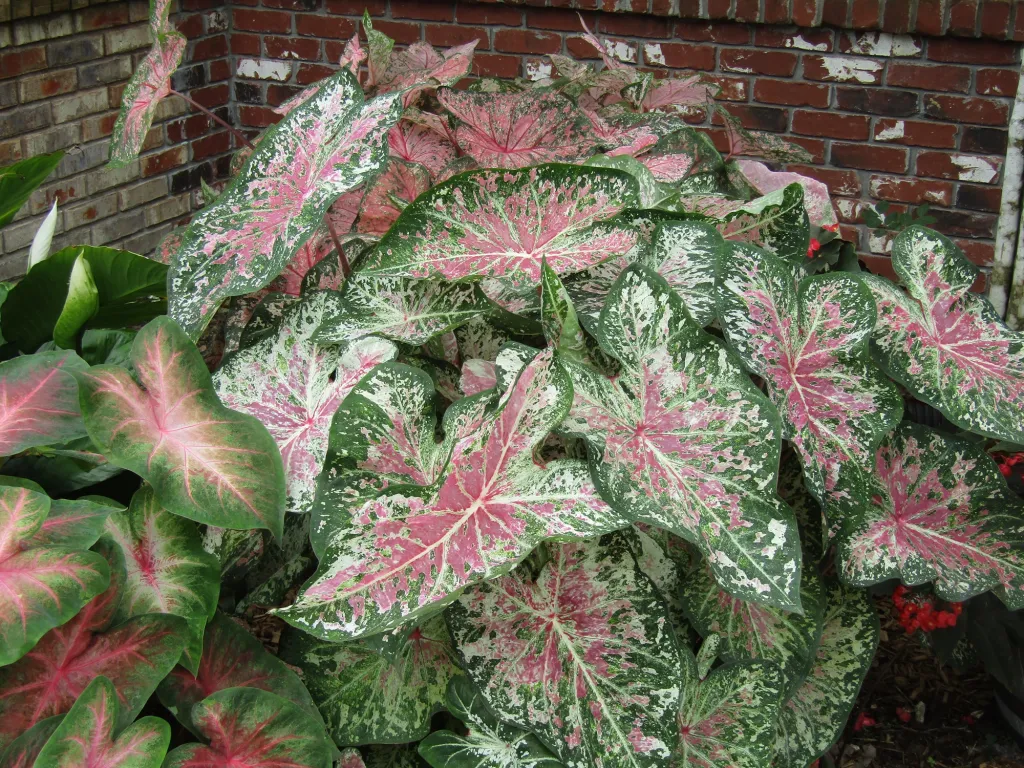
Q: Some of my caladiums have been slow to sprout new shoots with colorful foliage this year. Do I need to give them a special treatment?
Read more Editorial: Don’t let partisanship cloud nation’s 250th celebration
A: Normal care is all your caladiums need to regain their vigor after a cold winter and dry spring. Freezing temperatures likely affected some bulbs — which are actually tubers — closer to the soil surface. We often say it makes them sluggish, and in this case slows the spring growth. If your caladiums are in an area that has not received adequate water until the return of the rainy season, this can slow growth too. The good news is your plants are alive and growing. Give these shoots with colorful foliage waterings that keep the soil moist. Also apply a slow-release fertilizer, where permitted, to increase caladium growth and vigor. More good news is the late start for these plants may mean they could last longer into late summer or fall before their traditional decline for a period of rest. Prevent future winter damage next year by maintaining a light mulch over the soil surface.
Q: I have a small podocarpus shrub with multiple shoots from the base. One has turned brown. Is the whole plant going to decline? What should I do?
A: Hopefully this is a case where one shoot was damaged during planting or care and a wound caused it to decline. Prune the shoot where it connects into the plant at the point of healthy tissue. This may be to the ground. Podocarpus are susceptible to a disease know as mushroom root rot, so if much of the plant begins to decline it should be replaced. Remove the soil in the affected area and replace with fresh soil before replanting. There is no fungicide to control or prevent this disease.
Q: We have small dwarf yaupon hollies planted in a row. Do I shape them into balls or let them grow with the shoots touching as a thick hedge?
A: One of my good friends called the rounded shapes “Meat Balls.” Dwarf yaupon hollies are durable, growing to about 4 feet wide and tall if left unpruned. Many gardeners do like the rounded shapes. Some residents shape them into other geometric forms or even animals. Other gardeners like the hedge look, and keep their plants about 18 inches tall and wide. Do note pruning that keeps the plants dense can encourage a disease that causes portions to decline. This dieback can be prevented by growing yaupon hollies in areas with good air movement and only watering during drier times of the year. If needed, prune out the dead portions and apply a fungicide to help control disease.
Are you a Central Florida gardener? Here’s your to-do list heading into June
Q: Our garden is starting to decline. What should we do to prepare the site for the next planting?
A: Give your declining spring garden attention to remove the old plants and weeds. Insects and diseases can last through the summer on remaining plants. Now is a good time to solarize the soil with a clear plastic covering — for six to eight weeks — to bake out nematodes and other pests. Till the soil as needed and add organic matter such as compost before solarization. If you do not solarize the soil, add the organic matter anytime prior to the next planting. Keep weeds under control as they often harbor insects. Also, check the soil acidity and adjust the pH if needed. Next planting time for warm season crops is the middle of August.
Read more SpaceX sunrise launch sends up demo ‘Starfall’ spacecraft
Q: I have a century plant that is 25 feet tall and about to flower. Does the plant die after flowering?
A: Unlike the name suggests, century plants shoot up an amazing stalk to flower within 10 years after planting. The other unique feature of this plant is after flowering it gradually declines. But don’t feel too bad, as there are normally a number of new shoots at the base to restart the lifecycle. Even though this plant may cause neighborhood excitement, the flowers are not very showy being a yellowish green color and difficult to distinguish at the top.
Q: It is time to add new mulch to our landscape plantings. Do I remove the old and add the new or just do a top dressing?
A: Leave the old mulch in place, as it’s now home to roots of landscape plants. Removal of the mulch could eliminate some of the important water and nutrient-absorbing roots to cause plants to decline. Also, since you probably have a portion of a mulch layer left, only a light top dressing is needed to bring it back to the 2- to 3-inch level recommended for most trees and shrubs. Do remember to keep mulches, new and old, several inches away from the trunks and stem of all plants.
Q: I have cannas growing in a container and the flowers have declined on several of the shoots. I cut off the heads of old blooms. What happens next?
A: More shoots should be noticed sprouting from the rhizomes, which are think stems close to or in the soil. These produce the new blooms. The old flower stalks can continue growth for a while once the blooming portions are removed. Eventually these too can be pruned back to the rhizomes. As the rhizomes fill their container with new growths, the cannas need to be transplanted. If the container is fairly small, transplanting may be needed this summer. You can remove the rhizomes and break clusters apart to form containers of new plants or add them to full-sun flower beds. Keep the plantings moist and apply a slow-release fertilizer if permitted.
Tom MacCubbin is an urban horticulturist emeritus with the University of Florida Cooperative Extension Service. Write him: Orlando Sentinel, P.O. Box 2833, Orlando, FL. 32802. Email: [email protected].
Read more ‘A strong message’: In a first, OCPS high schools combine for summer show