
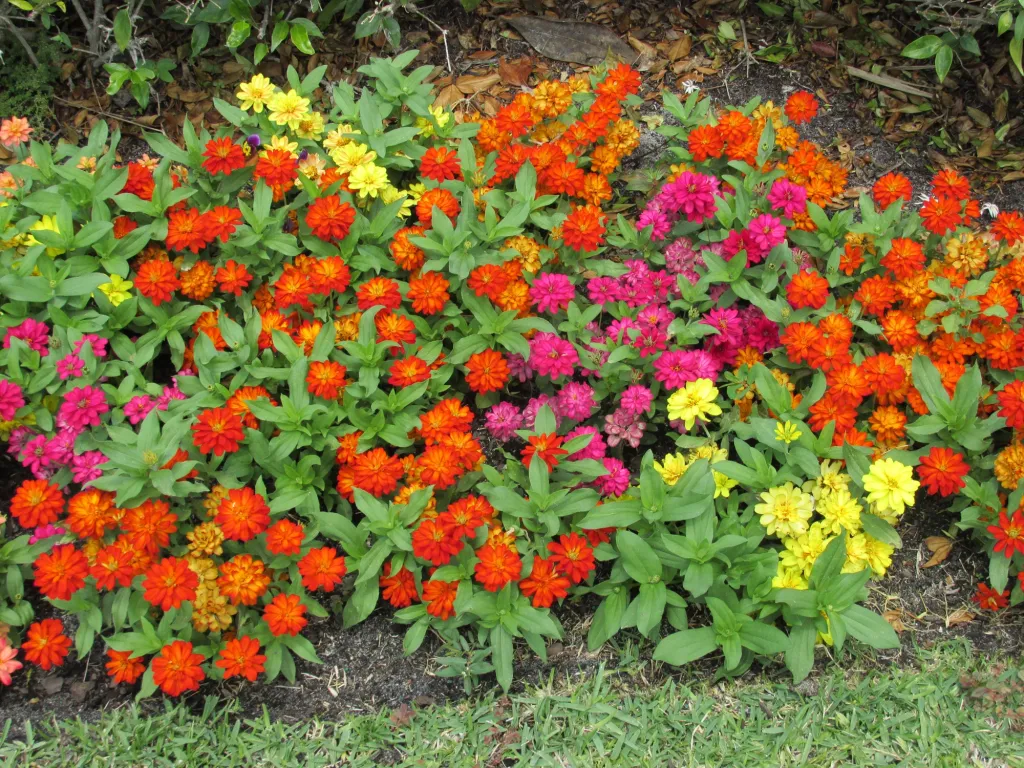
Q: I’m afraid I have missed the planting season for zinnias. Can I plant them now and do they prefer full sun? Should I plant the seeds in the soil?
Read more Rain, mud can’t dampen spirits at this year’s Bonnaroo Music Festival
A: Summer is not the best time for zinnias, but they can be planted spring through fall. During the hot rainy season some varieties are more susceptible to fungal leaf spots and mildew. Keep a fungicide handy to apply as needed. Plantings grow best in full sun in an area with good air movement to help prevent diseases. Seeds can be sown directly in the ground, but gardeners have the most success if they are started in small containers, each with an individual seedling. When the plants are 4 to 6 inches tall they can be transplanted to flowerbeds or container gardens.
Q: We have a very large bamboo plant that has been winter killed. There are more than 20, up to 40 feet tall, stalks of which some look alive and some dead. There are sprouts growing more than 2 feet tall from the bottom. What care should I provide?
A: Start this bamboo revival by removing all dead or declining stalks. This makes room for growths now forming new plants. If the planting is too congested, you can prune out some of the new shoots. You can apply a general garden fertilizer where permitted if needed to encourage growth. Bamboo is very durable and plants should fill the voids to grow back as you remember by fall.
Q: A young Nuttall oak was planted in my yard last year. It had beautiful big green leaves. However, this year, most of the leaves are very small and partially eaten. What is causing this?
A: Sometimes new and young trees have extra-large leaves for a year or two, then they grow ones of normal size. If the new growths are a good green color, your tree is likely just fine. Something is chewing on the leaves, and most likely it’s caterpillars. If spotted, they can be removed by hand, or you might apply a natural control of Thuricide or a spinosad-containing product — following label instructions. Small leaves can also be produced by a limited root system. It’s possible the tree is not growing out of its root ball rapidly enough to support larger leaves. Keep the soil moist within the drip line during dry times, and apply a landscape fertilizer as permitted. Your new tree most likely needs more time to become established and grow as expected.
Q: A vine is growing near the base of our magnolia tree. Will the vine climbing the tree cause harm?
A: Vines are never a good addition to trees. They eventually compete for foliage sites, encourage fungal problems and harbor insects that may affect growth. Keep vines trained to a trellis, wall or arbor where they make the best growth, become attractive and don’t affect other plantings.
Read more Sheriff’s office investigates mass graves at California animal rescue facility
Q: Last time I started tomato plants the seedlings grew lanky and fell over when only a few inches tall. What can I do to have stronger plants?
A: Providing more light is the answer to floppy tomato seedlings. As soon as the seeds germinate, and the first new growth spotted, give the seedlings a full-sun exposure. Starting tomato seedlings under lights, or in sunny windows, are not good substitutes for growing plants in the sun outdoors or in a greenhouse. Keep the seedlings moist and begin fertilizing a week after germination with a half-strength liquid product.
Q: Something is eating the leaves on my squash and cucumber plants but I don’t see them. How do I control the pest?
A: No need to find the pest, or more likely pests, doing this feeding. What is most important is to get them under control. Your leaf feeding, and eventually fruit feeding, pests are almost certain to be pickle or melon worms. These are the immature stages of small brown moths. What you noticed is their feeding on the plant foliage, but some are going to move over to the fruits. You might try to find them, and pick them off the vines, but it could be a challenge. Look in curled leaves that often contain webs with the larva stages — often called worms. Most likely they are going to be numerous and you need to provide protection for the fruits. A simple, effective control is to apply natural insecticides of Thuricide or a spinosad-containing product. One or more of these can usually be found at independent garden centers. Follow label directions.
Q: I don’t want to apply an insecticide to my St. Augustine lawn if it’s not needed. So how do I really know if I have chinch bugs in the yellow spots?
A: Searching for and finding chinch bugs is not an easy job, as the adults are only about the size of a pinhead. This means the immature stages are even smaller. Get to know chinch bugs before you go searching by looking for pictures online. Hunt for chinch bugs on the border of a yellowing area of the lawn. Pull the grass portions apart at the ground line and look for dark-colored adults, some with white crossed wings. Be diligent as many hide in the soil when you disturb them. An old trick gardeners have used in the past is pushing a large coffee can, or similar container, into the sod at the edge of where green and yellow grass meet. Actually, you may have to cut around the edge of the coffee can to get it to go into the ground. Then fill it with water and wait for the chinch bugs to float to the top. If you fail to find the pests, but think they are still causing damage, take a square foot of sod from where the yellow and good green meet to your local University of Florida Extension office to have it checked.
Tom MacCubbin is an urban horticulturist emeritus with the University of Florida Cooperative Extension Service. Write him: Orlando Sentinel, P.O. Box 2833, Orlando, FL. 32802. Email: [email protected].
Read more Today in History: June 26, first Harry Potter novel published