
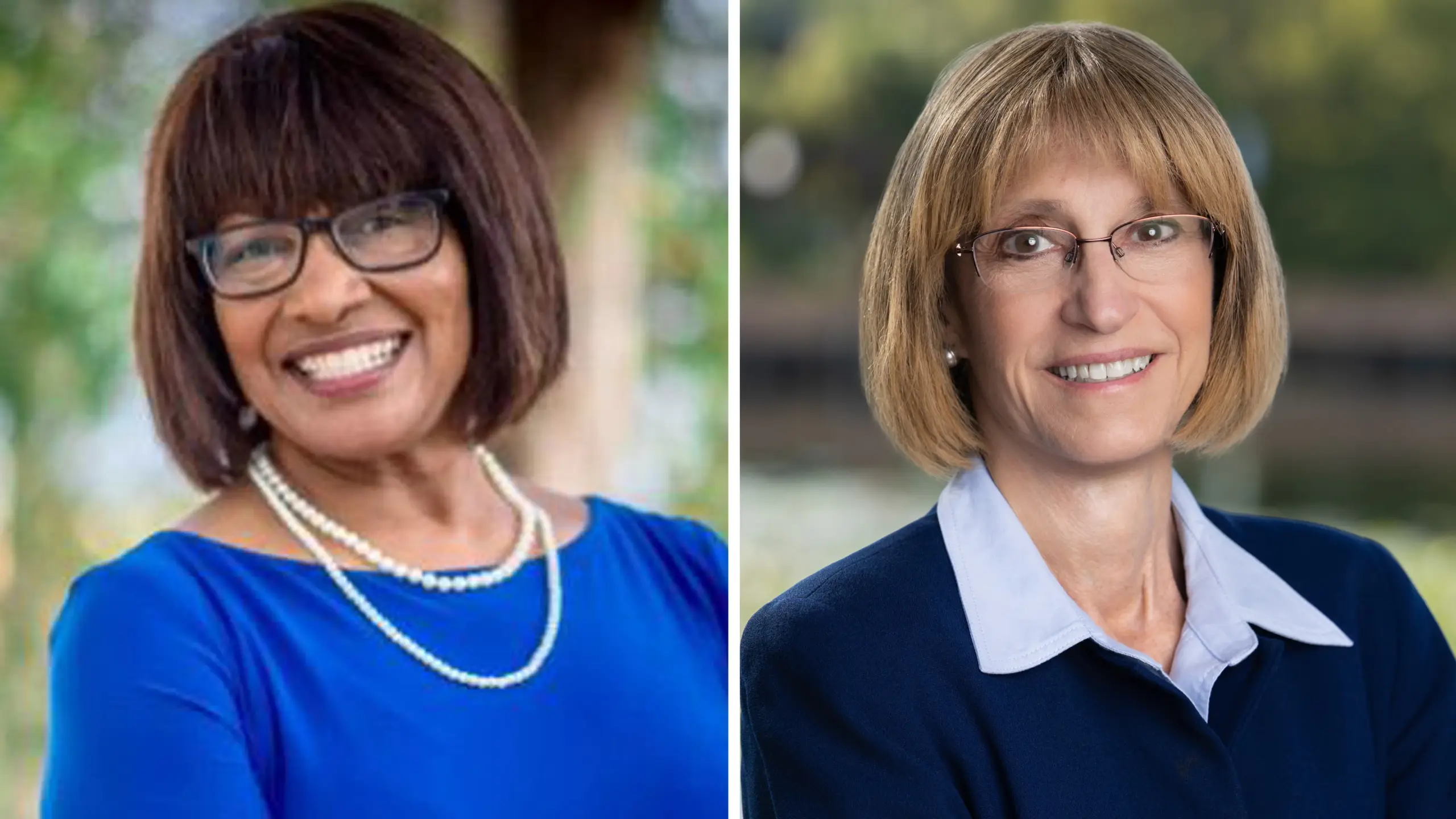
Two registered Democrats are vying to be the first-ever Orange County District 7 commissioner, one of two new seats created by a voter referendum in 2024 to expand the board.
Read more Miss Manners: According to them, I’m sick because I live a bad life
But one candidate, Vicki Vargo, a real estate lawyer who won election to Orlando City Council as a Republican in 2000, is a relatively new Democrat, switching party allegiance 10 months before she began her run for an office that pays $130,000 a year.
Vargo had been registered as a Republican since 1990, according to Election Supervisor records, and was a member of the GOP during her six years on Orlando’s council.
Orange County commission races are officially nonpartisan contests and party affiliation doesn’t appear next to a commission candidate’s name on the ballot, but it can make a difference to voters who pay attention to such things.
The new district includes College Park, Eatonville, Maitland, Orlo Vista, Pine Hills and Rosemont. Registered Democrats account for half of District 7’s 88,000 voters, outnumbering Republicans more than 2-to-1. About 25% are registered as independents or with other political parties.
Vargo’s recent party switch and her clashing political mailers — some reading as if made for Democrats and others for Republican voters — prompted the local Democratic party to back her opponent, Patricia Rumph, a lifelong Democrat.
“There are people who felt her positioning and party change before the election was dishonest, and that was a pretty overwhelming sentiment,” said Jarred Cornell, the party’s interim chair.
Some of the mailers were posted online or shared with the Orlando Sentinel by unhappy voters.
“I’m ready to lead with conservative values, common sense, and a focus on changing the lives of my neighbors for the better,” read a mailer Vargo sent to some voters ahead of the August primary.
Another postcard asked a registered Republican if they were “tired of radical left politics?”
Meanwhile, some registered Democrats said they received Vargo mailers with a handwritten message: “I’m a Democrat. Please vote for me.”
Cornell said county Democrats viewed Vargo’s mailers as “definitely concerning,” noting her campaign also ran digital ads saying she has “conservative priorities and conservative solutions.”
Vargo, 71, shrugged off criticism in an interview with the Orlando Sentinel.
“The adjective ‘conservative’ apparently scared some Democrats,” she said in an email.
But being fiscally conservative, she said, appeals to both Democrats and Republicans.
“I have the heart of a Democrat, a Republican mind and an independent spirit,” said Vargo, who left Orlando’s council in 2006 after getting trounced in that year’s election by opponent Robert Stuart. “I believe in working across the aisle to make government work for people to make their lives better. The most important thing is listening to constituents before leading.”
The local Democratic party endorsed Rumph, 74, a retired probation officer, after the primary whittled the race from a dozen candidates to just two.
Rumph received the most votes in that crowded August primary — 4,597, about 23% of ballots cast. Vargo finished second with 3,635 votes, about 18%. Turnout was light with just 19,983 of the district’s 87,774 registered voters participating, including 1,585 who chose not to vote for any of the 12 candidates.
Rumph received the endorsement this week of Orange County Mayor Jerry Demings, one of the county’s most prominent Democrats. He cited her service as the inaugural “community ambassador,” a role intended to build trust, improve communication and foster stronger relationships between Orange County’s government and the community.
Vargo has largely self-funded her run for commissioner through personal loans to her campaign totaling more than $77,000, according to campaign finance records. She has about $8,700 remaining in her campaign war chest.
Rumph raised about $40,000 and has about $2,000 remaining, according to campaign finance records.
The candidates have differing views on several key issues.
Amendment 3
Rumph is opposed to Amendment 3, which would increase the property tax exemption on homestead property, likely reducing homeowners’ bills but forcing local governments to cut spending or reduce services.
“I support meaningful tax relief for homeowners, but not if it comes at the expense of the local services our residents depend on,” Rumph said in a written candidate questionnaire. “Rather than shifting the burden through higher fees or cutting services, we should focus on responsible budgeting, greater government efficiency, and targeted affordability solutions that help working families without weakening our community’s long-term financial stability.”
Vargo described herself as “torn” on the amendment, but said she’d “probably” vote for it.
“Regardless of how property tax relief is decided in November, I believe there is excessive spending in Orange County government,” she said in a candidate questionnaire.
In an email she added, “Many people need property tax relief. I have senior homeowners on very limited incomes that are struggling. We need to find a way to help them. I would prefer to have this issue handled at the local level rather than having Tallahassee driving what they think is the solution.”
Orange County, with its large commercial tax, should be fine if the measure passes, she wrote. “However, I am very concerned about Eatonville and Maitland.”
Data Centers
Rumph said the issue needed more study. “Florida’s utility regulators should put residents first by ensuring families are not forced to subsidize the growing energy demands of large data centers and other high-use industries,” she wrote.
Vargo said utility regulators should require owners of data centers to pay or bond all their own infrastructure, including expanding electrical grids.
“Even experts anticipate that some data centers will fail. Local governments or utility companies should not be liable for bonds to build and operate these private enterprises,” she said in the questionnaire.
License plate readers
The roadside surveillance devices, manufactured by Flock Safety and other companies, have been hailed by law enforcement as a valuable crime-solving tool but assailed by critics as a privacy intrusion because they scan every vehicle that passes by, recording details like license plate numbers, make, model, color and even bumper stickers, dents and scratches.
Rumph said she would vote against deploying the devices.
“When that question was proposed to me by a resident with a law enforcement background, I initially said, ‘Public safety first!’ ” But she said she had an “aha moment” and changed her view after considering the privacy issue.
Vargo, though, said, “I can’t say that I would totally abandon them.”
She said safeguards need to be in place to ensure the devices aren’t misused. “But if they help solve crimes and can be used responsibly, we should have them here and there. I’m not proposing we have them everywhere, but you have no expectation of privacy once you get in your car.”
The winner of the Nov. 3 election will serve a two-year term and face re-election in 2028 to hold the seat.
Read more Honoring Dolly on 9/25, Orlando Family Stage looks to books
Read more Visit Orlando’s Magical Dining: 3 more last-minute picks