
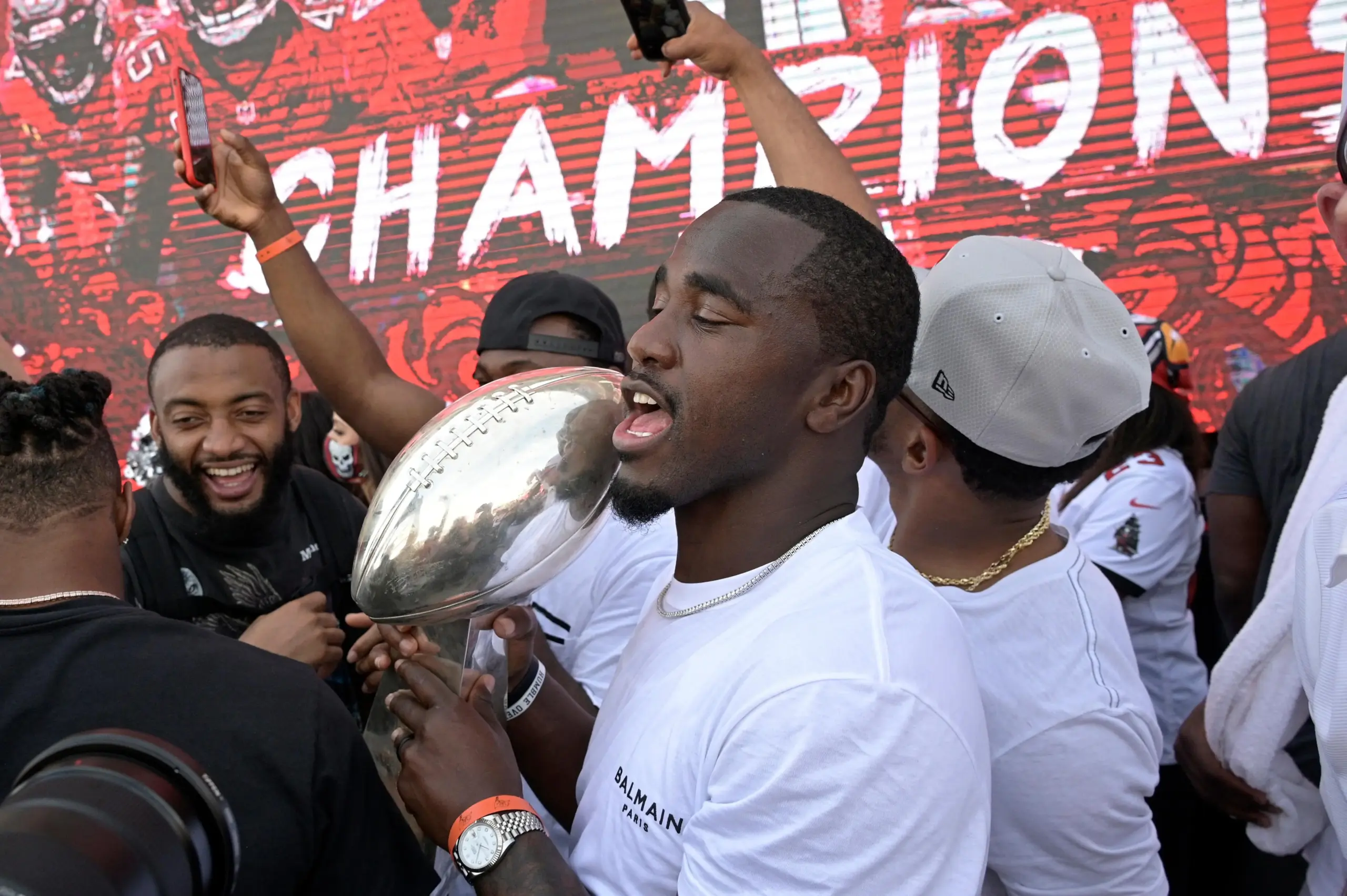
Happy anniversary, Tampa Bay!
Fifty years ago, on July 31, 1976, the bay area officially joined the ranks of major-league sports markets when the Bucs played their first preseason game against the Rams in the Los Angeles Coliseum.
Read more A new option for long-term care costs
(Yes, the exhibition schedule began at the end of July, because nothing said overkill like the NFL requiring every team to play six preseason games to prepare for a 14-game regular season.)
Now, if you’ve been around for a good portion of those 50 years you already know Tampa Bay has what might politely be described as a spotty reputation in the world of sports.
And, brothers and sisters, we earned it. We earned it hard.
There was the 0-26 start by the Bucs, and the even more stupefying 12 consecutive seasons with double-digit losses during the 1980s and ‘90s. When the Lightning joined the family in 1992, they began with a comically inept group of owners who always seemed on the verge of bankruptcy. And, finally, the Devil Rays came aboard in 1998 with an industrial park stadium that was equally ridiculed for its bizarre catwalks and oceans of empty seats.
No use denying any of it. Tampa Bay was ESPN’s favorite punchline for a generation. Maybe two.
But what about today?
Has the 21st century erased all of the nonsense from Tampa Bay’s formative years? Does Tom Brady make up for Jack Thompson? Does Junior Caminero make you forget Pat Burrell? Has Jeff Vinik obliterated the memories of the Kokusai Green days?
If not, they should. Because the truth is, Tampa Bay’s on-field success in the past 50 years is at least equal to — and in some cases surpasses — the accomplishments of other major markets.
So what if we have a few skeletons (as well as cheapskates, curmudgeons, convicts and connivers) in our closets? We also have three Stanley Cups and two Lombardi Trophies in the cupboard.
Which brings us to the point of this column:
Where does Tampa Bay rank when it comes to the ultimate prizes in sports in the last half-century?
We certainly can’t compete with, say, Los Angeles. But how do we stack up against Philadelphia? Better yet, what will history books say about Tampa Bay’s champagne showers versus other middle-tier markets such as Phoenix, Cincinnati, Kansas City and Pittsburgh?
First, a note about our methodology. And by methodology, I mean three barely legible pages on a legal pad. I used only the four major sports, and I counted only the number of titles since 1976. And since different markets have different numbers of teams, and not every franchise has been around since ’76, I counted the actual number of seasons in each market.
Read more Is it possible to benefit from hardship? Science says yes
For instance, Boston has had the NFL, NBA, NHL and MLB every year since 1976. So that’s 200 seasons. (Technically, the NBA and NHL have completed 51 turns around the calendar, but work stoppages in 1994 for baseball and 2004 for hockey wiped out two championship seasons.) Seattle, meanwhile, lost its NBA team, and its NHL franchise did not begin play until 2021-22. So our NFL expansion partner in the Pacific Northwest has 131 total seasons. Got it?
Oh, and we also had to make some geographic calls. For the purpose of this exercise, Green Bay is part of Milwaukee’s market and Brooklyn is part of New York. But Raleigh is separate from Charlotte. Orlando is separate from Tampa Bay.
Here we go:
Big markets (150 seasons or more)
In terms of sheer volume, Los Angeles (20 titles), New York (18) and Boston (17) have the most. But considering New York has multiple teams in all four sports, its percentage of championship seasons (4.9%) is not as impressive as Boston (8.5%) or L.A. (8.3%) or even San Francisco (8.0%). Chicago, Miami, Denver, Detroit, Dallas and Washington are all lumped in the 3-5% range. The Twin Cities (1.1%) and Atlanta (1.2%) are the real embarrassments, but my favorite?
Philadelphia and its rabid and arrogant fan base has five titles in 200 seasons for an unimpressive 2.5%.
New markets (less than 100 seasons)
A much bigger swing in numbers because of the smaller sample sizes. Raleigh, for instance, has only the Carolina Hurricanes, but they’ve won two Stanley Cups in 28 years, so they have a relatively high percentage of 7.1%. The real big winners are Edmonton (10.8%) and San Antonio (9.8%), who rode Wayne Gretzky and Tim Duncan to multiple titles in the NHL and NBA.
Markets such as Baltimore (three titles) and Cincinnati (two titles) do not have a lot of titles, but their numbers would look better if the countdown began in 1970 instead of ’76.
San Diego, with zero championships in 96 seasons, is the big loser.
Mid markets (100-149 seasons)
Personally, I think the most impressive city on the entire list is Pittsburgh. The Steel City has won 10 championships across three sports (NHL, NFL, MLB) for a 6.7% championship rate in a smallish, low-revenue market. And do you know who shines behind Pittsburgh? Yup, your favorite Tampa Bay teams with a 4.5% rate of championships.
With five titles between the Bucs and Lightning, the bay area has as many championships as Philadelphia. And more than Buffalo (zero titles), Phoenix (one title), Cleveland (one title), Atlanta (two titles), Seattle (three titles), Toronto (three titles) or Houston (four titles).
So, yeah, as a market we’ve had our quirks and mortifications. For a good number of years, we deserved the derision.
But based on the amount of confetti in recent years, this place has been home to more champions than a lot of other bigger, more revered sports markets.
Read more FCC chairman defends actions against ABC, says broadcasters must operate ‘in the public interest’
Happy anniversary, Tampa Bay.
You’ve earned the applause.
Total championships by market since 1976
— Los Angeles 20
— New York 18
— Boston 17
— San Francisco 12
— Chicago 12
— Pittsburgh 10
— Detroit 8
— Dallas 7
— Denver 7
— Miami 7
— St. Louis 6
— Washington, D.C. 6
— Montreal 6
— Tampa Bay 5 (tied with four others)