
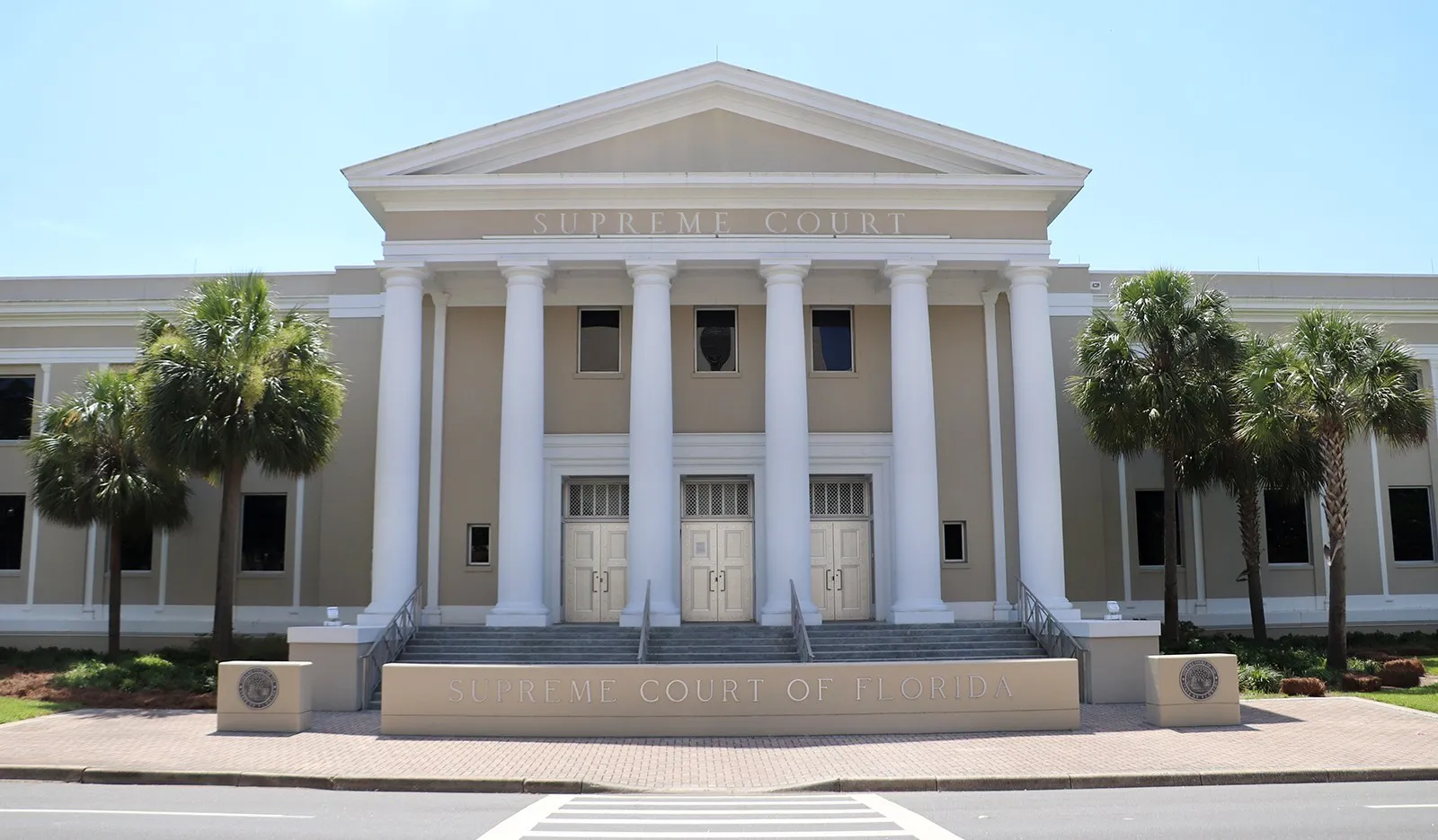
When the Florida Legislature created the Sixth District Court of Appeal in 2022, the mystery was: Why? The workloads of the existing five appellate courts didn’t justify another. The recommendation by a Supreme Court advisory committee was unpersuasive, and some members dissented.
Read more Alligator Alcatraz report raises alarms about Florida’s other immigration center
The committee speculated that it would “promote public trust and confidence” in part by attracting a diverse pool of applicants.
Skeptics suspected something more sinister: It would allow Gov. Ron DeSantis to appoint more right-wing judges to dilute the influence of the relatively liberal Second District Court of Appeal (and also sway decisions coming from Central Florida judges) or to justify another courthouse or two. Everyone knew it had nothing to do with diversity.
Four years later, the new Sixth District’s radical disregard for precedents is reason to wonder if that was the idea all along.
A renegade court
The judges of the Sixth, based in Lakeland, have formally renounced any obligation to follow the precedents of two DCAs, the Second and Fifth, from which it was carved. It has conspicuously rejected case law from the others as well.
One of its judges recently went out of his way to write a concurring opinion urging lawyers to draft their appeals in ways that would encourage his court and the Supreme Court to overturn any precedent not relying on so-called “first principles.”
“First principles” is a tenet of “textualism.” It means ignoring common sense and the modern world in order to interpret a constitution as literally as possible by what the court claims the words precisely say, rather than by what guideposts they were meant to express.
It’s the mantra of the right-wing revolution preached by the Federalist Society and practiced by DeSantis in his judicial appointments.
It’s how the U.S. Supreme Court disposes of gun safety laws nationwide and how the Florida Supreme Court overturned its own precedents on abortion rights by saying the state’s privacy amendment wasn’t meant to cover reproductive choice.
Watch the right flank
It’s essentially a pretext to erase any law or precedent that right-wing judges don’t like.
The Florida Supreme Court, six of whose seven justices are DeSantis appointees, has been doing that at almost every opportunity, not just on social issues like abortion but in civil justice and criminal law, especially the death penalty.
But its influence is limited by the Florida Constitution’s Article V, which says district courts of appeal are supposed to have the last word in most types of cases. The main exception is when two or more of them have disagreed on a point of law. Then the Supreme Court has what’s called “conflict jurisdiction.”
The Sixth District intends to create as much of that as it can. It “is not bound by the precedent of any of its sister courts, including the Second and Fifth District,” a three-judge panel ruled in one early decision in 2023.
Read more Florida city warns put those trash cans back where they belong or risk a hefty fine
In short order, three-judge panels rejected two precedents from the Fifth DCA (which surrendered Orange and Osceola counties to make up the new court). In January, the full 11-judge bench disagreed with 16 precedents of other district courts. A decision two months later clashed with 37 precedents of other DCAs. In every case, it certified the conflicts to the Supreme Court.
Ditching dozens of precedents
In the last of those cases, Ruffenach v. Deutsche Bank, Judge Joshua Mize wrote an appeal to lawyers for more precedents to attack.
As a new court with few precedents of its own, Mize explained, the Sixth “has a unique ability to correct long-existing errors in the law and return the law of our state to first principles.”
To do that, he wrote, “lawyers must preserve those issues in the trial court and present them to this court on appeal.”
DeSantis had appointed Mize to circuit court in Orlando before promoting him to the Sixth DCA. Like most of his appellate peers and DeSantis himself, he belonged to the Federalist Society.
The Ruffenach case was mainly of interest to lawyers (dealing with fees) and wasn’t noticed in the media. But the Sixth DCA’s aggressive activism could revolutionize Florida jurisprudence in a very reactionary way.
No respect for history
The Sixth DCA’s disdain for legal precedents contrasts sharply with how the new 11th U.S. Circuit Court of Appeals, covering Florida, Georgia and Alabama, behaved. In its first opinion in 1981, the judges unanimously said the decisions of the old 5th Circuit would be binding, and emphasized the importance of “stability and predictability” in the proper operation of the rule of law.
There appear to have been no Florida equivalents to that decision after the Legislature expanded the original three district courts to create the Fourth and Fifth DCAs.
We asked retired Supreme Court Justice Barbara Pariente, who served on the Fourth DCA, based in West Palm Beach, whether her colleagues there had ever adopted the precedents of the Second District from which it had been carved out.
“I don’t recall a time when they did not,” Pariente said. “Respect for precedent is one of the ways in which courts and judges conduct themselves.”
The Orlando Sentinel Editorial Board includes Executive Editor Roger Simmons, Opinion Editor Krys Fluker and Viewpoints Editor Jay Reddick. The Sun Sentinel Editorial Board consists of Executive Editor Gretchen Day-Bryant, Editorial Page Editor Steve Bousquet, Deputy Editorial Page Editor Dan Sweeney and editorial writers Pat Beall and Martin Dyckman. Send letters to [email protected].
Read more Asking Eric: I feel like my mother is just going through the motions with us