
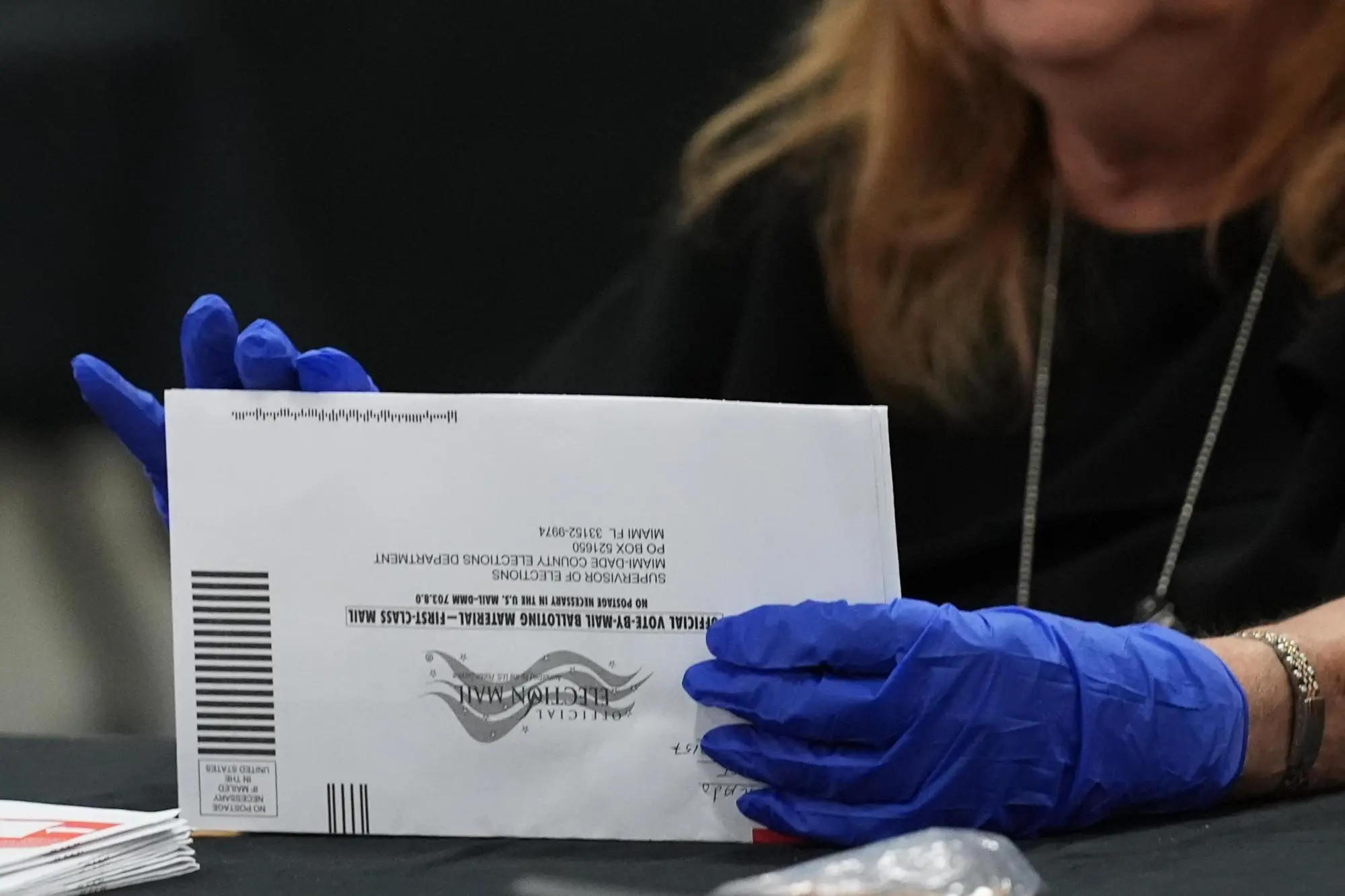
The U.S. Constitution is clear that the states — and the states alone — handle elections and the U.S. Supreme Court is wrong to even open up the possibility that President Trump’s executive order restricting mail-in ballots can go forward. The president and the U.S. Postal Service aren’t in charge of voting practices and the lower courts got that right in knocking down the Trump order. The justices of the high court should know better.
Read more Orlando’s Colombian community rallies to help following 7.4-magnitude earthquake
Trump wants the USPS to refuse to carry ballots to people that the Department of Homeland Security doesn’t have on a master list of citizens.
This, as with birthright citizenship, is another area where there is an entirely manufactured “debate” despite a long unanimity of thought rooted in the language of the Constitution. The nation’s founding document vests the handling of elections and the vetting of voters’ eligibility in the hands of the states, for myriad reasons. Congress can weigh in — and has in the past with voter-fairness laws that undid the Jim Crow laws blocking ballot access across the deep south. But the federal executive branch cannot control voter eligibility, and it’s even more far-fetched to think the U.S. Postal Service could.
Trump and his commissars will insist that this is all to safeguard the legitimacy of our elections, which even if it were true does not give him extra-constitutional powers or justify restricting access to ballots. It is, however, also not true, as has been established over and over by investigations, audits and reviews by legislators, journalists, law enforcement and other officials at every level of government. Enormous efforts to turn up evidence or instances of voter fraud and abuse over decades have produced negligible numbers.
It just isn’t happening, which prompts the obvious question of why the federal government is taking all of this heavy-handed action to tamp down on a nonexistent problem. That has an equally obvious answer: Trump wants to use the power of the federal government to subvert the midterm elections, this time before they happen as opposed to having to whip up a crowd of insurrectionists to try to subvert it afterwards, like he did after his 2020 presidential election defeat.
At least part of the court’s reasoning seems to rest on the idea that we have to wait for the administration’s illegal and undemocratic intent to manifest into illegal and undemocratic action for judges to even consider the underlying questions. This has been a feature of the court’s jurisprudence, if you can even call its shadow docket politicking that.
Read more Trump officials seek to transfer Yosemite land to private developer, report says
It will sign off on Trump power grabs or policies that are very clearly outside the scope of his authority — ranging from relatively frivolous efforts like the building of his extravagant ballroom to these dead-serious questions — and then defend itself by claiming these are merely procedural actions that haven’t ruled on the actual merits.
But the result is the same: Trump gets to do whatever he wants, and by the time the issue works its way up through the lower courts, it’s become a moot point. Whenever the Supreme Court does get around to getting a full briefing on the legality of the ballroom construction, the thing will be built; whenever they feel like the question of the legality of Trump’s attempted mail ballot restrictions (an obvious one, in our view) is ripe for consideration, the USPS could have already declined to send ballots out in states that have declined to participate in his extortion.
Then what? As powerful as the court fancies itself these days, it can’t turn back the clock. The justices know this, of course, but they want to have just enough plausible deniability about siding with Trump as an ideological project. Still, other judges could issue rulings blocking the order; let’s hope they do so quickly.
This editorial originally appeared in the New York Daily News. The Sentinel sometimes republishes editorials that reflect our overall point of view. The Orlando Sentinel Editorial Board consists of Executive Editor Roger Simmons, Opinion Editor Krys Fluker and Viewpoints Editor Jay Reddick. Contact us at [email protected].
Read more Judge sides with Stanford Daily, says Trump administration violated Constitution