
Editor’s Note: The editorial board had prepared an editorial on DNA evidence that might establish the guilt or innocence of James Duckett, a Mascotte police officer convicted in 1988 of murdering an 11-year-old girl. Just before our deadline, a new federal lawsuit alleging civil rights violations in the Duckett case was filed, so that editorial will appear online Friday and in print on Saturday.
Read more Gators humbled Arch Manning, beginning Texas’ 2025 turnaround: ‘I still have a lot to prove’
At medical schools and public-health research programs across Florida, dedicated faculty and students are in pursuit of hope. Hope for new therapies that could stop dementia from stealing memories and identities. Hope for breakthroughs in the way cancer is detected and treated. Hope for better strategies to control the spread of new infectious diseases before another global pandemic rages.
But hope has a price tag, and research costs money. Over the past few years, the Trump administration has steadily hacked away at the amount of funding flowing to biomedical research programs across the United States. And the fallout has already begun. Across the nation, our greatest competitive edge, this nation’s unmatched capacity for innovation, is in danger of being blunted. From artificial intelligence and quantum computing to biotechnology and precision medicine, the discoveries that will define the next generation of economic growth begin in our research universities and laboratories. But if those programs are never funded, those discoveries could become the pride and property of other nations — or never be discovered at all.
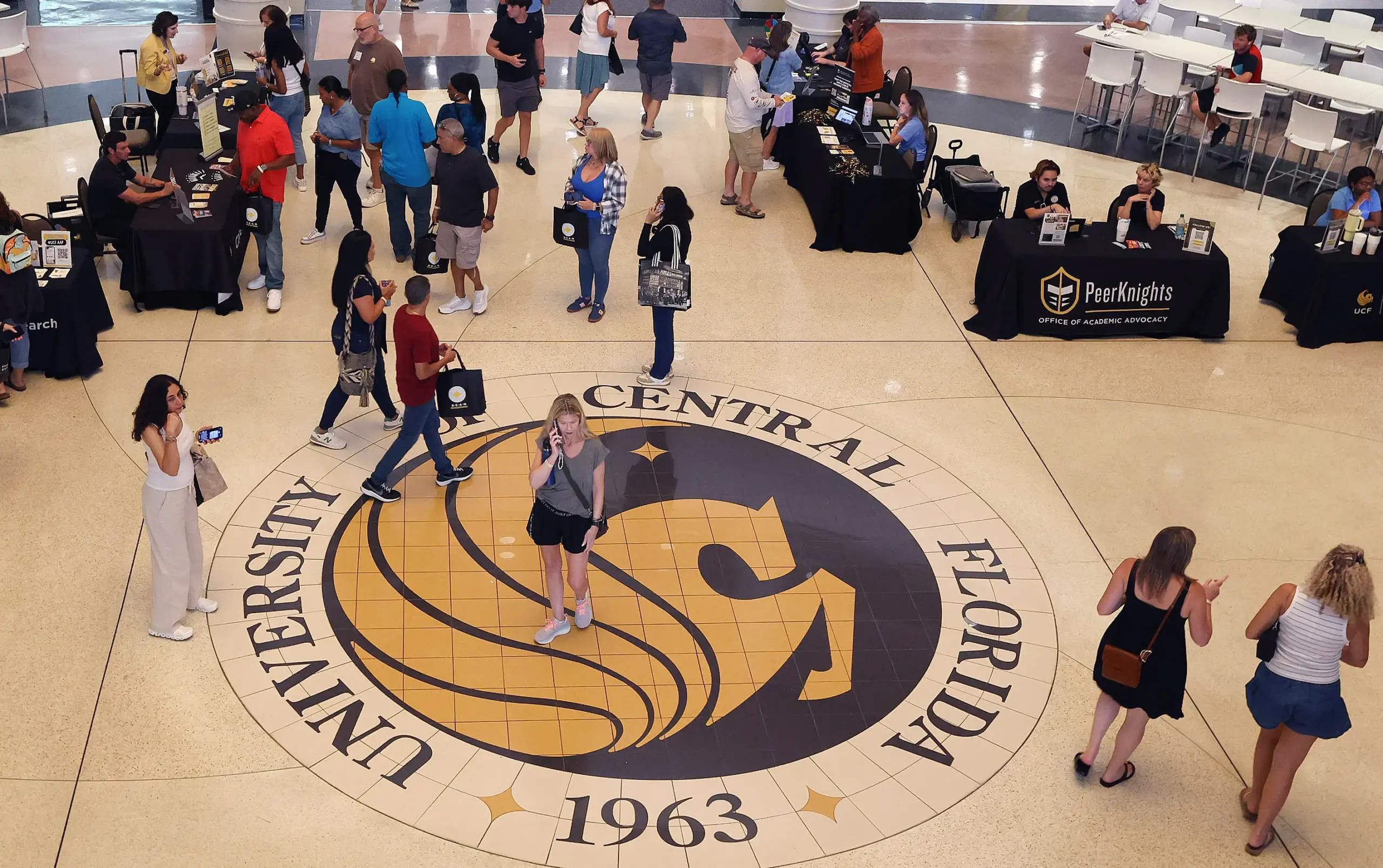
That is why Florida leaders should pay attention to the recent announcement that Johns Hopkins University’s School of Medicine has reduced its incoming Ph.D. class.. The decision was driven not by a lack of qualified students or scientific opportunity, but by a sharp decline in federal research funding. Hopkins has reported the loss of hundreds of millions of dollars in federal support, and it is far from alone. Several Florida medical schools, including campuses at the University of Central Florida, University of Florida, Florida State University and the University of Miami lost millions of dollars in research grant funding.
That will cost this nation — not just in scientific breakthroughs from current research but because our nation will have fewer skilled researchers to pursue future healthcare innovation. According to recently released data, admissions to Ph.D. programs at 55 leading research universities have declined by approximately 15%, following an 11% decline the previous academic year. Much of that contraction has coincided with reductions in federal grants through agencies such as the National Science Foundation and the National Institutes of Health, the world’s largest supporter of biomedical research.
None of this suggests that scientific research should be immune from scrutiny. At a time when the federal government faces persistent deficits, every taxpayer dollar deserves careful oversight. Research grants should be evaluated based on scientific merit, measurable public benefit and fiscal responsibility. Eliminating duplication, unnecessary bureaucracy and projects lacking meaningful value is both appropriate and necessary.
But there is an important distinction between eliminating waste and reducing investment.
Biomedical research has consistently produced some of the highest returns on public investment in American history. Federally supported research has led to breakthroughs in cancer treatment, vaccines, cardiovascular medicine, organ transplantation, neuroscience and countless other advances that have extended lives, reduced suffering and strengthened the nation’s economy. Many of today’s most successful biotechnology companies and medical innovations trace their origins to federally funded university research.
Reducing doctoral admissions may not produce immediate consequences that most Americans will notice. But scientific leadership is built over decades, not election cycles. The graduate students entering laboratories today become tomorrow’s physicians, researchers, entrepreneurs and innovators. Once that talent pipeline begins to shrink, rebuilding it becomes far more difficult and far more expensive.
Read more Letters: Threats of data centers | Stop Israel hate | What is owed our military
Next, consider this: Reduced research funding affects not only laboratories and universities but also small businesses, hospitals, startup companies and thousands of highly skilled jobs;. It determines whether the United States will remain the world’s leader in medical discovery at a time when global competitors are increasing their investments in science, technology and biotechnology.
Americans should expect their government to spend wisely. Waste should be eliminated wherever it exists. Every research dollar should be accountable to taxpayers.
But fiscal discipline and scientific leadership are not competing priorities. They are complementary ones.
The challenge before policymakers is not whether research funding should be accountable; it must be. The challenge is ensuring that, in pursuing necessary budget reforms, we preserve the investments that have made America the global leader in medicine, innovation and scientific discovery.
Future generations will judge us not simply by how much we saved, but by whether we had the foresight to continue investing in the discoveries that saved lives, strengthened our economy and secured our nation’s future.
This editorial is adapted from one that originally appeared in the Baltimore Sun. The Sentinel sometimes publishes editorials that agree with our own positions. The Orlando Sentinel Editorial Board includes Executive Editor Roger Simmons, Opinion Editor Krys Fluker and Viewpoints Editor Jay Reddick. Send letters to [email protected].
This editorial is adapted from one that originally appeared in the Baltimore Sun. The Sentinel sometimes publishes editorials that agree with our own positions. The Orlando Sentinel Editorial Board includes Executive Editor Roger Simmons, Opinion Editor Krys Fluker and Viewpoints Editor Jay Reddick. Send letters to [email protected].