
Osceola County’s rapid growth in the past decade has left one question hanging over the race for the District 4 seat on its county commission: How hard to hit the brakes on new growth?
Read more Orange County Clerk of Courts: Modernization, controversy mark Democratic primary
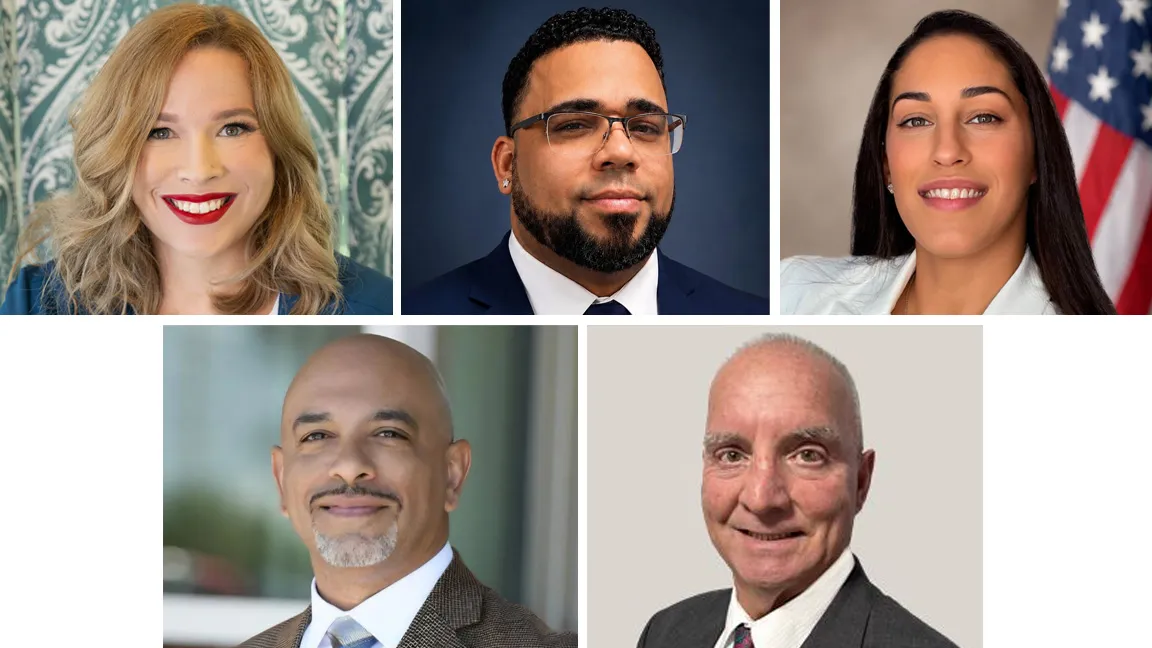
Five candidates, three Democrats and two Republicans, are running to replace Cheryl Grieb, the three-term Democrat who has held the 4 seat — covering parts of Kissimmee and St. Cloud — for nearly 12 years. The two winners in the Aug. 18 primaries will face off in the Nov. 3 general election.
In a county that has grown nearly 85% since 2010, according to census data, all five say road congestion and a lack of county infrastructure to meet the demands of rapid growth are their top issues.
Democrats
Mary Downey, 44, is the founder and CEO of Hope Partnership, a nonprofit focused on affordable housing and homelessness, and the Orlando Sentinel’s 2019 Central Floridian of the Year.
A first-time candidate, Downey said Osceola needs to get infrastructure in place, or on a firm timeline, before approving new development. The impact of rapid growth is a sequencing problem, not a reason to stop, she said.
“If we’re going to have a new development in a community, do we have the infrastructure in place to be able to support that type of development? And if we don’t, what is the timeline for that?”
The harder problem, she said, is the years-long stretch after a project is approved and before it’s built. A new interchange may be coming, but that does nothing for residents stuck in the meantime, and the county rarely plans for that gap, she said.
“What is going to be the consequences in the meantime for that community? Does it mean that their wait time at a red light used to be five minutes and now it’s 25 minutes because there’s so much traffic?” she said.
What she wants, she said, is for the county to bridge that gap with temporary fixes, like alternate routes and added places to walk, while the permanent infrastructure catches up, rather than leaving neighborhoods to absorb the strain.
She opposes the property tax amendment that will be on the November ballot, worried it would cut essential services, she said.
The ballot measure would increase homestead exemptions for non-school property taxes, likely cutting homeowners’ tax bills, but many local municipalities are worried it would sharply reduce money available for police, fire, parks, libraries, children’s programs and even Fourth of July celebrations.
Jose Gonzalez, 47, a retired police officer, opened J40 Print & Design in downtown Kissimmee in 2023, and survived when “sales fell to almost nothing,” he said.
The county wasn’t the cause, he said, but the strain taught him how permitting delays and licensing hurdles fall harder on a small shop than on a big developer, leaving him wary of blunt fixes.
A first-time candidate, he rejects a development moratorium that would stall housing but would instead make growth “pay its fair share” through impact fees, as long as an increase is legally defensible, he said.
“Existing taxpayers should not be expected to carry the entire cost of new development,” he said.
The commission has enacted temporary development moratoriums for new proposals in years past, including in 2017 and 2024, with aims to increase affordable housing.
He also wants to require developers to build the roads and intersections their projects demand. Infrastructure should be scheduled alongside development, not “years after residents have already moved into an area,” he said.
On the property tax amendment, he declined to share his views but warned lost revenue must either be replaced, covered by another source or cut from public services.
Read more Magical Dining 2026: 188 restaurants, 38 newcomers, 1 Michelin star
Rafael Lebron, 55, is director of business development at his family’s firm, Lebron Law, and is a member of the Kissimmee Board of Adjustment.
A first-time candidate, he has said he’d approach growth by restoring local concurrency — that is making sure infrastructure keeps pace with development — through an interlocal agreement with the school district and both cities.
He plans to prioritize road expansions, traffic flow improvements and public transit options, according to his website.
Lebron declined interview requests. But in a voter guide published by the News Collaborative of Central Florida, which includes the Orlando Sentinel, he said he was undecided on whether to support the property tax amendment, which he was still researching.
In his voter questionnaire, he wrote that he wants to respect perpetual deed protections — which are conditions written into a property’s deed that permanently limit how land can be used. He would also propose a charter change requiring a voter referendum before public conservation land could be repurposed.
Republicans
Nelly Hernandez, 39, is a small-business owner and co-founder of the political group Osceola Action Committee, created in 2022 to slow development along Kissimmee Park Road, a corridor with heavy traffic.
That local skirmish, she said, taught her that problems with infrastructure and roads were countywide.
“The best way to attack it is to sit in a seat and represent the voice of the community,” she said.
A first-time candidate, she wants a temporary pause, at least three years, on any new major residential projects. The county has allowed too many developments that overrun the roads that serve them, she said.
“If you don’t have the roads and infrastructure… you don’t have public safety,” she said, arguing traffic strain decreases the response time for public safety workers.
She backs the amendment to slash property taxes, arguing a projected county budget surplus means public safety would not have to be cut. If it doesn’t pass, she’ll look to lower the millage rate, she said.
Donald Shroyer, 56, served on the St. Cloud City Council from 2011 to 2018, including a year as deputy mayor.
A current middle school physical education teacher and small landscaping business owner, he favors infrastructure concurrency and phased approvals of new developments.
He would not raise impact fees to slow builders, however.
“If I raise those impact fees, the developer is not going to pay those fees,” he said.
Buyers will end up paying that, he said, as developers will just hike home prices. He would rather lower fees to bring prices down.
He thinks Osceola could ease congestion if it worked to put some schools, medical offices and county services further south, away from the crowded northern section of the county, though he didn’t specify the actions he would take to do so.
On the property tax amendment, Shroyer wrote in his voter questionnaire that he supports relief for homeowners who “continue paying the government every year, just to keep property they already purchased.”
Read more Cory Mills’ lackluster fundraising worries fellow Republicans