
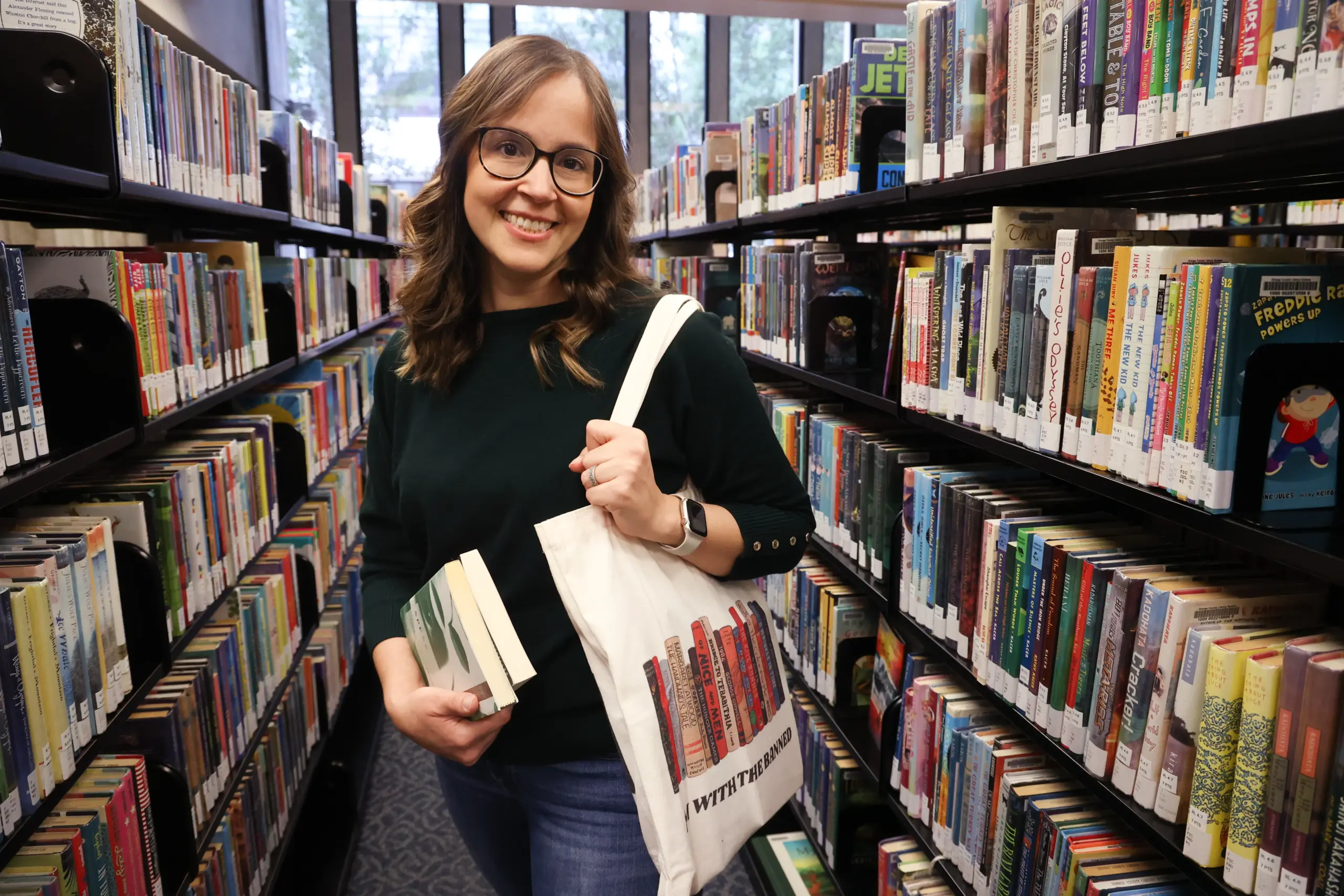
If your response to seeing Florida’s latest list of 620 instances of school library censorship is, “You can always buy the book,” I hope you understand what you’re really saying.
Read more Best Arctic Fox product at Ulta Beauty
Florida’s leaders are arguing in court that citizens do not have a First Amendment right to receive ideas free from viewpoint-based censorship in our publicly funded libraries, and that because libraries are a government benefit rather than a constitutional requirement, the government can decide what ideas are available — or whether to provide the library at all.
So when someone tells a Florida student, parent or librarian, “Just buy the book,” the answer is simple:
Publicly funded libraries exist to make knowledge accessible to everyone, not just those who can afford it. School libraries give children equal access to diverse ideas that help them grow and thrive; public libraries extend that access across the community, providing books, spaces, and resources regardless of income.
The Florida Department of Education’s annual lists never tell the whole story. Sometimes, the most revealing censorship happens after a community has already decided for itself.
Consider what happened in Orange County Public Schools (OCPS) last year. “Last Night at the Telegraph Club” by Malinda Lo and “Homegoing” by Yaa Gyasi went through the district’s reconsideration process. Committees that included parents of impacted students voted to retain them in high schools, and the school board upheld the decision for Last Night at the Telegraph Club upon appeal.
Then, at its June 4, 2025 meeting, the Florida State Board of Education condemned 55 titles as “pornographic.” OCPS subsequently removed 13 books from its collection, including six the district had previously reviewed and retained. Among them were “Last Night at the Telegraph Club” and “Homegoing.”
The message was unmistakable: A local community could follow its process, parents could participate in a public review, an elected board could uphold the committee’s decision and the state could still override that judgment.
Two months later, a federal judge made the point even more starkly. In an August 2025 ruling, Judge Mendoza identified both books among 23 titles whose removal was unconstitutional, finding that the books were not obscene, yet both remain unavailable in OCPS.
That is why counting formal objections alone is so misleading. The real danger is not that someone will challenge a book. It is that communities can do exactly what these policies supposedly ask of them, only to find that the state has reserved the power to decide.
Read more Best Arctic Fox product at Ulta Beauty
Florida has spent years framing these policies as protecting parents’ rights. But parents cannot exercise those rights when an appointed board hundreds of miles away decides what ideas their children can encounter. And telling families to simply buy the books themselves only compounds the problem.
Most public school children do not have parents who can, or will, buy a book the moment they discover it, before their attention shifts to something less fruitful but more accessible.
That is precisely why publicly funded libraries matter. Communities are best served when citizens, leaders, and librarians work together in each reader’s best interest.
And with Amendment 3 on the ballot, Floridians should pay attention to the larger political question: What happens when we decide publicly funded institutions are only valuable when we personally use them?
It is easy to say, “I can buy the book.”
It is harder to ask what happens to the child and family who cannot.
It is easy to say, “My family doesn’t need the library.”
It is harder to recognize that public institutions exist precisely because we are a community, not a collection of individual bank accounts.
The question before Florida isn’t just whether a particular book belongs on a particular shelf. It is whether we still believe that access to knowledge is a public good and worth preserving even when we are not the ones using it.
Because once we accept the idea that anyone who wants a book should simply buy it themselves, the next logical question is: If you can buy the book, why should taxpayers pay for the library?
That is where this argument ultimately leads, and Floridians should be very careful about following it there.
Stephana Ferrell is director of research and insight with the nonprofit Florida Freedom to Read Project. She was a Central Floridian of the Year finalist in 2024 for her work opposing book bans in Florida Public Schools.
Read more Best 4k Tv Under $500