
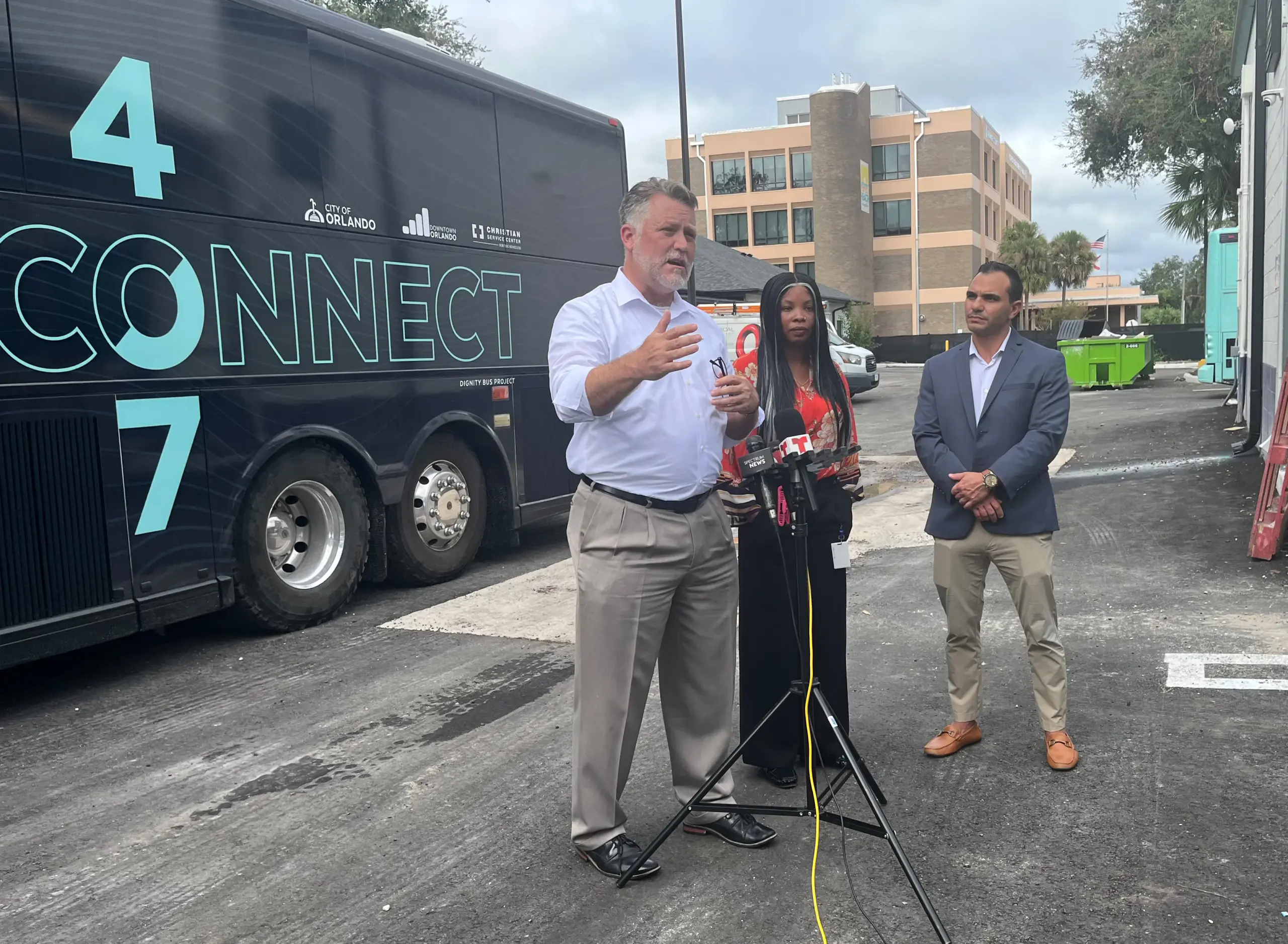
In the year since the City of Orlando turned two passenger buses into mobile bunkhouses for the homeless, 260 people have spent at least a night and more than 160 have found housing, officials said Thursday.
Read more More Americans lose SNAP as Congress weighs food stamps’ future
Launched in partnership with the Christian Services Center, the 407 Connect program’s goal was to help 407 people find homes over a three-year period.
Since August 2025, the buses have helped 169 people find housing, putting the program on track to surpass its goal.
“We’re able to get people stabilized very quickly just by getting them a couple of consecutive good nights’ sleep,” said Eric Gray, executive director of the Christian Services Center. “And that seems to be the difference.”
In each bus, the seats were ripped out and replaced with two rows of bunk beds that sleep up to 42 people a night. They have privacy curtains, electric outlets and phone chargers. A security guard sits in the driver’s seat, and there are restrooms and places for occupants to store their bags.
The program cost the city $3 million. Two thirds of that money goes to operating and staffing the buses. The rest pays for down payments on apartments, rental assistance and other costs associated with getting people into housing.
People who stay on the buses will often have some income, either from disability benefits or a low-wage job, Gray said. But they don’t have money saved for a security deposit and first month’s rent on an apartment.
“That’s the barrier that we help them overcome,” he said.
The buses do not drive around the city looking for people to pick up. Rather, outreach workers go out into the community and invite homeless people to spend the night on a bus, parked at the center, located near downtown Orlando.
They target those they think, that with help, can get off the streets.
“It’s individuals where we can identify a clear path, or somewhat of a general approach or plan, to get to self-sufficiency and being housed,” said David Barilla, executive director of Orlando’s downtown development board.”
In the morning, they are invited into the services center to work with a case manager, get a hot meal, a shower and other services. The buses spend the day at an offsite location and return in the evenings.
Read more Diverting ‘Footloose’ gets the Garden Theatre dancing again | Review
But when the program launched, the center did drive a bus around during the day so that homeless people could get a peek inside. That’s because initially the biggest challenge was convincing people to get on the bus.
“Just physically getting them to take the first steps onto the bus to see how nice it is, and how safe it is and all of that made a big difference,” Gray said.
Once word got out, they had no problem filling the buses up with occupants.
Those who sleep on the bus can do so as long as it takes for them to find permanent housing. The average stay is about 30 days, but some people have stayed just a couple of days and others months.
Men, women and children are allowed on the bus. If someone brings a dog, there are kennels inside the Christian Services Center where they can spend the night.
The biggest surprise for Gray was the number of people, and sometimes couples, 75 and older who came to stay on the buses. It is more challenging to find older people housing, he said, because they often have health issues preventing them from living independently.
The program is partnering with assisted living facilities to try and help those people find a place to stay.
Central Florida is short about 750 shelter beds for a homeless population that is about 2,000 people strong. Orange County and Orlando officials have had difficulty bringing new shelter beds to the area. Each time they zeroed in on a possible location for a new shelter, they’ve been met with strong opposition from residents worried that a shelter would bring crime to their neighborhoods.
The mobile shelter concept was an attempt to bring new shelter beds to the area without sparking opposition from residents. The program offers a small but meaningful boost to the insufficient number of shelter beds.
“Every person who moves into housing represents a significant step forward,” Gray said. “Not just for that individual, but for our entire community.”
Read more California Supreme Court rules against Riverside County Sheriff Chad Bianco in ballot seizure fight