
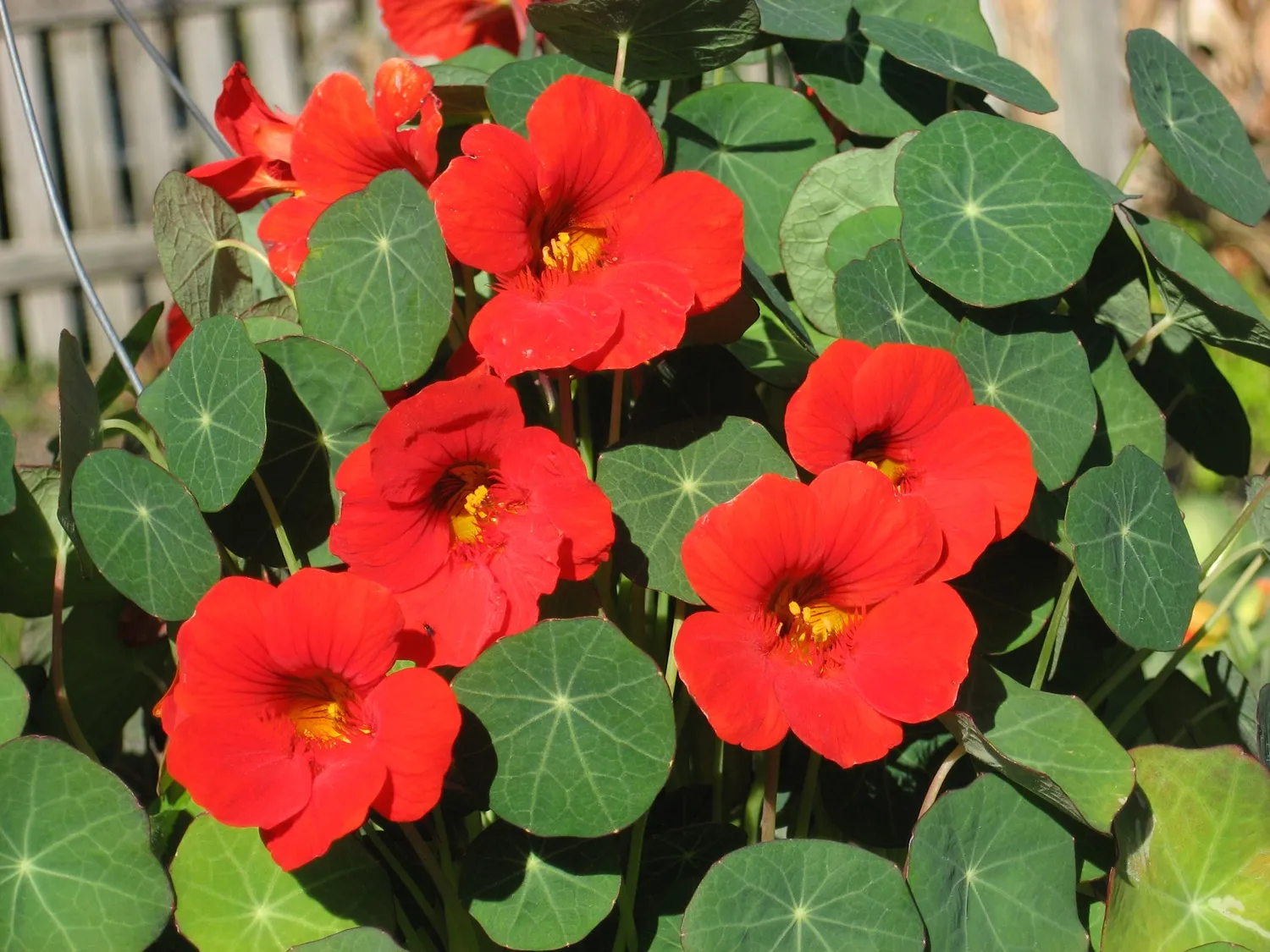
Q: We would like to grow nasturtiums this fall. Do you plant them in containers or in the ground?
Read more In Orlando, Garth Brooks and friends have a super singalong | Review
A: Start nasturtiums the way that’s most convenient for you. Seeds can be sown directly into the ground and often restart from fallen seeds of previous plantings. The most-sure way to start seeds is in containers. Plant two or three seeds in small pots to have transplants ready in about four to six weeks. These plants can be removed as intact root balls and set in the ground or larger containers, such as hanging baskets. Nasturtiums grow well from early fall until late spring. Flowers can be enjoyed for their color and plant portions used in culinary dishes.
Q: We had an oak tree removed. Is it OK to use the ground up oak stump for mulch?
A: Use the chunky chips to form walkways and in compost piles. A light layer might also be used under shrubs. As the chips decompose, organisms bind up nutrients to break down the tree portions. When composted these nutrients are gradually released for plant growth. Where fresh oak chips are used near other trees and shrubs, fertilizer may be needed to prevent nutrient deficiencies among growing plants.
Plant Doctor: Free and easy way to turn cuttings from your plumeria into new plants
Q: It is about time to fertilize our lawn. Is one fertilizer better than another? What do you use?
A: Being a smart shopper I use what’s on sale — but I am selective. Look for a quality fertilizer labeled for lawns that have zero or a low phosphorus level. Normally the nitrogen, the first number in the analysis, is high and the last number in the analysis, for potassium, is equal or a bit lower. Also, select a product with 50% or more slow-release properties. Lawn fertilizers are well regulated in Florida, so it shouldn’t be hard to find a good product for your lawn.
Q: Our hibiscus plants have aphids in the tips of the shoots. How do we control them without affecting the bees?
A: Curling leaves and stunted shoots are often signs aphids are sucking juices from hibiscus leaves and stems. One natural way to dislodge these pests is with a strong stream of water sprayed onto the pests feeding among the hibiscus shoots. The control can be temporary, so a follow-up treatment may be needed. Insecticidal soaps can also give good aphid control. These act as contact insecticides and only affect the insects treated. They can be directed on the aphids following label instructions so as not to affect other beneficial insects such as bees. Where needed they can also be washed off plants once aphids are under control
Plant Doctor: Area yards, beds brimming with brilliant blooms of beloved bromeliad
Read more Letters: Jolly should debate | Protect immigrants’ dignity | GOP critics too late
Q: I would like to have my holiday cactus in bloom for Christmas. When should it be covered at night to promote blooming?
A: Keep the plant in the dark at night starting mid-October. When a holiday cactus is growing in a room where lights might be turned on at night, or light could be received from an outdoor source, it’s best to place a box or similar covering over it at sunset. Remove the covering at sunrise the next day. Continue covering the plant until buds form and begin to open. Also, keep watering only when the surface soil is dry to the touch and withhold feedings until after the new year.
Q: Over the years I’ve used weed-and-feed lawn products but still have lots of weeds. One is called woods grass. How do I have a healthy St. Augustine lawn?
A: It’s a bit ironic, but once you start using a herbicide, you begin cultivating weeds. Some weeds escape control of the herbicides and these unwanted growths begin to flourish. Switching herbicides sometimes helps, but make sure the product selected is formulated for your lawn type and follow label instructions. Perhaps a better suggestion is to have your problem weeds identified and then matched with the herbicide for your lawn type to obtain control. You may need a different herbicide for broadleaf, grassy and sedge-type weeds. Occasionally weeds have to be dug out or spot killed, as there may not be a selective herbicide for control. Most likely your woods grass is what’s also called basket grass. You might look for an image online to see if this is what’s growing in your lawn. Some find a home remedy of a very light dusting of baking soda as a good control with minimal damage to the desired grass. You might experiment in a small area to see if this works for you.
Q: Our holly fern planting is decades old and always thrived under our pool screen and tree shade. But it now seems to have gotten burned. I’m puzzled, any ideas?
A: Look very closely, maybe with the aid of a hand lens, to spot thrips feeding on the foliage. Their rasping, sucking feeding habits produce the burnt foliage appearance. You might apply one of the natural insect controls of insecticidal soap, neem oil or spinosad to eliminate them. Of the products suggested, a spinosad-containing product, often found in natural insecticides at independent garden centers, may be most effective. Follow label instructions for the product selected and make repeat applications as needed.
Q: We let our poinsettias become lanky over the summer. Is it too late to give them a light trimming?
A: Regretfully you missed the last pruning time by about a month if you want a colorful display for Christmas. You can still trim the plants now, but the new shoots are unlikely to mature the growth and begin the flowering process until later than normal. Trimming now would produce plants that develop colorful bracts — but most likely into the new year.
Tom MacCubbin is an urban horticulturist emeritus with the University of Florida Cooperative Extension Service. Write him: Orlando Sentinel, P.O. Box 2833, Orlando, FL. 32802. Email: [email protected]
Read more Editorial: Trump’s news outlet ban was a flagrant offense to the First Amendment