
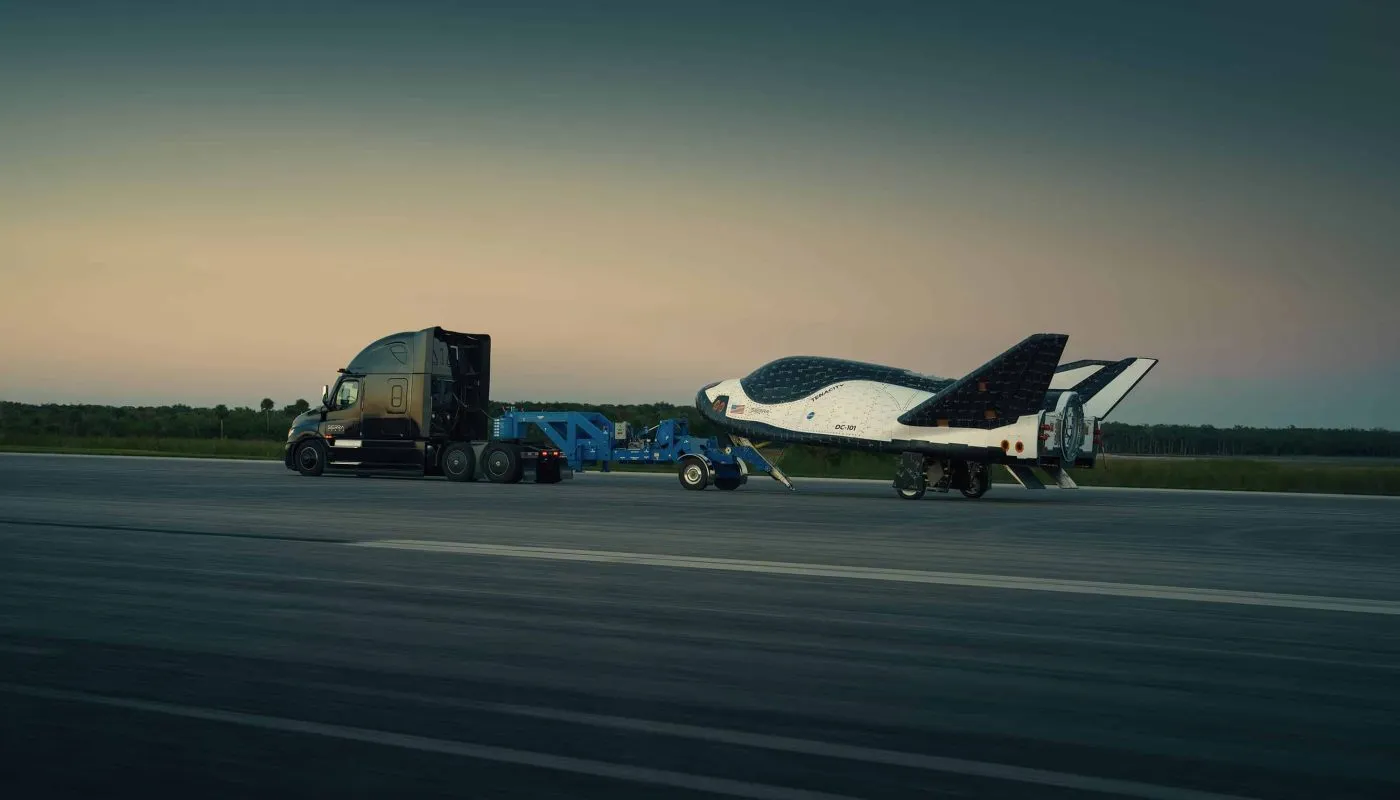
Sierra Space’s Dream Chaser, the spacecraft that looks like a miniature space shuttle, doesn’t have a target launch date yet but it does have “undisclosed national security and commercial customers,” according to a company press release.
Read more Dates for Immerse, ZoraFest, Highland Games, UCF Celebrates the Arts and more
“As the space domain has become increasingly contested, Dream Chaser has evolved into exactly what America needs, a strategic national capability built on commercial innovation and investment,” said company CEO Dan Jablonsky in a press release. “We’re establishing a new operational model in which the same platform serves national security, civil and commercial customers on a single mission.”
Just when that mission will fly, though, has not been announced.
“Sierra Space is finalizing the manifest with defense, civil, and commercial payloads, offering customers the opportunity to demonstrate capabilities on a platform that will set the standard for the next era of orbital operations,” the release stated.
The Sentinel reached out to the company asking if a target launch date has been determined.
The inaugural launch will feature its first Dream Chaser vehicle named Tenacity, but its path to launch has faced technical hurdles. It’s designed to lift off atop United Launch Alliance Vulcan rockets from Cape Canaveral Space Force Station’s Space Launch Complex 41, and had been originally targeting liftoff more than two years ago.
But delays in Tenacity’s testing forced ULA to move on to other missions as it tried to get Vulcan up and running. That ride to space is still working through issues and Sierra Space has to compete for space on ULA’s launch manifest among a backlog of more than 70 missions including more than two dozen for national security.
Vulcan has not launched since February, and that was only its fourth flight ever. ULA has been working to solve a problem with its solid rocket boosters supplied by Northrop Grumman that suffered burn-throughs on their nozzles on both Vulcan’s second and most recent flights.
Then Blue Origin’s launch pad explosion in May was blamed on a valve on BE-4 engines, which are also the engines used on Vulcan’s first stage. So Blue Origin has had to make fixes to ULA’s supply of those engines.
ULA is still aiming to get Vulcan back to flight before the end of the year.
I’s unclear, though, if Tenacity is ready for when its ride to space does become available.
It spent two years at KSC, only finishing its acoustic testing last April before heading off to Colorado for what the company called “final modifications and mission-specific upgrades.”
Read more Cruise lines roll out Labor Day sales up to 60% off
“We spent years solving the hardest engineering challenges: deployable wings so we could maximize our payload capacity in a standard rocket fairing, hypersonic flight control providing unparalleled maneuverability and mission flexibility, autonomous reentry, and less than 1.5g runway landing,” said Dan Polis, senior vice president of engineering and Dream Chaser. “The result is a multi-use space transportation system with operational capabilities no other vehicle offers.”
The spacecraft was originally awarded a NASA commercial resupply contract back in 2016 that would make it the third company to fly regular cargo missions to the International Space Station alongside SpaceX’s Dragon and Northrop Grumman’s Cygnus spacecrafts.
Unlike SpaceX, which has Dragon landings in the water, and Cygnus, which burns up in Earth’s atmosphere after the station is done with it, Dream Chaser is designed to land back on Earth in the same way the space shuttle orbiters did.
But NASA last year announced it had adjusted that contract so Dream Chaser’s first mission won’t rendezvous with the space station, but instead be a free flyer. And NASA plans to only provide minimal support to the remainder of Dream Chaser’s development and first flight. NASA can still order Dream Chaser resupply flights if the first test flight is successful.
The uncrewed, 30-foot-long spacecraft is about one quarter the size of the space shuttle with the capacity to deliver up to 12,125 pounds of supplies and ability to remain attached to the ISS and become an extension of the workable space.
Its first missions originally planned for KSC landings at the former space shuttle landing facility. The company had a truck haul it across that runway at 70 mph last November to test out its landing capability. Plans, though, have since shifted to target initial landings at Vandenberg Space Force Base in California.
The spacecraft has been in the works for more than 16 years.
Sierra Space had initially tried to win a contract for a human-rated version of Dream Chaser, but NASA opted to give those commercial contracts to SpaceX for Crew Dragon and Boeing for its Starliner.
The company still aims to develop a human-rated version of the vehicle that could be used to fly to any of the commercial space stations in development that look to replace the International Space Station once it’s decommissioned.
Read more Miss Manners: I have a brain disorder, and sudoku is not going to fix it