
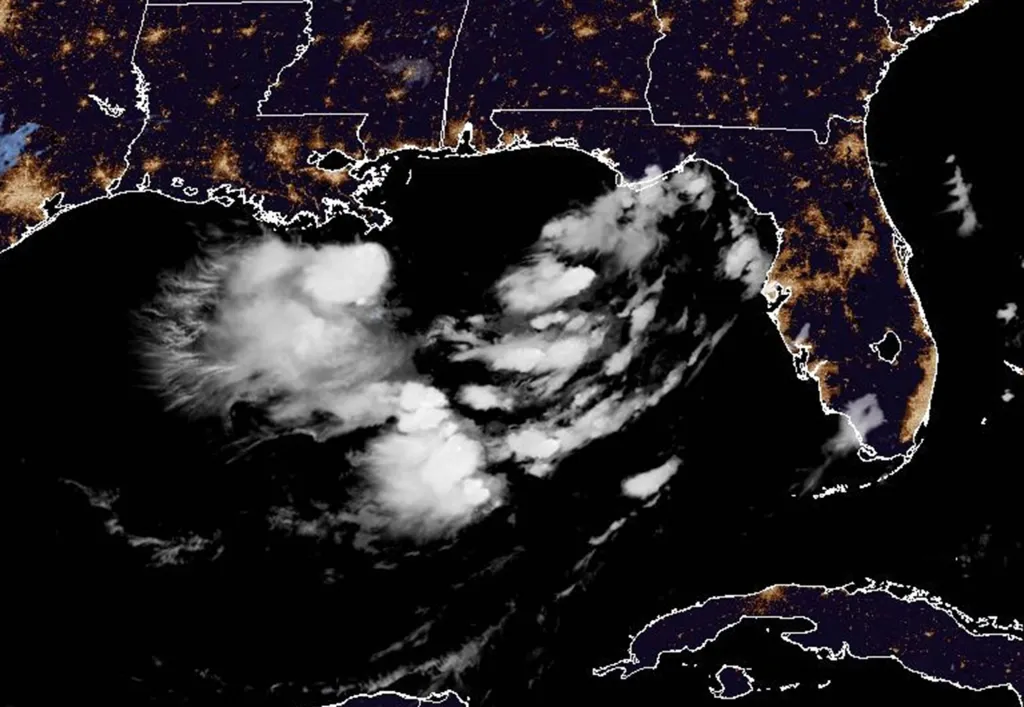
A tropical depression in the Gulf is forecast to grow into Tropical Storm Bertha on Monday as it slowly moves toward the coast and could threaten the Florida Panhandle, according to the National Hurricane Center.
Read more Low-income apartments in Orange County bring relief to struggling renters
As of the NHC’s 5 a.m. advisory, the center of Tropical Depression Two was located about 120 miles south of Panama City and 220 miles southeast of Mobile, Alabama moving northwest at 3 mph with maximum sustained winds of 35 mph.
A tropical storm watch has been issued from the Ochlockonee River in Florida to the Alabama-Mississippi border.
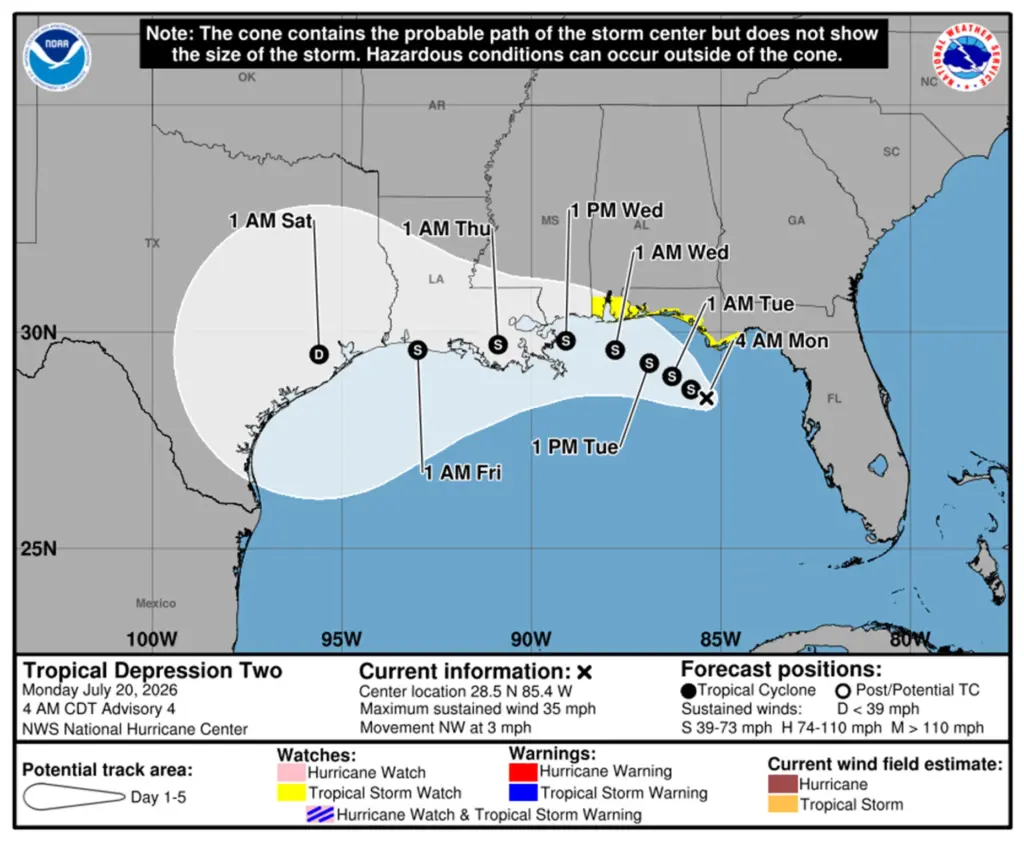
“A slow northwestward motion is expected during the next day or so, followed by a turn toward the west-northwest or
west,” forecasters said. “On the forecast track, the depression will move near or along the northern Gulf coast during the next several days.”
The system is expected to gradually strengthen Monday and became the season’s second named storm — Tropical Storm Bertha.
Tropical-storm conditions are possible within the watch area by late Monday into Tuesday morning and a storm surge of 1-3 feet could hit the Florida coast from Indian Pass to Chassahowitzka, the entire Alabama coast and Mobile Bay.
In addition, rainfall of 2-4 inches through Thursday, with some areas seeing up to 6 inches, is forecast along the eastern and central Gulf Coast from western Florida to the middle Texas coast, with a threat of flash flooding.
Swells along the coast could cause life-threatening surf and rip current conditions.
Read more Copay assistance is meant to defray patient drug costs. Some insurers keep it instead
The forecast intensity has been dialed back since Sunday’s forecast, with the NWS now projecting it to strengthen to 50 mph sustained winds by Tuesday night or early Wednesday.
“The depression’s broad structure and mid-level dry air are keeping the convection limited. Thus, its intensification continues to be gradual,” forecasters said. “After 36 hours, northeasterly shear is expected to increase markedly, and the guidance is coming into better agreement that this should halt additional intensification after that time.”
4am CDT Monday July 20th Key Messages for Tropical Depression Two (#TD2).
The latest advisory is out at https://t.co/ibBuChY9Xn. pic.twitter.com/HPxhQR1jxs
— National Hurricane Center (@NHC_Atlantic) July 20, 2026
The 2026 hurricane season so far has had just one named system, the short-lived Tropical Storm Arthur that developed in the Gulf and brought floods to Texas and Louisiana in June.
Bertha is the next name on the hurricane season list followed by Cristobal.
The season officially began June 1 and runs through Nov. 30. The height of hurricane season runs from mid-August into October.
The National Oceanic and Atmospheric Administration expects this season to be below normal with the official forecast released in late May calling for 8-14 named storms, of which 3-6 would become hurricanes. Of those, 1-3 would become major hurricanes reaching Category 3 status or above.
An average season has 14 named storms, seven hurricanes and three major hurricanes.
Read more Talent rules, but ‘Diana’ misses the mark — royally | Review