
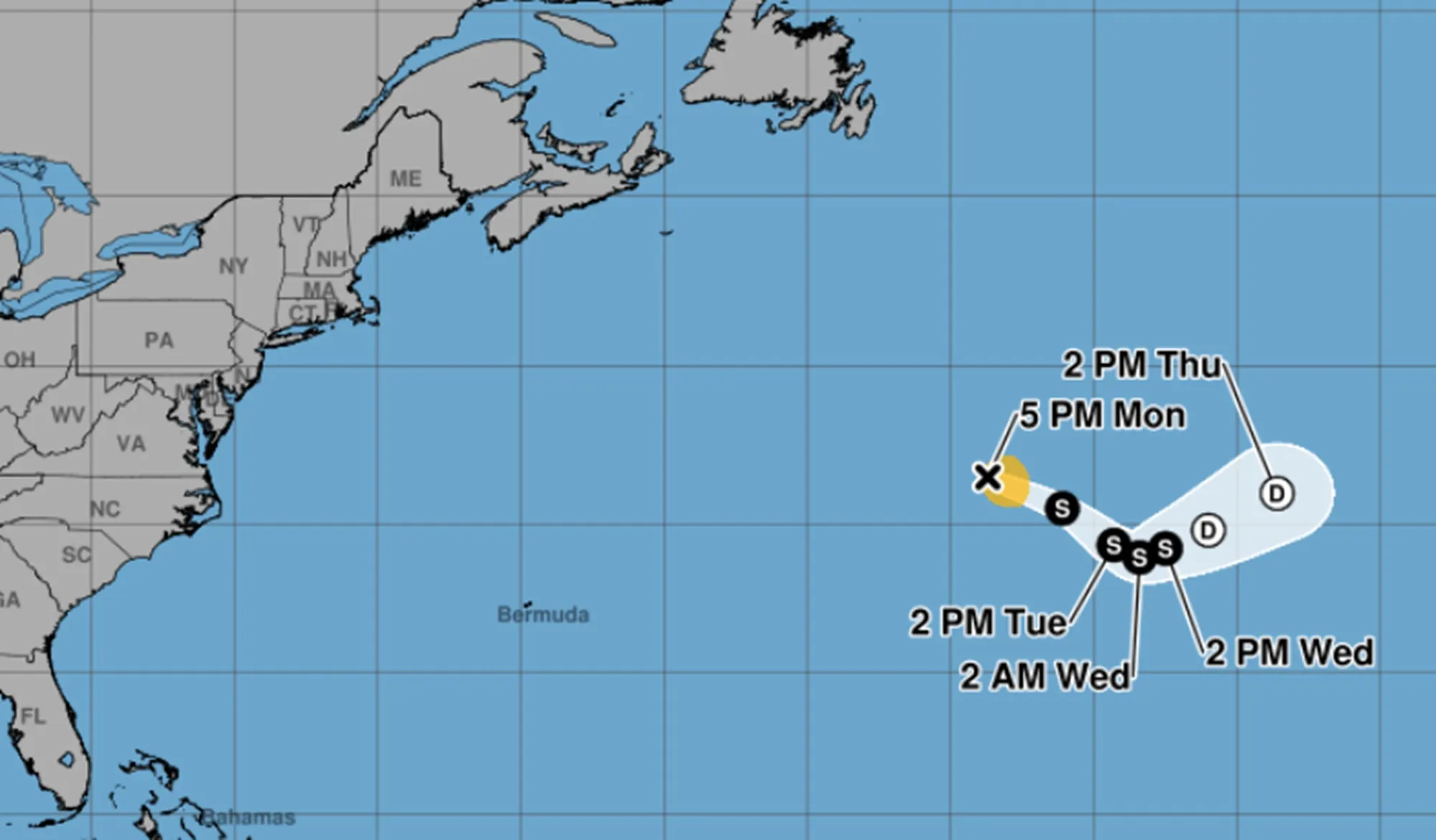
Tropical Storm Hanna on Monday became the eighth tropical storm of the Atlantic hurricane season but is no threat to land, according to the National Hurricane Center.
Read more Uthmeier wants OpenAI to halt development of its products until they are safe for general public
As of the NHC’s 5 p.m. advisory, the center of Hanna was located in the central subtropical Atlantic about 960 miles east-northeast of Bermuda moving east-southeast at 17 mph with maximum sustained winds of 45 mph.
“A general east-southeast motion is forecast over the next day or two followed by a turn to the east-northeast,” forecasters said. “Only slight intensification is forecast in the short term and Hanna is likely to become a post-tropical cyclone by the latter part of this week.”
Tropical-storm-force winds extend out up to 90 miles from its center.
The NHC also continued to track Tropical Depression Fay, which was also no threat to land in the central Atlantic.
As of 5 p.m., the center of Fay was located about 1,325 miles west-southwest of the Azores moving southwest at 9 mph with maximum sustained winds of 35 mph.
“A southwest to west-southwest motion, along with an increase in forward speed, is expected over the next couple of days,” forecasters said. “Little change in strength is forecast during the next day or so, and Fay is forecast to become a post-tropical cyclone in 36 hours..
Read more NASA reinvests, taps commander for Boeing Starliner’s return to crewed flight
In addition to Hanna, the hurricane season so far has seen the formation of tropical storms Arthur, Bertha, Cristobal, Dolly, Edouard, Fay and Gonzalo. None of them has developed into a hurricane, though.
Hurricane season began June 1 and runs through Nov. 30, but the height of hurricane season runs from mid-August through mid-October.
The National Oceanic and Atmospheric Administration last month updated its seasonal forecast and now expects between seven and 13 named storms this year. Of those, two to six would become hurricanes. It also predicted that there might not be any major hurricanes this year, or at most two.
Already, 2026 was forecast to have lower-than-average storm generation, and that has been reduced even further with the latest forecasts from the NOAA and other weather groups.
An average year would see 14 named storms and seven hurricanes, with three of those growing to Category 3 strength or higher.
Read more Jolly slams ‘corrupt homeowners insurance system’ after news organizations’ report