
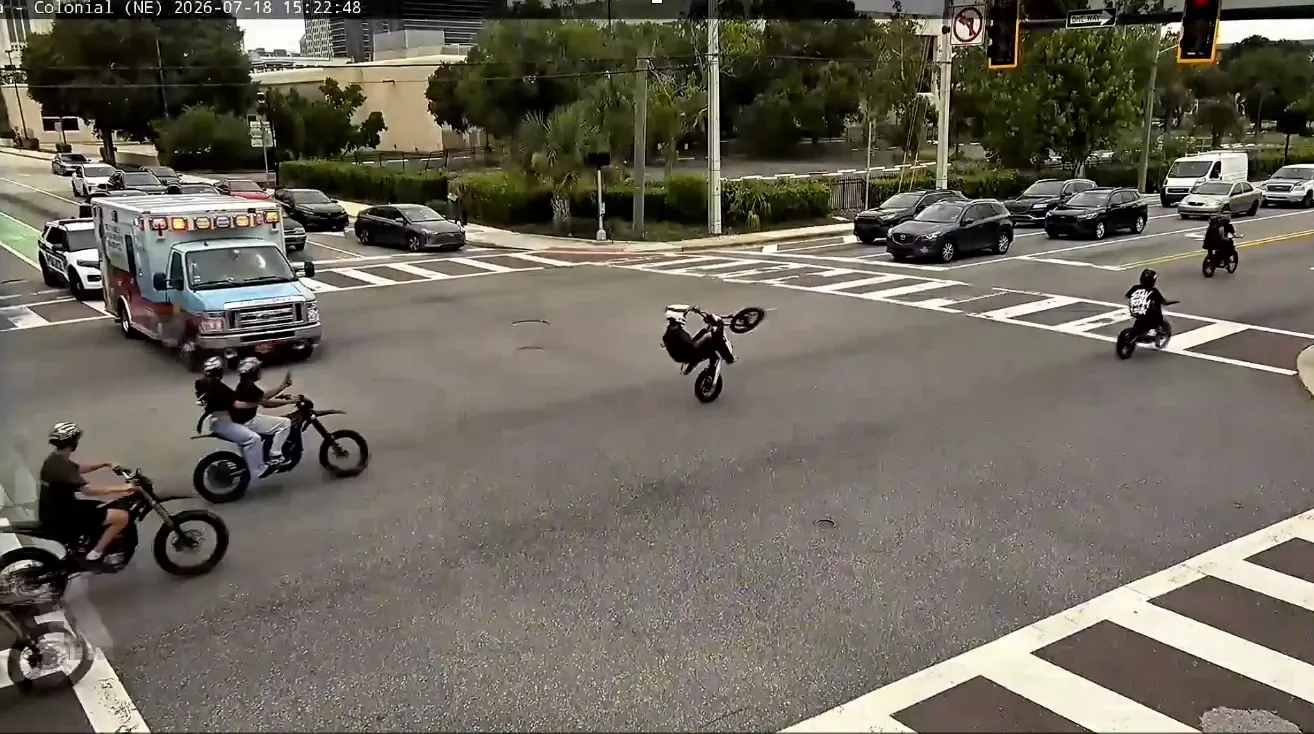
Winter Park officials have taken the first step toward joining other area governments in regulating use of the popular e-bikes and e-scooters.
Read more ‘Failing catastrophically’: Florida grand jury blasts DCF for deaths of kids, elderly
Commissioners on Wednesday unanimously approved amendments to city codes that included updating definitions, violations and penalties for e-bikes, e-scooters and other electric micromobility devices. A second vote is required before it takes effect, and that could come as soon as their Sept. 23 meeting.
Commissioner Craig Russell, a longtime teacher and athletic coach at Winter Park High School, has spearheaded the effort.
“It’s a very, very collaborative thing. It’s not my ordinance. I appreciate it because I think it’s real meaningful,” Russell said during the Aug. 13 workshop in which details of the ordinance were hashed out.
When asked Friday about the need for such an ordinance, City Manager Randy Knight said in an emailed statement that it helps stress the importance of safe and responsible operation of the various modes of transportation — including micromobility devices.
“With the rise in popularity of e-bikes and e-scooters, it was important to maintain the safety of our community, especially in areas of the city that have high pedestrian and vehicular movements,” Knight said.
A schedule of city fees effective Oct. 1 would set the civil penalty for the first violation at $25, and $45 for successive ones, but Commissioner Elizabeth Ingram said she thought they were too low.
Her motion to increase them to $35 for a first violation and $75 for later ones passed unanimously. An individual can avoid the fine entirely for the first violation by successfully completing an approved safety course.
E-bikes and e-scooters have surged in popularity in recent years, with more than 1 million sold annually, according to the Department of Energy. But nationwide, riders accounted for 59,200 emergency room visits in 2024. In Orange County last year, more than half of emergency room visits linked to the vehicles were among people 19 years or younger.
The ordinance clarifies the distinction between e-bikes and electric motorcycles — the latter prohibited by state law from operation on bicycle paths and sidewalks — but would ban them from any shared-use path or multi-use trail in the city.
Florida law classifies any two- or three-wheeled motorized vehicle lacking functional, human-operable pedals or able to exceed legal speed limits for e-bikes as a motor vehicle or motorcycle, not an e-bike.
Read more Rep. Lauren Boebert’s son sentenced to 20 days jail for violating probation
The ordinance would also revise the definition of electric bicycles to conform with Florida statutes, which specify them as having seats for riders, motors under 750 watts and capable of speeds up to 28 mph. It defines a micromobility device as any motorized transportation device designed for an individual capable of no more than 28 mph.
In addition, the ordinance would ban entirely the operation of any micromobility device on sidewalks in the Hannibal Square Neighborhood Commercial District in the west-central portion of the city, the Orange Avenue District in the southwestern portion and the Central Business District downtown.
Bicycles, e-bikes and e-scooters are already banned there, so this would extend the ban to such devices as electric skateboards and hoverboards.
Official bike paths may be used in lieu of city streets where available, so long as their use will not endanger pedestrians.
Medical mobility aids like wheelchairs are explicitly exempted, with regulations linked to the device rather than the individual. Rental of micromobility devices within city limits remains prohibited.
Individuals under 16 years of age may operate an e-bike, motorized scooter or other micromobility device on any bicycle lane, bicycle path, right-of-way, road, sidewalk or multi-use trail without completing a city-approved rider safety course first.
It would be illegal to park, abandon or leave any bicycle, e-bike, micromobility device, motorized scooter or electric motorcycle on any street, right-of-way or sidewalk in a way that it obstructs traffic, parking spaces, or building or driveway access. They also cannot be used “in a careless manner.”
Impoundment of vehicles is authorized for repeat violations. In the case of electric motorcycles, a first offense will result in impoundment due to immediate safety concerns.
Winter Park would join other local jurisdictions, including Orange County Public Schools and Winter Garden, in passing regulations. Orange County and Orlando commissioners are also considering doing so.
But local governments can’t impose criminal penalties for violating micromobility ordinances, nor can they treat them in law the same as motor vehicles.
Read more Plant Doctor: Area yards, beds brimming with brilliant blooms of beloved bromeliad