
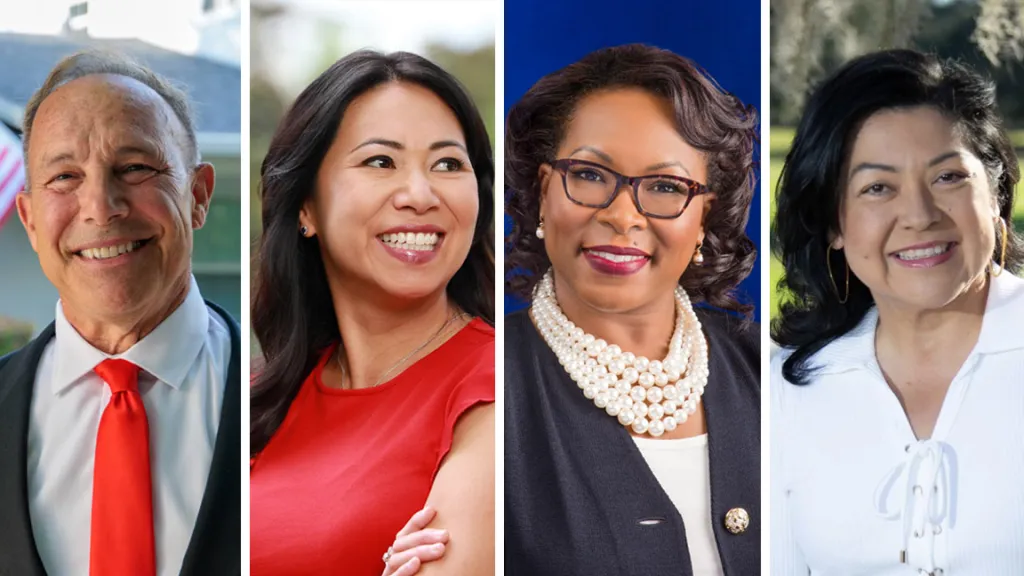
Readers of this column and the Orlando Sentinel submitted more than 100 questions for the candidates for Orange County mayor.
Read more Maxwell: How do they differ? Orange County mayoral candidates on the issues
I whittled them down to 16 questions about everything from transportation and the environment to homelessness and the convention center. All four candidates were good enough to provide answers to every single one.
I summarized many of the responses from Chris Messina, Tiffany Moore Russell, Stephanie Murphy and Mayra Uribe in a column that highlighted some of the differences and distinctions. But I also wanted to share their complete, unedited responses in their entirety. So here they are:
QUESTION 1: Why are you running?
Chris Messina: I ran (& was the runner-up with nearly 40,000 votes) for Orange County Mayor in 2022 because of concern about government overreach and excessive taxation. Now in 2026, I’m also deeply concerned that many of our citizens are struggling, financially and otherwise, in a region that’s so rich in resources. We need an economy where families, children & businesses thrive. That takes new Vision – a 21st Century Vision. My Vision for a thriving Orange County is based around leveraging our area’s natural advantages, particularly in SpaceTech.
Tiffany Moore Russell: As a lifelong Orange County resident and dedicated public servant, I am running for Mayor because I believe in the future of our community and want to help build a thriving, vibrant Orange County for generations to come. As a mother of two sons, ages 17 and 14, I want to ensure we create a community where they—and the next generation—choose to live, work, raise their families, and invest their futures. As your next Orange County Mayor, I will fight for strong public services, expanded economic opportunities, responsible growth, and a government that listens and puts residents first. Our community deserves bold, experienced leadership that brings people together, takes action, and delivers results for families, businesses, and neighborhoods across Orange County. I have spent my career serving this community and have the experience, commitment, and vision to lead us forward. Throughout this campaign, I will work every day to earn your trust and your vote. Together, we can build a stronger, more innovative, and more prosperous Orange County—one that we are proud to call home today and for generations to come.
Stephanie Murphy: I believe that Orange County needs to be a world-class community for the people who live and work here. Families are feeling squeezed by rising housing costs, worsening traffic, and the increasing cost of living. As a mom raising my family here, I see those challenges every day. Throughout my career, I’ve taken on difficult problems, whether at the Department of Defense, in business, or in Congress, where I built bipartisan coalitions and delivered results for Central Florida. I’m running for Mayor because Orange County needs proven executive leadership focused on solving problems, not politics. My priorities are straightforward: make Orange County more affordable, more livable, and more prosperous by improving transportation, expanding attainable housing, delivering world-class county services, and creating more opportunities for residents to build successful careers. I want to ensure Orange County isn’t just a great place to visit, but the best place in Florida to live, work, and raise a family.
Mayra Uribe: I’m running for Orange County Mayor because I believe leadership means listening, delivering results, and putting residents first. Orange County is my home. I was born and raised here. I’m raising a family and building a life and a business here. And just like everyone else, I want to thrive here. I’m heavily invested in our community, my neighborhood, my church. Orange County is a part of me. That’s why I am so passionate about serving as the next Mayor. I am uniquely qualified and ready on day one to sit at the head of the table and make decisions that are in the best interest of the people of Orange County. I believe that this election is crucial because we are at a pivotal moment, and our residents need, now more than ever, leaders that deliver results. While our county has made some progress, too many critical challenges remain. Previous leadership kicked far too many cans down the road. I say, let’s gather up those cans, roll up our sleeves, and get to work. I am ready to make the hard decisions. As Mayor, one of my top priorities will be to improve traffic flow through the county and strengthen transportation services by investing in smart infrastructure and developing regional solutions. I will also look to expand attainable housing options for our workforce by partnering with the private sector, nonprofits, and municipalities. I will bring proven leadership, fiscal responsibility, and a collaborative approach to ensure Orange County remains safe, affordable, and full of opportunity for every family. That’s why I’m running for Mayor. It’s time for a new direction that puts residents first by focusing on the issues that affect their daily lives and ensuring county government is accountable, responsive, and results oriented. It’s time to stop letting special interests have their way. Their well-financed thumb has been on the scale for far too long. We need to rebalance. My Orange County is a place where families can afford to live, businesses can thrive, and our children and grandchildren will choose to build their futures because of the opportunities and quality of life we create together.
QUESTION 2: With respect to tourist/hotel taxes (TDT), where do you stand on further expansion of the convention center and funding of Visit Orlando? And do you plan on actively pushing state lawmakers to change the law to allow more flexible spending on local needs?
Chris Messina: TDT Funds are generated by tourists and therefore should only be used for authorized tourist promotion in line with FL Statute 125.0104, as proscribed by state statute. I support funding Visit Orlando, Greater Orlando Sports (GO Sports) and the Convention Center. The exact amount of funding for each of these has to depend on the Return on Investment (ROI) of each $ spent: How many visitors/TDT$? and How much tourist spend/TDT$. Maximum benefits in utilizing TDT funds will be obtained by expanding the potential destinations/events – i.e The SpaceForce Academy (a major initiative of my campaign), the new Fire Safety Training Center coupled with a national competition such as the Firefighter Challenge, a revitalized Church Street featuring e-Sports, & and potentially, an additional professional sports franchise.
Tiffany Moore Russell: I support completing the North/South Concourse expansion of the Convention Center to ensure Orange County remains competitive in the global tourism and meetings industry. Once that project is complete, we must establish a long-term capital improvement and maintenance schedule for both the West Concourse and the North/South Concourse. We have made a significant investment in these facilities, and it is our responsibility to be good stewards of taxpayer dollars by protecting that investment and ensuring these buildings remain world-class assets. I support continued funding for Visit Orlando because tourism is a critical economic driver for our region, supporting jobs, businesses, and local revenue. However, any request to increase funding must be supported by a clear strategic plan, measurable goals, and data demonstrating a strong return on investment for Orange County residents. Every dollar invested must deliver value and strengthen our economy. Tourist Development Tax revenues play an important role in maintaining our competitiveness as a premier tourism destination. I am open to conversations about whether additional local flexibility is appropriate, but any changes must be carefully considered and balanced with the need to protect the tourism industry that supports so many jobs and businesses in our community. My first priority will always be finding solutions locally and using the tools available to us before seeking changes from the state. Recent efforts by state lawmakers to limit local decision-making have weakened the principle of home rule that allows communities to address their own unique needs. As Mayor, I will stand up for Orange County’s ability to make decisions that best serve our residents, businesses, and future generations.
Stephanie Murphy: Tourism is one of Orange County’s greatest economic strengths. It supports hundreds of thousands of jobs, generates billions in economic activity, and helps fund essential public services. I support continued investment in assets like the Convention Center and Visit Orlando when there is a clear return on investment, strong accountability, and those investments help keep Orange County competitive as a global destination. At the same time, I recognize that many residents feel the benefits of our tourism economy have not kept pace with the challenges they face, including housing costs, traffic, and infrastructure demands. Every local elected prefers greater flexibility in deploying local funds. If elected, I will work with our legislative delegation to explore reasonable flexibility in state law that allows Tourist Development Tax revenues to support projects that both strengthen tourism and improve quality of life for residents. Any changes should preserve our tourism economy while ensuring the people who live and work here share more directly in its success. If state law does not change, I will look for every opportunity to use Tourist Development Tax revenues within the existing legal framework to deliver the greatest possible benefit to the people of Orange County. That means prioritizing investments that not only attract visitors, but also create lasting value for residents by strengthening our economy, supporting local businesses, and enhancing the quality of life in our community.
Mayra Uribe: Yes, Orange County’s Tourist Development Tax (TDT) should be managed with accountability and a clear focus on maximizing benefits for both our tourism economy and our residents. Most of our County residents, 70%, want TDT taxes from tourists to go to transportation and housing, especially since the tourism industry creates the need for affordable rent restricted housing and transit demands. I agree. There are many options, such as allowing the sixth penny to be used for housing and transportation, thereby generating $65 to 70 million per year. Regarding the Orange County Convention Center, I believe we should complete and fully evaluate the current expansion—which is already funded and under construction—and allow it to operate for several years before considering any additional expansion. We are still paying multiple bond issues on previous projects, and with the potential loss of significant property tax revenue, it would be fiscally irresponsible to commit to new large-scale projects until we understand the County’s long-term financial outlook. Bottom line: I am against any further expansion for at least 5 years. I also believe Visit Orlando plays an important role in promoting our tourism industry, but I have consistently advocated for greater accountability and more responsible spending. I opposed increasing Visit Orlando’s funding because I believe we can effectively market our destination while ensuring taxpayer dollars are used efficiently. If state law is changed to provide greater flexibility for TDT revenues, I will actively support using a portion of those funds for workforce and affordable housing, transportation, and other infrastructure needs directly impacted by tourism. With nearly 80 million visitors each year generating approximately $400 million in TDT revenue, it is appropriate that a greater share of those dollars help address the housing, mobility, and infrastructure challenges created by our growing tourism economy, while maintaining Orange County’s position as the world’s premier destination. This is a fun fact: We used to send 22% of collections to Visit Orlando. Now, its 30%. They opposed me when I pointed out that $75 million was enough per year for Visit Orlando marketing, and that the $45 million savings could go to other uses such as arts, housing, and transportation. They didn’t like that, so they went after me in the 2024 re-election, spending over $1 million to try to unseat me. They also went after my husband’s charity and created false scandals. Investigations by the state showed that none of the allegations were true; we were completely exonerated. We did everything by the book. And all of it happened because I dared to ask if Visit Orlando’s ballooning budget was, “too much money… a waste of public tax dollars?” I have been a leader on these issues, and I will continue to battle for better deals for the citizens of Orange County. That includes working with state officials to change existing laws so that Orange County can spend more of the money we collect on those who live and work here.
QUESTION 3: Do you believe the Central Florida Expressway Authority made the right decision in voting to run a toll road through Split Oak Forest? And do you have any plans to challenge that decision?
Chris Messina: While I don’t believe that the Central Florida Expressway Authority (CFX) made the right decision because this land had been committed for a nature preserve, we need to figure out how to turn it into a Win-Win. So far, releasing the conservation easements to allow construction has been cleared by the Florida Fish and Wildlife Conservation Commission (FWC) and other state agencies. The Osceola Board of County Commissioners has voted in favor of the road. Every relevant entity other than Orange County has approved the road. At this point I believe a legal fight over this will be protracted, expensive to Orange County taxpayers, & ultimately not successful. Orange County should accept CFX’s offered mitigation package of over 1,500 acres of nearby wetlands and forests, plus $43 million for local conservation management in return for the 150 acres encumbered or surrendered. The development rights in the 1,500 acres plus the 1529 acres remaining in the Split Oak Forest should be deeded away in perpetuity to protect the combined 3,000+ acre forest as a nature preserve. In addition, the current plans call for 3 wildlife corridor/trail underpasses. these should be either widened, added to (doubled?) or both, to maintain a contiguous connection for wildlife migration.
Tiffany Moore Russell: This issue represents one of the most complex challenges facing our community because it requires balancing two deeply important priorities: addressing the needs created by rapid growth while protecting the natural areas that make Orange County unique. Residents expect their local leaders to provide solutions to transportation challenges while also preserving permanently protected lands and environmentally sensitive areas. East Orange County is among the fastest-growing areas in our region, and with that growth comes increased traffic demands and the need for responsible infrastructure planning. At the same time, we have a responsibility to protect our natural resources for future generations. I understand and respect the strong opinions on all sides of this issue. After reviewing the available information, I believe the Central Florida Expressway Authority made the best decision possible by modifying the original proposal, mitigating impacts, adding additional acreage to conservation efforts, and providing funding for land management and future investments. While the final decision was not supported by everyone, I believe the selected alternative represented the least harmful option while addressing critical transportation needs. Moving forward, my focus as Mayor will be ensuring that major transportation projects are carefully evaluated, that environmental protections are prioritized whenever possible, and that residents have a meaningful voice throughout the planning process. We must pursue solutions that allow our community to grow while preserving the natural treasures that define Orange County.
Stephanie Murphy: I understand why many residents care deeply about protecting Split Oak Forest. I also recognize that our region must address growing transportation needs. I believe the compromise that was approved represented a meaningful effort to balance both priorities by reducing the impact to a small portion at the corner edge of the preserve while adding approximately 1,550 acres of adjacent conservation land, nearly doubling the amount of protected habitat. That approach also received support from respected conservation leaders (including Audubon Florida) who believed it resulted in a net environmental benefit. At this stage, my focus would not be spending additional taxpayer dollars by reopening decisions that have already gone through years of review. As Mayor, I would focus on ensuring that every environmental mitigation commitment is fully honored, that agencies are held accountable for delivering on those commitments, and that future transportation planning continues to balance mobility, conservation, and the long-term quality of life that makes Orange County a great place to live.
Mayra Uribe: I do not believe the Central Florida Expressway Authority made the right decision regarding the Split Oak Forest extension. While I initially supported the project based on the information presented at the time, additional facts and concerns later came to light that were not adequately communicated during the original review. After reviewing that new information, I changed my position and voted against the project, while also leading the effort to hire independent legal counsel to provide the County Commission with objective advice. I believe alternative routes and solutions should have been more thoroughly evaluated before moving forward. The protection of county purchased green space and recreation areas are as important as developing roads. As Mayor, I will continue to advocate for transparent decision-making, comprehensive environmental review, and thoughtful planning that balances our transportation needs with the protection of conservation lands, parks, and natural resources. Once major decisions have been finalized through the appropriate legal and regulatory processes, my focus will be on ensuring future infrastructure projects are evaluated with greater transparency, public engagement, and accountability from the outset.
QUESTION 4: What specific spending priorities would you increase, protect, or cut within the county’s $8 billion budget — and what measurable outcomes should residents expect in the first two years?
Chris Messina: A Messina Mayoral Administration will:
1. invest in attracting new businesses, particularly in SpaceTech. This will allow us to diversify our employment and tax base. We will also vigorously pursue bringing the first military academy in the South- the Space Force Academy- to Orange County & hope to obtain a commitment within two years. Our goal will be to maintain our revenue base over the next two years while cutting taxes (via property tax reform and, possibly also reducing certain sales taxes).
2. Launch our “Orange County Works” with a $10M/yr investment to provide a subsidized trade school program to every Orange County citizen who wants it. Our goal would be to have 1,000 students enrolled in this program within 2 years.
3. A proactive approach to development, with at least one project underway to convert our many blighted strip malls into high quality, multi-use centers with mixed income housing.
4. A plan to reduce our homeless population by 33% through a comprehensive partnership program. This would combine additional transitional housing with best practices in drug & mental health treatment coupled with programs to foster self-sufficiency and gainful employment.
5. A world class task force funded for local law enforcement to especially target child sex trafficking, with a goal of reducing it by 50% in two years.
6. Lynx restructuring underway to emphasize smaller access vans, using technology equipped for predictive point-to-point service vs. the current highly inefficient hub & spoke model on 40% of routes. Initially, we will join Seminole’s pilot program in this regard & then expand it rapidly. We envision that as the large inefficient buses are phased out, this would significantly reduce the Lynx System’s capital expenditure needs.
7. Use AI & web portals to automate & streamline the permitting process to cut paperwork & unnecessary delays in half.
8. Utilize a forensic audit team, zero-based budgeting, and fiscal discipline to cut $200M/ year in programs which are unnecessary, inefficient, or both.
Tiffany Moore Russell: My budget priorities are guided by the same principles that have shaped my public service career: invest in people, maintain critical infrastructure, and ensure taxpayer dollars are spent responsibly and effectively. As Orange County Mayor, I will require every department to conduct a comprehensive budget review focused on identifying efficiencies, reducing unnecessary spending, and encouraging innovative solutions. Government must continuously look for ways to improve services while being responsible stewards of public resources. Technology provides tremendous opportunities to increase efficiency and improve how we serve residents. As Orange County Clerk, I implemented a “less paper” initiative after facing significant budget reductions during my first year in office. By transitioning to a fully digital filing system, we reduced costs, improved efficiency, and lowered our environmental impact. I will bring that same forward-thinking approach to every department within Orange County government. My budget priorities will include:
• Making housing more attainable for working families, seniors, and those who want to call Orange County home.
• Supporting smart, well-planned growth that balances economic opportunity with community needs.
• Investing in transportation and infrastructure improvements that enhance mobility and quality of life.
• Expanding social service programs, including mental health resources, homelessness solutions, and youth workforce development.
• Strengthening public safety to keep our communities secure.
• Supporting small businesses and promoting economic diversification to create long-term opportunities.
• Protecting and expanding parks, recreation, and cultural programs that contribute to our quality of life. During my time as a County Commissioner, I secured investments for neighborhood infrastructure, traffic safety improvements, community centers, drainage projects, and economic development initiatives.
Those experiences reinforced an important lesson: strategic investments made today create stronger, safer, and more resilient communities tomorrow. As Mayor, I will continue that approach—prioritizing responsible budgeting, investing in our residents, and ensuring Orange County remains a place where families, businesses, and future generations can thrive.
Stephanie Murphy: Orange County’s budget should be judged by whether residents see better results in their daily lives. Can they afford to live here? Are their neighborhoods safe? Are roads, drainage and basic services keeping up with growth? I would invest in the things that improve daily life, especially housing, transportation safety, stormwater, faster permitting and economic opportunity. I would protect essential services like public safety, fire rescue, emergency response and programs that support seniors, children and vulnerable residents. I would also take a hard look at spending that is outdated, duplicative or not delivering results. Before asking taxpayers for more, county government should prove that it is using existing dollars effectively. Residents should see measurable progress across a range of areas like shorter permitting and inspection timelines, more predictable county services, additional attainable housing units in the pipeline, targeted traffic improvements at high-congestion corridors, expanded workforce partnerships with Valencia, UCF, OCPS, and employers, and clearer public reporting on whether county programs are meeting their goals.
Mayra Uribe: As Mayor, my budget priorities will begin with protecting core services that residents rely on every day, including public safety, fire rescue, corrections, transportation, and critical infrastructure. For example, let’s look at public safety. While it will always be a funding priority, the increased costs need to be minimized. I have no problem paying the deputies and fire fighters and jail guards appropriately. But, at the same time, we need to find efficiencies in those budgets. I believe we have a responsibility to ensure every taxpayer dollar is spent wisely. I will implement a zero-based budgeting approach that requires every department to justify its spending, identify inefficiencies, and eliminate waste rather than simply increasing budgets year after year. Instead of tackling the waste and inefficiencies in the system, many budgets were increased by 20-40% under the current Mayor. Under my leadership, this won’t happen again. I will also pursue greater operational efficiencies by centralizing and modernizing back-office functions across county government and exploring innovative approaches to reduce rising insurance cost. Insurance costs now exceed $200 million annually for the General County Government, the Sheriff, Fire, Corrections and Constitutional Officers. It is time for the County to adopt the Harris Rosen Model that other governmental agencies have implemented to reduce costs. Some have resulted in reductions by 20%. I will examine, with the School Board, ways to reduce these insurance costs. The numbers simply are not sustainable. In my first two years, residents should expect measurable outcomes, including a more transparent and accountable budgeting process, lower administrative costs, improved government efficiency, continued investment in public safety without unnecessary spending growth, and greater resources directed toward priorities such as housing, transportation, and infrastructure that directly improve quality of life.
QUESTION 5: Do you have any concrete plans to lift wages in a county dominated by low‑paying service jobs to attract higher‑skill, higher‑wage industries?
Chris Messina: Yes! We’ll attract new, high-pay businesses, particularly in SpaceTech. This will allow us to diversify our employment base. We will also vigorously pursue bringing the first military academy in the South- the Space Force Academy- to Orange County. Our “Orange County Works” program will provide a subsidized trade school program to every Orange County citizen who wants one. Certified workers in the trades, of which there is a significant shortage, can make $100K/year a few years out of trade school, for example.
Tiffany Moore Russell: Economic diversification is essential to building a stronger and more resilient Orange County. As Mayor, I will focus on attracting industries that create higher-paying career opportunities, expanding workforce development partnerships, and ensuring that education and training programs are aligned with the needs of today’s employers. During my time as County Commissioner, I supported initiatives that helped small businesses grow, expanded economic opportunities, and strengthened our local communities. As Clerk of Courts, I focused on improving customer service, modernizing operations, and expanding access to government services so residents could better navigate and benefit from the resources available to them. Within Orange County government, I will also conduct a review of salaries for our frontline customer service and field employees to ensure they are receiving competitive, livable wages. I believe government must value the employees who provide essential services to our residents every day, just as I prioritized during my tenure at the Clerk’s Office. Orange County’s future depends on an economy where businesses have the tools and support to succeed while workers have access to good-paying careers that allow families to thrive. As Mayor, I will work to create that balance by promoting innovation, supporting entrepreneurs, investing in our workforce, and expanding opportunities for everyone who calls Orange County home.
Stephanie Murphy: The best way to raise wages is to create more opportunities for residents to compete for higher-paying jobs. Tourism will always be a cornerstone of Orange County’s economy, but we cannot rely on one industry alone. We need to diversify our economy by attracting and growing industries like defense and aerospace, advanced manufacturing, life sciences, healthcare, technology, and financial services. One of the unique strengths I bring to this job is that I’ve spent my career working across many of the very industries we want to attract. I’ve worked in defense and national security, healthcare, consulting, technology, and international business. I understand what employers look for when deciding where to invest and create jobs, and I have experience bringing together the government and the private sector to solve problems and drive economic growth. As Mayor, I will focus on making Orange County more competitive by improving infrastructure, modernizing permitting, investing in workforce development, and strengthening partnerships with employers, Orange County Public Schools, Valencia College, and University of Central Florida so residents gain the skills employers need. I also want to build stronger career pathways through apprenticeships, internships, and industry-recognized credentials, and explore a countywide workforce partnership modeled after Osceola Prospers that brings together employers, educators, and workforce organizations to prepare residents for high-demand, high-wage careers. Growing better-paying industries while preparing our workforce to fill those jobs is the most sustainable way to increase wages and expand economic opportunity for everyone. My goal is simple: create an economy where the next generation can build a successful career without having to leave Orange County.
Mayra Uribe: Raising wages begins with creating better-paying jobs. For too long, Orange County’s economy has relied heavily on tourism, while we have not attracted enough high-wage industries to diversify our economic base. As Mayor, I will prioritize recruiting technology, advanced manufacturing, life sciences, aerospace, defense, and other high-growth industries that offer strong career opportunities and competitive wages. I also believe we need a more proactive economic development strategy, including a dedicated team focused on business recruitment, workforce partnerships with our colleges and universities, and support for entrepreneurs and small businesses that create quality local jobs. The nation has been in an expansion mode in tech and other emerging technologies. But many have been disappointed with the low yield of new industries and jobs in Orange County. By expanding our economy beyond traditional sectors and investing in workforce development, we can provide residents with more opportunities to build successful careers, increase household incomes, and strengthen Orange County’s long-term economic competitiveness. To tackle these challenges head-on, I will create a department focused on attracting tech, manufacturing, and other industries to set up shop in Orange County.
QUESTION 6: Do you believe rural boundaries should be preserved? If so, how do you plan on doing so, given the Legislature’s attempt to block the protections?
Chris Messina: Yes, I do, especially given that over 70% of our residents voted for a rural boundary. This does not stop development, but does raise the bar for new project approvals. In this case I would confer with friends in the FL Legislature. That will be made smoother by the fact that unlike all of the other candidates for Orange County Mayor, I have good relations with both the DeSantis administration and the current party in power.
Tiffany Moore Russell: Yes. Rural areas are an important part of Orange County’s identity, contributing to our community’s character, environmental health, and long-term sustainability. As our county continues to grow, we must be intentional about balancing responsible development with the preservation of our natural lands, agricultural areas, and rural communities. Future decisions should be guided by thoughtful planning, protection of environmentally sensitive areas, and meaningful engagement with the residents who live in these communities. Growth is inevitable, but how we manage that growth will determine the future of Orange County. We must protect the resources that make our county unique while ensuring we have the infrastructure and services needed to support a thriving community for generations to come.
Stephanie Murphy: Yes. I believe Orange County’s rural boundaries are an important part of what makes our community special and should be preserved whenever possible. Protecting rural areas helps conserve natural resources, support agriculture, protect wildlife habitat, and gives residents confidence that growth will occur where infrastructure can support it. At the same time, Orange County is one of the fastest-growing regions in the country. We cannot simply say “no” to growth. We need to grow up instead of out where appropriate by encouraging redevelopment, increasing housing options in existing activity centers, and making better use of land that is already served by roads, utilities, and other infrastructure. That approach is not only better planning, it is also better stewardship of taxpayer dollars. The cost of building new infrastructure has increased dramatically in recent years, making it increasingly important to maximize the infrastructure we have before extending costly new roads, utilities, and public services into undeveloped areas. While recent actions by the Legislature have limited local authority over land use, I will use every tool available to protect environmentally sensitive lands, invest in conservation, and advocate for local decision-making. I will also work with our legislative delegation to preserve Orange County’s ability to plan responsibly for its future. My approach is smart growth: protecting the character of our rural communities while ensuring Orange County has the housing, infrastructure, and economic opportunities needed to support a growing population.
Mayra Uribe: Yes. I strongly support preserving Orange County’s rural boundary and have demonstrated that commitment through my votes, including serving as the deciding vote on multiple occasions to prevent urban sprawl. As Mayor, I will continue to lead efforts to protect our rural communities while promoting smart, responsible growth within our existing urban areas. Preserving our rural boundary also means protecting our wetlands, improving flood control, and safeguarding our natural resources with consistent, science-based standards across the county. It is time that we have one set of rules for wetland and flood control in Orange County, as those areas cross jurisdictional boundaries. Although the Legislature has changed certain procedural requirements, it has not changed the clear message from Orange County voters—84% supported protecting the rural boundary. I believe we have both a responsibility to respect the will of our residents and an obligation to balance growth with conservation so future generations inherit a county that is both prosperous and environmentally sustainable. I will lead the Orange County Commission to limit development beyond rural boundaries.
QUESTION 7: How many County Commission meetings have you attended from beginning to end?
Chris Messina: At least 10 plus multiple Charter Review meetings and County subcommittee meetings; I haven’t really counted. What I do know is that the County meeting agendas could & should be run much more efficiently.
Tiffany Moore Russell: As a former County Commissioner for eight years, I understood the responsibility of the office and made it a priority to attend countless Board of County Commissioners meetings, budget hearings, and public discussions. I believe elected officials must be present, engaged, and accountable to the residents they serve. As Orange County Clerk of Courts, I continued to stay engaged with county government by attending numerous commission meetings and budget work sessions. However, the responsibilities of leading a large constitutional office required me to balance my schedule, including senior leadership meetings held on Tuesday mornings that often conflicted with BCC meetings. When I was unable to attend an entire meeting in person, I made sure to remain informed by watching the meetings through the county’s online system and staying current on the issues affecting our community. My commitment has always been to understand the decisions being made, engage in the process, and ensure that I am prepared to make informed decisions on behalf of the residents I serve.
Read more Teen arrested for sex assault on a mom with kids on NYC subway is Yale student
Stephanie Murphy: I have followed County Commission meetings closely, both live and online, to understand the issues facing Orange County and how the Commission approaches its work. Just as importantly, I have spent considerable time meeting with county commissioners, county staff, city mayors, city staff, community leaders, business owners, neighborhood organizations, and residents across Orange County to better understand both the opportunities and the challenges we face. As Mayor, I believe my greatest contribution will not simply be attending Commission meetings, but improving how county government operates between meetings. I am a National Association of Corporate Directors (NACD) Certified Director and have served on a number of corporate and nonprofit boards, including the Board of Visitors for the United States Military Academy at West Point, and the advisory board of the RAND Corporation. Those experiences have strengthened my expertise in governance, strategic planning, organizational performance, risk management, and accountability. Orange County is an $8 billion organization with more than 8,000 employees and serving 1.6 million residents. I believe there are proven governance and management practices from high-performing organizations that can strengthen county government, improve customer service, increase transparency, and deliver better results for residents. My goal is to build a county organization that is more responsive, more efficient, more transparent, and relentlessly focused on delivering measurable results for the people of Orange County.
Mayra Uribe: I have attended every County Commission meeting since my election. Only 100% participation ensures that I am informed, accountable, and able to advocate effectively on behalf of the community in every aspect of county governance.
QUESTION 8: Do you support the idea of converting the former Kaley Ave Work release center into a shelter or service center for those experiencing homelessness?
Chris Messina: Yes, it should be a combination shelter, service & job training/placement center. However, we have to ensure that there is no increase in crime or vagrancy threatening local homeowners.
Tiffany Moore Russell: Homelessness is a complex challenge that requires more than a single facility or one solution. It requires a coordinated, comprehensive approach that connects individuals with stable housing, behavioral health services, employment assistance, substance abuse resources, and other supportive services needed to help people rebuild their lives. I am open to considering proposals for facilities throughout Orange County when they are part of a broader strategy that addresses the needs of those experiencing homelessness while also respecting the concerns of the surrounding community. Any solution must balance compassion with responsible planning, ensuring that services are effective, properly managed, and beneficial to both individuals in need and the neighborhoods where they are located. Throughout my career, I have worked closely with community organizations and stakeholders to improve access to government services and address challenges facing our residents. I believe collaboration between government, nonprofits, service providers, businesses, and residents will be essential to creating meaningful, long-term solutions to homelessness in Orange County.
Stephanie Murphy: I do not believe homelessness can be solved one facility at a time or by focusing on one location. The question should be whether Orange County has a coordinated, countywide strategy that gets people off the street, connects them with services, and moves them into stable housing. Any proposal for the former Kaley Avenue work release center should be evaluated as part of that broader strategy, including neighborhood impact, public safety, operating costs, service capacity, transportation access, and whether it fills a gap in our continuum of care. One area where I believe we need additional capacity is transitional housing to help people move successfully from emergency shelter to permanent housing while they stabilize their employment, health, or family situation. Orange County has significantly increased its investment in homelessness and human services in recent years, including dedicating more than $56 million in the FY 2024-25 budget to homelessness, mental health, healthcare, and housing. Yet the annual Point-in-Time count has remained relatively flat, and unsheltered homelessness remains well above pre-pandemic levels. That tells me we should not simply spend more. We should demand better outcomes and continually evaluate which programs are delivering measurable results. Communities across this country are working to address the same challenges and we should learn from and adopt the ideas that have worked. Communities making the greatest progress are using coordinated systems that combine prevention and diversion, street outreach, transitional housing, rapid rehousing, permanent supportive housing for those with the most complex needs, mental health and substance use treatment, and strong partnerships among local government, nonprofits, healthcare providers, law enforcement, and the business community. As Mayor, I will focus on results. We should establish measurable goals to reduce unsheltered homelessness, shorten the time people remain homeless, increase successful placements into stable housing, and ensure public dollars are invested in programs that demonstrably improve lives while keeping our neighborhoods and public spaces safe for everyone.
Mayra Uribe: I do not support using the former Kaley Avenue Work Release Center as a high-intensity shelter or service site for individuals with unmanaged substance use issues, or that may be carrying weapons. My concern has always been public safety, neighborhood impact, and ensuring that any facility is appropriately structured and responsibly managed. However, I do support evaluating the site as a potential low-impact housing or women and children facility for individuals employed but still homeless in need of stable, supportive housing. I have also been a strong supporter of the new homeless shelter near Goldenrod, which reflects the type of structured, service-oriented approach that can provide stability while maintaining community safety. Any future use of the Kaley site should prioritize accountability, safety, and effective pathways toward long-term housing and self-sufficiency.
QUESTION 9: Do you support expanding the number of toll roads we have, reducing them or keeping them the same?
Chris Messina: Assuming we reach an effective compromise on the Osceola County Parkway, there will be one more new toll road; that’s enough. I would like to ensure that CFX and the Florida Turnpike Authority direct more surplus funds to expanding multimodal transport- expanded bike trails, air taxi pilot programs, and potentially underground train routes if the Boring Company’s connector between Epic and the main Universal complex is successful.
Tiffany Moore Russell: Transportation decisions should be based on demonstrated need, current and projected traffic patterns, fiscal responsibility, and the impact on our communities—not on a predetermined number of toll roads or one-size-fits-all solutions. As Mayor, my priority will be investing in a balanced transportation system that improves mobility, reduces congestion, supports economic growth, and enhances quality of life while considering costs, environmental impacts, and the needs of residents. We must evaluate every project carefully to ensure it delivers meaningful benefits to the community. I will utilize data analytics, performance measures, and public input to guide transportation decisions and ensure that investments are strategic, transparent, and aligned with the long-term needs of Orange County. Our approach must be focused on building a transportation network that works for residents, businesses, and future generations.
Stephanie Murphy: The question is not whether Orange County should have more or fewer toll roads. The question is whether we are giving residents better transportation options and reducing congestion. As Mayor, I will evaluate transportation projects based on whether they improve mobility, reduce travel times, support economic growth, and provide a strong return on taxpayers’ investment. In some cases, new roadway capacity may be appropriate. In others, we may achieve better results by improving traffic signal coordination, expanding transit options, investing in regional rail, adding bicycle and pedestrian connections, or making better use of the infrastructure we already have. We also need to pursue every available funding source before asking local taxpayers to shoulder a greater burden. During my time in Congress, I helped secure federal funding for transportation and infrastructure projects in Central Florida, and I will bring that same focus as Mayor. Orange County is a major economic engine for Florida and a net contributor to the state’s revenues. We deserve our fair share of state transportation funding, and I will work aggressively with our legislative delegation and state agencies to bring those dollars home. My priority is not maximizing toll revenue. It is minimizing the amount of time residents spend sitting in traffic. Every transportation investment, whether it is a toll road, a transit project, or an operational improvement, should be judged by one standard: does it make it easier for the people of Orange County to get where they need to go?
Mayra Uribe: My position on toll roads is balanced and focused on mobility, affordability, and regional growth. In some cases, new toll roads can play an important role in alleviating congestion and improving traffic flow on existing roadways, particularly in a rapidly growing region like Central Florida. However, I also believe we must carefully evaluate the long-term impact on residents who rely on these roads daily. I support exploring opportunities to reduce toll costs on certain segments or identify pathways to eliminate tolls over time, especially on heavily used commuter routes. The goal should be a transportation system that improves mobility while remaining fair and affordable for working families. We will take a fresh look at all the current toll roads in Orange County to determine if there are any changes that should be made. Any new toll roads would have to make practical sense and survive rigorous feasibility studies. It’s not just about the revenue.
QUESTION 10: Do you support plans to bring a Major League Baseball team to Orlando – and, if so, what kind of public money or resources do you believe should be used to make that happen?
Chris Messina: Yes, if the money for the stadium and the team can be raised privately and/or in combination with some level of existing TDT funds. Other public funds should be used only for transportation infrastructure, access, signage and public safety.
Tiffany Moore Russell: I support exploring opportunities to bring a Major League Baseball team to Central Florida because of the potential economic impact, increased tourism, job creation, and community pride it could generate. Orlando’s sports landscape has grown significantly over the years, and another professional sports organization has the potential to contribute to the economic vitality and quality of life of our region. However, any consideration of a project of this magnitude must be approached with careful analysis and responsible stewardship of public resources. I would require an independent economic impact study, a commitment to significant private investment, a comprehensive community benefit agreement, and strong protections for taxpayers before any public participation is considered. If there is a request to utilize Tourist Development Tax revenues, that request must be supported by clear data demonstrating a strong return on investment and showing how the project would increase tourism-related economic activity. As Mayor, I will support opportunities that strengthen our economy and enhance our community, but any investment must be transparent, accountable, and provide measurable benefits for Orange County residents.
Stephanie Murphy: The first decision is not Orange County’s. It is Major League Baseball’s. If MLB and a team ownership group determine that Orlando is a viable market and express serious interest in locating here, then I believe it would be appropriate for the County to evaluate what role, if any, it should play. That is the same approach I would take with any major employer or economic development opportunity. Any request for public investment must be judged on the merits. I would expect a rigorous analysis of the economic impact, the return on investment for taxpayers, the source of any proposed funding, the opportunity costs, and whether the project advances broader community goals. I would not support committing county resources without a compelling business case and clear public benefit. Orlando has demonstrated that major sports franchises and events can generate economic activity, strengthen our national profile, enhance our quality of life, and create a sense of community. If Major League Baseball wants to be part of Orange County’s future, I would welcome that conversation. But my responsibility as Mayor would be to ensure any public investment is transparent, fiscally responsible, and in the best interests of Orange County residents.
Mayra Uribe: I support efforts to bring a Major League Baseball team to Orlando because of the potential economic development, job creation, and increased national visibility it could bring to our region. However, my support for any public funding must be carefully evaluated based on the specific proposal, including the team’s financial commitment, ownership structure, lease terms, and the overall economic return to taxpayers. We want to play ball but not give away the game. That’s why I want to pause the use of public funds around this issue. But everyone needs to think reasonably because there seems to be a limit of about $30 million per year over thirty years to go toward a project like this. Given the significant and competing demands on limited public resources—particularly for housing, transportation, and infrastructure- I believe any potential public investment must be responsible, transparent, and clearly justified. If structured appropriately, there may be a limited and defined role for public participation, but it should never come at the expense of critical community needs. The priority must always be to ensure that any major investment delivers measurable, long-term benefits to Orange County residents. My family, friends, and campaign staff can all attest that I have a reputation for being quite the penny pincher,to the point of being annoying about it. That’s how I was raised – to spend wisely, justify every expense. I want to bring that kind of thinking to the mayor’s office.
QUESTION 11: Do you believe Lynx should be expanded? And do you believe it deserves a dedicated funding source? If so, what source should it be?
Chris Messina: Yes, Lynx coverage should be expanded, but No, it does not need additional funding. It needs to be restructured to utilize smaller access vans with technology equipped for predictable, point-to-point service. Currently it relies on a highly inefficient hub & spoke model. As the large inefficient buses are phased out, this would significantly reduce the capital expenditures that Lynx requires.
Tiffany Moore Russell: As Orange County continues to grow, our transportation system must evolve to meet the needs of our residents, businesses, and visitors. I support expanding LYNX service where it makes sense and working with regional partners to identify sustainable funding solutions that ensure public transit remains reliable, accessible, and responsive to the needs of our growing community. However, our transportation challenges extend beyond public transit alone. Orange County needs a dedicated and sustainable funding source for a comprehensive, multimodal transportation system that addresses the future needs of our region. This includes improving roads, expanding transit options, enhancing pedestrian and bicycle safety, and creating more connectivity between neighborhoods, employment centers, and communities. As Mayor, I will advocate for a long-term transportation strategy that is data-driven, fiscally responsible, and developed with meaningful input from residents. Our goal must be a balanced system that reduces congestion, improves mobility, supports economic growth, and enhances the quality of life for everyone who calls Orange County home.
Stephanie Murphy: More broadly, I believe Central Florida needs to rethink how we view public transportation. Too often, we expect transit systems to operate like private businesses. But public transportation is a public good. Just as we invest in roads, parks, and public safety because they strengthen our economy and improve our quality of life, we should invest in a transportation system that connects people to jobs, education, healthcare, and opportunity. Even one of the most heavily used transit systems in the country, New York City’s subway, does not recover its operating costs through fares alone. It succeeds because generations of leaders have recognized that a strong transit system is essential to a thriving economy. That said, recognizing transit as a public good does not mean accepting poor performance. We owe taxpayers and riders a system that is safe, reliable, and responsive to how people actually travel. Today, there are legitimate concerns about Lynx. Routes do not always reflect where people live and where they work, particularly the thousands of hospitality employees commuting to the tourism corridor. Some routes prioritize indirect retail destinations over efficient connections to major employment centers. We should redesign routes using actual origin-and-destination data, not simply where routes have historically existed. Riders have also raised concerns about safety, reliability, and basic amenities at transit facilities. The purpose of transit is not to maximize ridership on paper. It is to maximize people’s access to opportunity. I also recognize the concerns raised by our regional partners about the current funding model. A successful regional transit system requires transparency, accountability, and confidence that every participating county is receiving fair value for its investment. Strengthening those partnerships should be a priority. I am open to a dedicated funding source for transit, but only if it is paired with a comprehensive regional mobility plan, measurable performance standards, independent accountability, and a commitment to delivering better service for riders. My goal is not simply to expand Lynx. It is to build a transportation system that gets people to work, school, medical appointments, and home safely, efficiently, and reliably.
Mayra Uribe: I support strengthening and modernizing the Lynx transit system to better meet the needs of a growing Orange County, but expansion alone is not enough without meaningful reform and improved service efficiency. We need a more reliable, user-friendly system that includes smaller and more efficient buses, improved digital and web-based scheduling tools, and better-connected transfer stations, especially in the Eastern and Southern parts of the county. We also need express routes that reduce travel times. I would like Orange County to adopt a New Transit Standard that sees us building a system around a philosophy that promises riders that it should take no more than 45 minutes to go from one location within the county to another. Let’s usher in a new era of mass transit that serves as many people as possible safely, efficiently, and on time. To achieve this goal, we need to improve the relationships with the local partners and the state. I also think we need to continue to seek the best transit solutions in the country and bring them here. Investments in upgraded transit infrastructure, such as solar-powered, climate-controlled bus shelters with Wi-Fi at key locations, can also improve the rider experience and encourage greater use of public transportation.
QUESTION 12: Do you plan on pushing any effort to raise sales taxes in Orange County?
Chris Messina: No, absolutely not. Instead, given that Orange County Public Schools closed 7 schools in the 2025-2026 school year, with more closures looming, we need to study whether we should abolish the .5% sales tax surcharge for new school construction and renovation.
Tiffany Moore Russell: My priority will always be to serve as a responsible steward of taxpayer dollars. Before considering any new taxes or revenue sources, we must first evaluate existing resources, identify opportunities for greater efficiency, and ensure government is operating as effectively as possible. Any proposal that impacts taxpayers must be carefully examined, clearly justified, and supported by transparency and accountability. If new investments are necessary to address critical community needs, residents deserve a clear understanding of the purpose, cost, and measurable benefits. As Mayor, I will make decisions based on fiscal responsibility, long-term planning, and a commitment to providing the services and infrastructure our growing community needs while respecting the hard-earned dollars of Orange County residents.
Stephanie Murphy: I do not have an agenda to raise sales taxes. My first priority is making sure Orange County is using existing taxpayer dollars effectively by improving performance, eliminating inefficiencies, and pursuing every available state and federal funding opportunity. If, after doing that, there is a compelling need for a dedicated investment in critical infrastructure or transportation, I believe the people of Orange County should have the opportunity to decide through a referendum. But I would only support asking voters to approve additional revenue if there is a clear plan, strong accountability, measurable outcomes, and confidence that the investment will deliver meaningful improvements to residents’ daily lives. Any proposal of that magnitude should also be developed collaboratively with our municipal partners. The residents of Orlando, Winter Park, Apopka, Ocoee, Winter Garden, Maitland, and every city in Orange County would be affected by how those dollars are invested, and their mayors should have a seat at the table in shaping both the priorities and the accountability measures. Orange County is also unique because our tourism economy means a significant share of a local option sales tax is paid by visitors rather than residents. That makes any discussion about a sales tax different here than it is in most Florida counties. Even so, voters deserve to know exactly what they are paying for. One thing I’ve noticed in Seminole County is that when you drive on roads improved with its voter-approved penny sales tax, you often see signs letting residents know the project was funded by that investment. That kind of transparency and accountability helps build public trust because taxpayers can see where their money is going and what it is accomplishing. As Mayor, I will approach every taxpayer dollar with the same discipline I have applied throughout my career. Before asking residents to pay more, government should demonstrate that it is managing the resources it already has responsibly.
Mayra Uribe: I am not currently advocating for a sales tax increase, and any consideration of a future increase would require a high level of public trust, transparency, and clearly defined project commitments before moving forward. The experience in 2022 highlighted the importance of getting this right from the beginning, with specific, measurable projects that residents can understand and support, developed in close coordination with our cities and balanced across all eight districts. Any future transportation funding conversation must be grounded in accountability and focus on tangible improvements such as pedestrian safety, lighting, intersection upgrades, green spaces and trails, better traffic signal timing, and critical roadway improvements in high-impact corridors. If, and only if, there is broad public buy-in and demonstrated need, I would consider supporting a limited, time-bound half-penny sales tax dedicated to transportation improvements, infrastructure, green spaces, structured as a pay-as-you-go model with strong limits on bonding and a requirement to leverage state and federal funding wherever possible. Let’s give our citizens the best bang for their buck. However, before any new revenue is considered, I believe we should first explore the responsible use of existing resources, including portions of tourism-related revenues where appropriate, to address transportation and infrastructure needs. Ultimately, any decision must prioritize affordability, mobility, and long-term investments that support the future of Orange County’s families and workforce. We need to remember that transportation is about the future – our children’s future. Travel is evolving rapidly. Fewer young adults want to own a car, let alone learn how to drive one. We need to be ready when our younger residents skip Uber and try our mass transit system for the first time. They should find our system fast, fun, and friendly. It should take you from Point A to Point B safely, with plenty of tech amenities, at a reasonable cost. And it shouldn’t take up half your day to do it.
QUESTION 13: Do you plan on voting yes or no on this year’s constitutional amendment on lowering property-tax collections for local governments?
Chris Messina: I will vote Yes to lower property taxes by increasing the Homestead exemption and am encouraging everyone to vote accordingly. The total from tax on homesteaded properties is 2.5% of Orange County’s budget, assuming no growth. The impact of the proposed amendment on Orange County’s budget is likely to be less than a 2% reduction, again, assuming no growth. With growth, Orange County budget revenues will be neutral to positive even if this amendment takes effect.
Tiffany Moore Russell: I personally plan to vote No on the constitutional amendment that would lower property-tax collections for local governments. I believe voters deserve a complete and honest understanding of both the potential benefits and the long-term consequences before making such an important decision. While reducing property taxes may provide financial relief for some homeowners, we must also recognize that property taxes are a significant source of funding for essential local services. A substantial reduction in these revenues could create challenges for maintaining critical infrastructure, supporting parks and libraries, and delivering the quality services that residents expect from their local governments. The impact could extend beyond traditional services and affect important community programs, including mental health resources, after-school programs, homelessness initiatives, and other social services that support our most vulnerable residents. As Mayor, I will always advocate for responsible fiscal policies that balance the needs of taxpayers with the responsibility to provide safe, healthy, and thriving communities. We must ensure that any changes to our revenue structure do not come at the expense of the services that make Orange County a great place to live.
Stephanie Murphy: I currently plan to vote no. Good tax policy should expand opportunity, not unintentionally limit it. Having served on the House Ways and Means Committee, where I helped write and evaluate federal tax policy, I learned an important lesson: you should start with the objective you are trying to achieve and then design tax policy that accomplishes that goal with the fewest unintended consequences. Florida has a real affordability problem, but I do not believe this amendment addresses it in a sustainable way. It provides meaningful tax relief for many existing homeowners, but it does little for renters, first-time homebuyers, or families trying to achieve homeownership. My concern is that it could unintentionally widen the gap between those who already own a home and those who are still trying to build wealth through homeownership. I am particularly concerned about the long-term impact on housing. Local governments rely on property tax revenue to provide the infrastructure and services that support new development. If municipalities lose a significant portion of that revenue, they may become less willing or able to approve lower-cost housing because those developments generate less tax revenue while still requiring roads, utilities, parks, public safety, and other services. Over time, that could further constrain the supply of attainable housing and make homeownership even more difficult for working families. That concern has been echoed by many community leaders, particularly in communities where homeownership has long been one of the most important pathways to building and passing generational wealth. I am also concerned that reducing local revenues without a sustainable replacement will make it harder for local governments to provide the services residents expect or invest in the infrastructure needed to support future growth. I support responsible tax relief, but it should be carefully targeted, fiscally sustainable, and designed to expand opportunity, not unintentionally limit it. I believe we can do a better job of making Florida more affordable without making it harder for the next generation to buy their first home.
Mayra Uribe: The proposed constitutional amendment on property tax relief represents a major potential shift in how Florida funds local government services, and I am carefully reviewing its full fiscal impact before making a final determination. Property taxes currently make up a significant portion of Orange County’s general fund and support essential services such as public safety, transportation, infrastructure, and housing initiatives. While I support providing meaningful tax relief to homeowners and understand the public’s desire for affordability, it is also important to fully evaluate how reductions of this scale could affect long-term county revenues, bond ratings, and the ability to maintain core services. Early analyses of similar proposals across the state suggest that reductions in property tax revenue could significantly impact local budgets and may require difficult decisions around service levels or alternative funding sources. Because of this, any decision must be made with a clear understanding of both the benefits to taxpayers and the potential tradeoffs for public safety, infrastructure, and community services. Currently, I am continuing to review the details, listen to constituents, and evaluate the potential impacts on Orange County’s financial stability before reaching a final position. My priority is to ensurethat any tax policy provides real relief to residents without undermining the essential services they rely on every day.
QUESTION 14: Do you believe SunRail should be expanded? If so, how and to where?
Chris Messina: Not unless it can be self-sufficient. We need transformative innovation in train systems so they can run without massive taxpayer subsidies.
Tiffany Moore Russell: Yes. Orange County continues to experience tremendous growth, welcomes more than 75 million visitors each year, and is home to one of the nation’s busiest airports. As our population and economy continue to expand, we must invest in a transportation network that can meet the needs of residents, businesses, and visitors. Expanding multimodal transportation options, including continued growth and connectivity of SunRail, should remain a priority. A stronger regional transit system can help reduce congestion, improve access to jobs and services, and provide more transportation choices for our community. Future transportation investments should focus on improving regional connectivity, supporting economic growth, and creating a more efficient and sustainable transportation system. As Mayor, I will work with regional partners to ensure that our transportation planning keeps pace with our growth while enhancing the quality of life for everyone who calls Orange County home.
Stephanie Murphy: Yes. I support expanding SunRail as part of a broader regional transportation strategy, but expansion should be driven by where people live, where they work, and where we expect future growth. The first priority should be connecting people to jobs. Thousands of residents commute every day to major employment centers like the tourism corridor, healthcare campuses, and other job hubs. We should expand rail and transit in ways that make it easier for working families to get to work, reduce congestion, and give employers access to the workforce they need to grow. Residents also want to be able to take a train to Orlando International Airport. That kind of connection would improve mobility for both residents and visitors and strengthen our region’s competitiveness. That is why I support advancing the Sunshine Corridor and other rail investments that create meaningful connections throughout Central Florida. At the same time, we need to stop thinking about transportation as separate systems. People don’t care which agency owns the bus, train, or road. They care whether they can get where they need to go safely, reliably, and efficiently. SunRail, LYNX, Brightline, local shuttles, sidewalks, bike facilities, and our road network should function as one integrated transportation system, with coordinated schedules, seamless transfers, and better first- and last-mile connections. As Mayor, I will also work aggressively to secure additional state and federal transportation funding. During my time in Congress, I helped bring federal infrastructure investments to Central Florida, and I know Orange County can compete successfully for those resources. As one of Florida’s largest economic engines and a net contributor to the state’s revenues, we should receive our fair share of transportation investment. Ultimately, transportation projects should be judged by one standard: do they improve mobility, reduce congestion, strengthen our economy, and make it easier for people to get to work, school, medical appointments, the airport, and home? That is the standard I will apply to any future expansion of SunRail.
Mayra Uribe: Yes, I support the expansion of SunRail, particularly efforts led by the state to extend service and improve regional connectivity, including a direct connection to the airport, which would significantly enhance mobility for residents, visitors, and the workforce. We should also focus on strengthening existing services by expanding operating hours into nights and weekends, especially during peak seasons from September through June, when demand for transit is higher due to work schedules, events, and tourism activity. Improving frequency, reliability, and last-mile connections will be essential to making SunRail a more practical and better-utilized transportation option. My goal is to ensure that rail transit becomes a true mobility solution that reduces congestion, expands access to jobs, and supports Orange County’s long-term growth.
QUESTION 15: What role, if any, do you believe the county should play in supporting local arts and cultural groups?
Chris Messina: Vibrant communities have vibrant arts. In addition, the arts are an economic powerhouse. They sustain more than 10,000 jobs in Central Florida and generate roughly $500 million in annual economic impact. Orange County Government combines with the City of Orlando to contribute more than $12 million in public support to the arts. A Messina Mayoral Administration will:
• Champion sustainable public and private investment in the arts
• Support initiatives that make performances, exhibitions, and classes affordable and welcoming to all residents
• Partner with United Arts, our cities, and the private sector to keep Orange County a national leader in cultural vitality
Tiffany Moore Russell: Arts and culture are an essential part of Orange County’s economy, identity, and quality of life. They create jobs, attract visitors, support local businesses, and provide residents with opportunities to experience creativity and connection within our community. As a mother of two teenagers, I also understand the important role the arts play in helping young people develop creativity, confidence, discipline, and leadership skills. Access to arts and cultural programs can inspire the next generation and provide pathways for personal growth and career opportunities. Throughout my career, I have supported community organizations that invest in youth, neighborhoods, and programs that strengthen the foundation of our community. I understand that these investments are not just about today—they are about creating opportunities and building a stronger Orange County for generations to come. Orange County should continue to play a leadership role in supporting local arts and cultural programs because they contribute to our economy, enhance our quality of life, and bring our diverse communities together. Supporting the arts means supporting education, creativity, tourism, small businesses, and opportunities for residents of all ages. As Mayor, I will work to ensure that arts and cultural investments remain an important part of our community strategy by partnering with local organizations, supporting programs that reach residents throughout the county, and preserving the cultural assets that make Orange County a vibrant place to live, work, and visit.
Stephanie Murphy: The County should support arts, culture, parks, and recreation because they are essential to making Orange County a great place to live, work, and raise a family. They improve quality of life, strengthen education, support tourism, and help attract the talented workforce and innovative companies we want to grow our economy. I believe these investments should be transparent, accountable, and focused on measurable community benefit. We should expand access to the arts and recreation for children and families while supporting organizations and facilities that strengthen our neighborhoods and reflect the diversity of our community. I also believe Tourist Development Tax revenues can continue to play an important role in supporting these priorities. Arts, cultural institutions, parks, recreational facilities, and youth sports complexes enhance the visitor experience while enriching the lives of residents. Youth sports, in particular, are one of the fastest-growing segments of our tourism economy while meeting the increasing demand from local families. This is exactly the kind of investment where tourism and community interests align.
Mayra Uribe: I believe Orange County should play a strong and intentional role in supporting local arts and cultural organizations because they are essential to our identity, our economy, and our quality of life. Tourism Development Tax (TDT) resources should continue to be leveraged to expand arts and cultural programming, strengthen our creative institutions, and position Orange County as a leading arts destination in Florida. At the same time, we should ensure that arts access is not limited by a family’s income. That means partnering with the school district to invest in arts education, music programs, and enrichment opportunities so every child has the chance to participate in and benefit from the arts. Supporting arts and culture is not only about economic development and tourism, it is also about education, equity, and building a stronger community for future generations.
QUESTION 16: Do you have any plans for expanding mental-health offerings in the county?
Chris Messina: Yes, particularly for teens, veterans, those experiencing housing/job insecurity & our seniors. These services are best offered in a distributed model – small centers in local neighborhoods, where those with needs are, vs. large centralized mental health centers.
Tiffany Moore Russell: Yes. Mental health is one of the most important challenges facing our community, and addressing it requires a coordinated, compassionate, and proactive approach. As Mayor, I will work to strengthen partnerships among hospitals, schools, nonprofits, first responders, and behavioral health providers to improve access to care, expand early intervention, and ensure residents receive the support they need before challenges become crises. We must also do a better job connecting residents with the resources and services that already exist while continuing to invest in programs that address mental health, substance abuse, and community wellness. Throughout my public service career, I have focused on improving access to government services and making sure residents can more easily navigate the resources available to them. Mental health services deserve that same level of attention, coordination, and commitment. By bringing partners together and focusing on prevention, we can build a healthier, stronger, and more supportive Orange County for all residents.
Stephanie Murphy: Yes. Mental health is one of the most important issues facing Orange County because it affects public safety, homelessness, workforce participation, and the well-being of families across our community. In Congress, I supported increasing funding for school-based mental health services, expanding access to community behavioral health clinics, strengthening crisis intervention programs, and investing in substance use treatment and recovery. Those experiences reinforced my belief that early intervention and access to care produce better outcomes than waiting until someone reaches a crisis. Orange County has increased its investment in behavioral health in recent years, but we need to ensure those investments are producing better results. My focus will be on expanding access to care, particularly crisis stabilization, outpatient treatment, supportive housing, and mental health services for children and adolescents, while improving coordination among healthcare providers, nonprofits, law enforcement, first responders, and our school districts. As Mayor, I will focus on measurable outcomes: reducing wait times for care, improving access to treatment, decreasing repeat crises, and ensuring people receive the help they need before their situation becomes an emergency. Success isn’t measured by how much we spend. It’s measured by how many people get the help they need before a crisis occurs.
Mayra Uribe: Yes, I support expanding mental-health services in Orange County, particularly as part of a broader strategy that addresses both homelessness and public safety. A significant portion of chronic homelessness is tied to underlying mental health challenges and substance use disorders, alongside individuals who may only need short-term housing support to stabilize their lives. Our response must reflect both realities. We need a full line of care that includes expanded access to mental health treatment, crisis intervention services, and supportive housing options that help individuals transition back to stability and independence. At the same time, mental health support should be integrated into our public safety and prevention strategies, because many behavioral health needs intersect with the justice system. By investing earlier in treatment and support services, we can reduce long-term costs, improve community safety, and most importantly, provide compassionate care to individuals in need. This is both a moral responsibility and a practical solution for building a healthier and safer Orange County.
Read more Heat advisory returns to Central Florida from 11a to 8p