
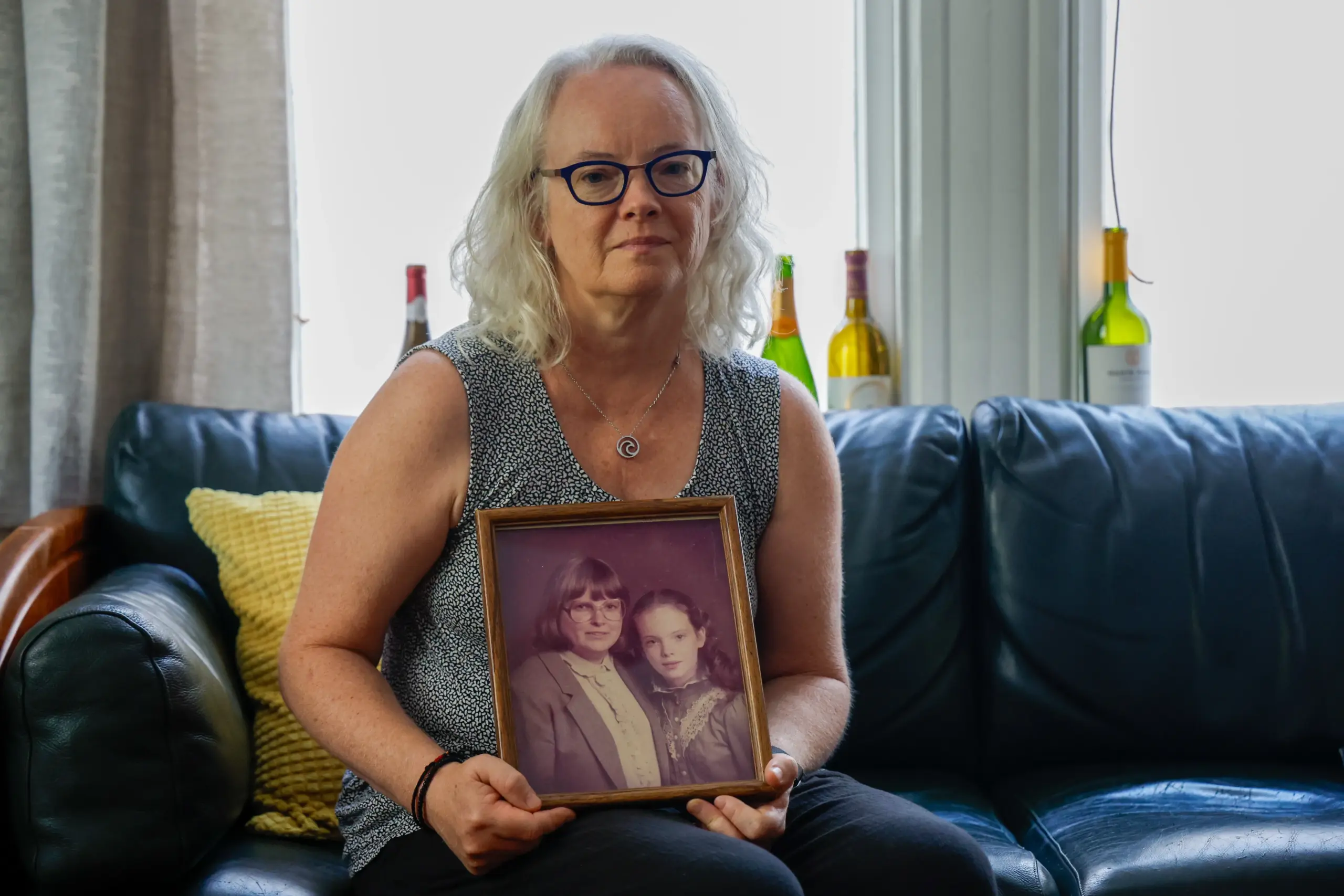
Editor’s note: Last week, the Florida Department of Health in Orange County confirmed a human case of locally acquired dengue fever and is now advising residents to take precautions to avoid being bitten by mosquitoes. Other areas in Florida are also dealing with dengue fever, including Tampa Bay. Here’s an account of one such case from the Tampa Bay Times:
Read more Ex-Gator Ben Shelton stuns Carlos Alcaraz in US Open marathon that ended at 3:33 a.m.
Gay Small was supposed to spend Labor Day weekend in North Carolina, taking long walks with her sister, picking apples with her grandkids.
But she died at Tampa General Hospital early Friday, her 80th birthday. From a mosquito bite, her family said.
Health officials have not confirmed the cause of death to the public, but that’s what her kids say they were told. If so, Small would be Tampa Bay’s first fatality in almost a century from dengue fever.
She most likely caught it within a couple of miles of her condo on Bayshore Boulevard.
“She hasn’t traveled. She doesn’t drive. She hadn’t left the city limits in more than a month,” said her daughter, Anna Small, 55.
Gay was healthy, her daughter said. The only pills she took were vitamins. She walked at least five miles a day, often along Tampa’s Riverwalk.
Since July, more than 200 Floridians have been hospitalized for dengue fever, far more than in any other state.
The tropical disease normally is contracted when people travel overseas.
But this summer, record numbers of people have been infected in Tampa Bay. The week before Small died, the number of locally acquired dengue infections in Hillsborough County doubled to 59. That’s more than 10 times the cases of other Florida counties.
The morning she died the Tampa Bay Times posted a story about the outbreak. A few hours later, the state’s surgeon general held a news conference to warn the public.
“Americans don’t expect it to be here. But it’s here,” Anna Small said. “And for some people, it’s really serious.”
In seven days, Gay Small went from feeling tired to her organs shutting down.
Symptoms, then a diagnosis
Come over for dinner, Gay told her daughter on Friday, Aug. 28. I’ll cook.
She walked a couple of blocks from her condo to Publix. Bought salmon and salad fixings. Fruit for dessert.
Her mom looked weary, Anna thought. Drained, said Anna’s husband, Philip Lenzen. They weren’t worried. Maybe she was dehydrated from the heat.
The next morning, Anna texted her mom: “How are you feeling?”
The answer came back with misspellings, random letters. That wasn’t like her mom, who had been a technical writer and prided herself on perfect copy.
Anna finally deciphered the message: “I have a tremor.”
When Anna saw her mom that evening, Gay’s hands were shaking. She was slurring, unsteady.
Anna drove her to urgent care. The doctor there sent them to the hospital.
At Tampa General, Anna had to help her mom out of the car. When Anna unlaced her mom’s sneakers in the emergency room, she saw broken blood vessels snaking around swollen ankles.
Nurses thought Gay might be having a stroke, so they ordered a CT scan. It came back normal. They ran tests on her lungs, liver, kidneys, spleen and heart, drew blood to screen for infections. Her mom hadn’t been in a hospital in 50 years.
Sunday morning, after Gay finally got a room, Anna went home to get some sleep.
Her mom texted her and her husband a few hours later: “You are nothing goingnn To b elli gel.” Anna’s translation: You are not going to believe this.
The next message, Gay typed, then corrected: “I have Denga Fever. Dengue!!!”
“No way,” Anna wrote back. “Well that’s kinda good news. Who would have thought?”
A disease they knew
Gay and her family know more about dengue than most Floridians.
Her late husband, Bob Small, spent years working for pharmaceutical companies and nonprofits, trying to develop a vaccine for the disease, which infects about 400 million people around the world every year.
She traveled with him for his work in Asia, South America, the South Pacific.
Gay and her family knew you can’t pass dengue between people, only through mosquitoes. Most who get the disease don’t know they have it. Only one in four experience symptoms.
They knew it can cause high fever, nausea, a rash — things that can be mistaken for the flu.
In rare cases, they knew, the disease can cause debilitating aches, which earned it the nickname “breakbone fever.”
But they had no idea it was spreading in their backyards.
“I considered the possibility of my elderly mom getting an acute illness or disease at some point,” said Gay’s son, Jeremy Small, 53. “But dengue fever? Without leaving her neighborhood?”
Once Gay’s family got a diagnosis, they were relieved.
“We knew the odds of dying from dengue were really low,” said Anna. With rest and fluids, they thought, their mom would be fine.
Explaining the spread
This summer, Tampa Bay’s long drought followed by almost daily rain have helped spread the disease locally, said Kartik Cherabuddi, Tampa General’s chief epidemiology officer.
His staff has tested at least 10 times more people for dengue than they did last summer.
After a bite, symptoms don’t show for a week or two. When they do, doctors run a patient’s blood through a tropical fever panel that can detect five different diseases, including malaria and dengue. Within six hours, they can make a diagnosis. So far, Tampa General has recorded 20 cases.
Hospital officials said they can’t comment on specific cases or verify the first dengue death. They report positive tests to the Florida health department, which updates a report on Thursdays. On Tuesday, Hillsborough’s spokesperson for the state Department of Health, Claire Maher, said she couldn’t confirm a fatality.
Read more Asking Eric: Suddenly my co-workers are talking about my former marriage
About one-fourth of people with dengue get the severe form, which can cause internal bleeding. Doctors have to monitor patients’ organs, watch for fluid pooling around the heart.
“When the fever breaks and they start feeling better, that’s the critical part,” Cherabuddi said. Risk factors can worsen. “They have to keep being monitored.”
Most people, even with severe dengue, fully recover, he said. Around the globe, dengue kills an estimated 20,000 patients annually. Older people and those with preexisting conditions are more vulnerable.
So are people who have had dengue before. With most viruses, the doctor said, people’s immune systems build antibodies, so a second infection is milder. Dengue works the opposite way. There are four strains, so if you get a different type the second time, the antibodies try to attack it — which can cause more damage.
Maybe Gay had gotten infected during her foreign travels and never knew it, Anna thought. Maybe that’s why her case took such a tragic turn.
A sudden downturn
On Monday, the day after the diagnosis, Gay texted, “I’m not in great shape.”
Anna rushed to the hospital to find her mom’s hands and feet scarlet and puffy. Plasma was building in her joints, a nurse explained. Gay’s lactic acid was soaring.
Anna called her brother in Atlanta: You better come.
Jeremy found his mom having what he called a “sweat lodge moment — she’s not making sense.”
On Wednesday, Gay’s platelets crashed. Doctors gave her three blood transfusions.
The next day, her heart rate soared while her blood pressure tanked. Doctors sent her to intensive care, where her kidneys failed, then her liver. Anna watched her mother grow jaundiced, so swollen she barely recognized her.
While a helicopter hovered outside the hospital that afternoon, spraying insecticide to kill mosquitoes, Gay started gasping.
“Please,” she kept whispering, “can’t we just go home?”
Anna begged the doctor to be honest about her mother’s prognosis. “We didn’t want to keep her alive just to torture her.”
Unless you want to intubate her, the doctor told her, there’s not much more we can do.
Gay had signed a “Do Not Resuscitate” order years before. Doctors sedated her late Thursday, just before midnight, then turned off the machines.
“It’s almost her birthday,” Anna told the nurses. “In eight minutes, she’ll be 80.”
By daylight, she was gone.
The aftermath
On Sunday, Anna authorized an autopsy, which could show whether her mom had contracted dengue before.
Her husband wrote the obituary.
Gay and Bob Small had been married for 55 years.
Besides writing, she’d knitted, done pottery, written poetry. She gave her daughter Gloria Steinem books; her son, Hunter S. Thompson’s. She named her African grey parrot Will Shortz, after the New York Times crossword puzzle writer.
“She was always active, kayaking, hiking and biking,” Anna said. Fort DeSoto was her happy place. She was constantly photographing butterflies, birds and clouds.
Generous and outspoken, Gay fed homeless people and fumed at teens racing e-bikes. She dabbled in massage therapy. Owned every Joan Baez album.
Every summer, she took some of her six grandkids on grand vacations: Bonaire, St. Thomas, Curacao.
Jeremy described her as “open, interesting, interested and extremely accepting.”
Three years ago, after Gay’s husband collapsed during a bike ride and died, she moved from their Hyde Park home to the Bayshore condo, giving up her yard but not her gardening. She packed the patio of her 12th-floor unit with flowers.
While she was in the hospital, drifting in and out of consciousness, she kept asking her kids, “Please, go water my plants.”
Over the weekend, the grandchildren who were going to meet in North Carolina to celebrate Gay’s birthday gathered instead in their parents’ South Tampa home.
Gay’s granddaughter baked the cake she had been planning: A lemon tart, Gay’s favorite.
They shared photos, reminisced about family trips, slathered on bug spray before walking to Armature Works for dinner.
As they told stories, they shook their heads.
Why did this happen to such a healthy, vibrant woman?
How could she be gone?
What good could come from her sudden death?
Gay wanted, more than anything, to be useful, her daughter said, to make a difference. That’s why her kids decided to share her story.
“If she can let people know the severity of this,” Anna said, “maybe it will give her death meaning.”
©2026 Tampa Bay Times. Visit tampabay.com. Distributed by Tribune Content Agency, LLC.
Read more Honey cake bread-and-butter pudding is ultimate Rosh Hashanah riff