
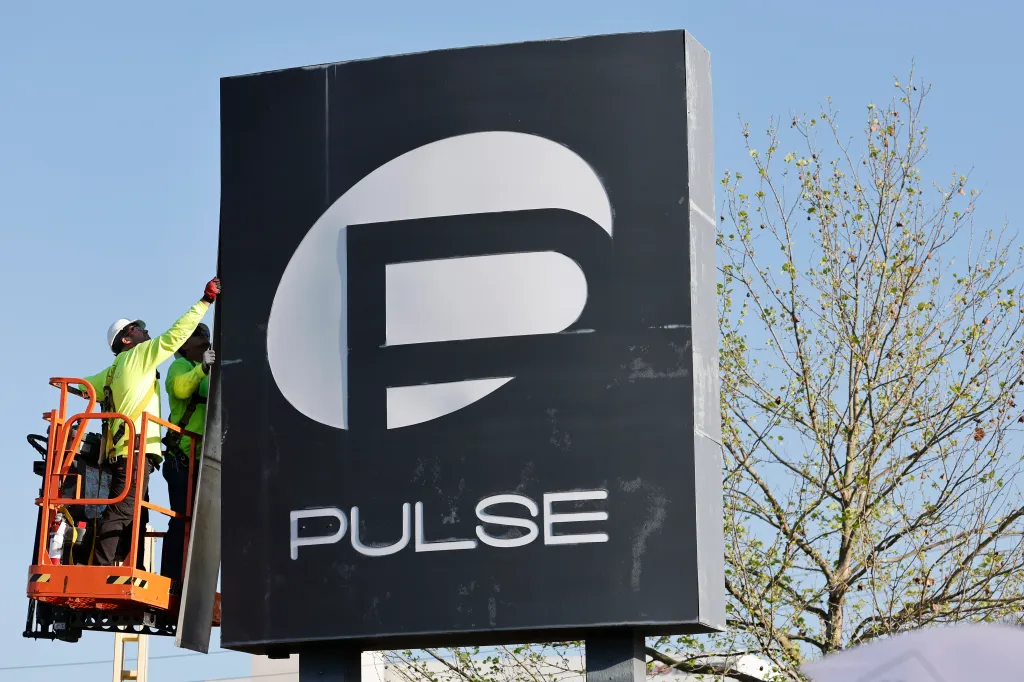
I wasn’t in Orlando on June 12, 2016.
I was returning home to Puerto Rico when news broke about a mass shooting at Pulse nightclub. By the time I landed and rushed to the newsroom, the scale of the tragedy was beginning to emerge.
Read more Hurricane center continues to track system that could form in Gulf
Then came another devastating realization: many of the victims had ties to Puerto Rico.
What happened at Pulse wasn’t just an Orlando story. Families across the island were searching for loved ones, waiting for answers, and grieving alongside a community hundreds of miles away.
As a journalist, I spent those days helping tell the stories behind the headlines, not just how people died, but how they lived. I had no idea then that Pulse would remain a constant thread throughout the next decade of my life.
After moving to Orlando and joining the Orlando Sentinel, I found myself returning to Pulse again and again. Not because it remained a breaking news story, but because its impact never truly ended. Every year brought new conversations about remembrance, healing, resilience, and the responsibility of preserving the stories of the people we lost.
Eventually, my path led me to Equality Florida, where I now serve as Deputy Director of Communications. Looking back, it’s remarkable how Pulse has connected so many chapters of my professional life. More importantly, it has connected me to survivors, family members, advocates, and community leaders whose commitment to honoring the 49 has never wavered.
As we mark the 10-year remembrance of Pulse, one question continues to weigh on me: What does it truly mean to honor those we lost?
For many people, remembrance means attending a vigil, visiting a memorial, reading the names of the 49, or sharing a tribute. Those acts matter. They ensure that the people taken from us are not forgotten.
But remembrance cannot end there.
Over the years, I’ve come to believe that honoring the 49 is not only about how we remember them. It’s also about what we choose to do because of them, to turn remembrance into something meaningful.
The best way to honor those we lost is to continue building the kind of community they deserved to live in.
Read more What are ‘pocket listings’ in real estate and why are they so controversial?
A community where LGBTQ young people know they belong, where people show up for one another during moments of crisis, a place where we reject hatred, violence, and indifference in favor of compassion, dignity, and connection.
For some people, honoring the 49 may mean volunteering. For others, it may mean supporting local organizations, mentoring a young person, donating blood, advocating for safer communities, or simply reaching out to someone who feels alone. The specific action matters less than the commitment behind it.
What has stayed with me most over the last decade is not only the tragedy itself, but the people who refused to let tragedy have the final word.
I’ve seen family members channel grief into advocacy. Survivors share painful stories so others can learn from them. Community leaders dedicate themselves to ensuring future generations understand what happened and why it matters.
Those acts may not always make headlines, but they are part of Pulse’s legacy.
Ten years later, many families are still carrying unimaginable loss. Survivors continue to navigate the impact of that night. A generation of young people has grown up knowing Pulse as history rather than memory.
The responsibility to remember now belongs to all of us.
Not simply because of what happened on June 12, 2016, but because of who the 49 were. They were sons and daughters, brothers and sisters, partners and friends. They were people with dreams, ambitions, talents and futures. They were deeply loved, and their absence is still felt every day.
This June, I hope we do more than remember their names.
I hope we honor their lives by finding our own ways to strengthen the communities around us. I hope we choose engagement over apathy, compassion over indifference, and action over complacency.
Because the most meaningful memorials are not only the ones we build in stone.
They are the values we choose to carry forward.
Ten years after Pulse, honoring the 49 requires more than memory.
It requires action. Honor them with action.
Jennifer Marcial Ocasio is deputy director of communications at Equality Florida and a former Sentinel writer and editor.
Read more Smithsonian-backed space experience lands at The Florida Mall