
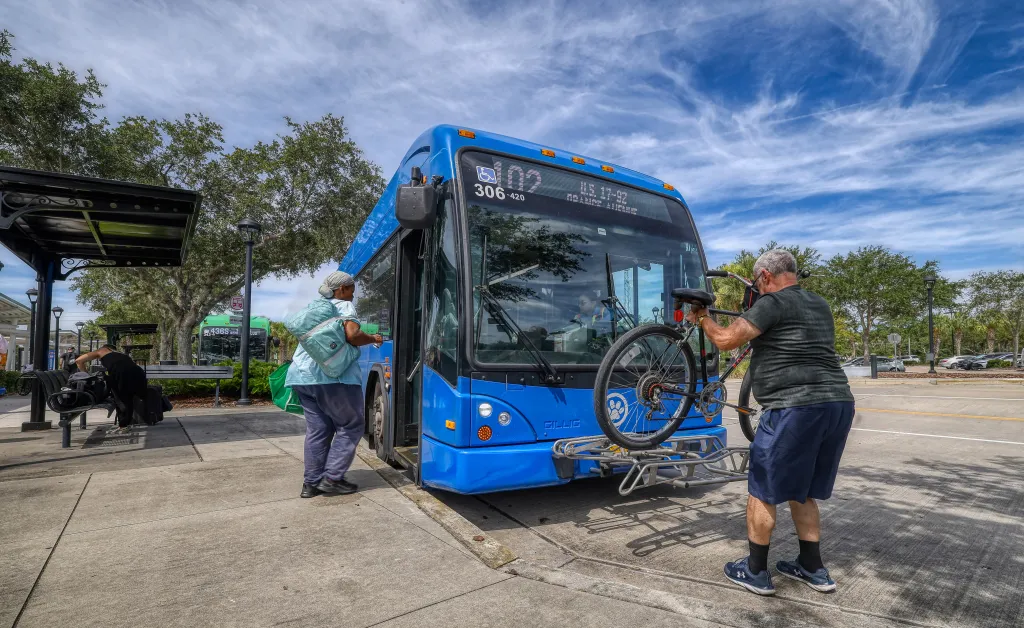
Seminole commissioners are furious that Lynx wants to hike costs for its mass transit service — even after the county ditched most of its bus routes last January due to a lack of riders.
Read more Toddlers’ deaths in Orange highlight disturbing domestic violence trend
Now county officials are talking about completely walking away from Lynx and starting their own mass transit program.
“I was one of the biggest supporters of Lynx on this board … I am not in that position anymore,” Commission Chair Andria Herr told Lynx CEO Tiffany Hawkins. “If I could get out entirely, I would. Because I think this was punitive.”
The biggest obstacle for Seminole, however, is state law. The county — along with Orange, Osceola and the city of Orlando — is required to be part of the Central Florida Regional Transportation Authority, which oversees Lynx.
But in Seminole, Lynx buses had been driving around mostly empty, according to county officials, partly because most residents own their own vehicles in a suburban county less densely populated than neighboring Orange. Meanwhile, Lynx’s costs for Seminole had jumped by hundreds of thousands of dollars every year.
In what they hoped would be a cost-cutting move to save millions, Seminole got rid of all but five bus routes in the county earlier this year after launching its own ride-sharing service.
But now Lynx wants to markedly raise Seminole’s overall cost for next fiscal year anyway, despite the reduction in service.
According to the agency’s budget presented to Seminole, Lynx does plan to reduce its charge to the county for fixed bus service by $2.3 million in the next fiscal year — from $5.2 million this year to $2.9 million in 2027, a drop of nearly 44.5% — because of fewer routes.
On the other hand, the agency is also asking to raise Seminole’s contribution for the paratransit service Access Lynx by more than $2.5 million — from nearly $6.2 million this fiscal year to $8.7 million — a nearly 40.7% jump.
County officials said they are puzzled by the cost increase in the face of falling ridership for Access Lynx, which provides door-to-door transportation for disabled and low-income riders countywide.
Commissioner Amy Lockhart, who represents Seminole on the Lynx board, said the agency is using an “antiquated, broken” funding system for a suburban county that doesn’t need a mass transit system as Orange does.
“It is obvious to us when the big personalities or the big players in the room [at Lynx] say I want to look at how to redo this formula, and it’s suddenly done in a way that makes Seminole County have to pay more,” she said. “We weren’t born yesterday.”
Overall, Lynx is requesting from Seminole about $11.75 million next fiscal year, which starts Oct. 1. That’s nearly a $120,000 increase from this fiscal year, even though Seminole replaced 10 Lynx bus routes north of State Road 436 — which runs just north of the Orange County line — on Jan. 11 with its own on-demand service Scout.
By comparison, Seminole paid Lynx nearly $11.8 million in fiscal year 2024. In fiscal year 2019, Seminole paid $7.2 million.
Read more Man’s ear infection spread to his brain. His family claims it could’ve been caught before he died
Added to that Lynx cost is that Seminole is budgeting $6.8 million for Scout in the next fiscal year, bringing Seminole’s total cost for transit to about $18.5 million. However, county officials said a portion of that micro-transit cost will be paid for with advertising revenues on Scout vehicles and grants, including a $1.5 million state grant that Seminole is seeking.
Lynx charges counties, including Seminole, for the number of routes the local government requests and how frequently they want buses to pick up riders at stops — whether it’s every 30 minutes or every hour, for example.
“You are paying for the service that you want,” Lynx spokesman Matt Friedman said.
When Seminole staff — concerned about the rising expense — asked Lynx last year how the county “could better control transit costs, Lynx proposed reducing fixed-route service as one option,” county spokeswoman Andy Wontor said in an email.
Seminole then kicked off plans to eliminate fixed bus routes and start its own micro-transit service, contracting with Miami-based Freebee to run the Scout vehicles.
The county received an estimate of just over $9.8 million for its total annual cost to Lynx if it eliminated or reduced the 10 Lynx bus routes, including the most expensive Link 103 bus, which traveled on the U.S. Highway 17-92 corridor.
“But the numbers change year by year,” Friedman said on why Lynx did not provide estimates beyond a year to Seminole. The Lynx board votes on contributions from its partner governments every spring.
That estimate was also before Lynx reworked its funding model last May, primarily to help fund Access Lynx after the costs from the contractor went up by $13.5 million, agency officials said.
In addition, Lynx also needed to pay for the overall costs of operating across Central Florida after Seminole reduced its routes, Hawkins told county commissioners June 9.
By comparison, Orange is now being asked to pay just over $109 million for next fiscal year, a 13.5% increase from this year’s payment of nearly $95.3 million.
Osceola is facing a roughly 17.6% increase next fiscal year, from nearly $16.6 million this fiscal year to nearly $20 million next year.
“Osceola is paying more, but their service didn’t change. We’re paying more, and we decreased service,” Herr said.
Zembower said Lynx “switched” the funding model at the detriment of Seminole.
“Our intent was to save taxpayer dollars for routes that arguably nobody was riding,” he said. “I would just ask that Lynx and our partners [Orange, Osceola, Orlando] put themselves in our shoes.”
Read more James Burrows, director of classic TV comedies including ‘Cheers’ and ‘Friends,’ dies at 85