
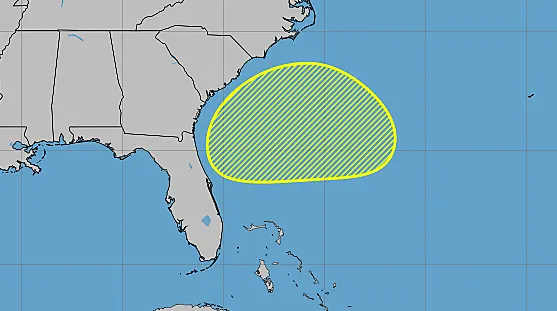
The National Hurricane Center on Saturday began projecting a system could form in the Atlantic off the coast of Florida next week.
Read more Everglades photographer Clyde Butcher reflects on 60-year career amid retrospective shows
As of the NHC’s 8 a.m. tropical outlook, the forecast calls for a low pressure area to form along the western end of a frontal system early next week and threaten the southeastern United States.
“Slow development of this system will be possible thereafter while it moves slowly westward,” forecasters said.
The NHC gives the system a 20% chance to develop in the next seven days.
Saturday 6/27 8am EDT: NHC is monitoring the potential for a disturbance to slowly develop off the SE US coast next week. Right now, the chance of formation by the end of next week is low (20%) while the system moves slowly westward. Check https://t.co/tW4KeGdBFb for updates pic.twitter.com/pHrneymYRo
— National Hurricane Center (@NHC_Atlantic) June 27, 2026
If it develops, it could become the second named storm of the season following the short-lived Tropical Storm Arthur that developed in the Gulf and brought floods to Texas and Louisiana earlier this month.
The next name on the hurricane season list is Bertha.
For now, the National Weather Service in Melbourne only forecasts the weak trough or surface boundary moving toward north Florida early in the week that could boost rain chances near Central Florida beginning Monday afternoon while also contributing to climbing heat indices in the 103-109 degree range.
Read more ‘No brainer’: Former Seminole High quarterback to donate blood stem cells
As the forecast low pressure area forms offshore of northeast Florida and the Georgia coast, normal rain chances are in store for the Orlando area.
Hurricane season officially began June 1 and runs through Nov. 30. The height of hurricane season runs from mid-August into October.
The National Oceanic and Atmospheric Administration expects this season to be below normal with the official forecast released in late May calling for 8-14 named storms, of which 3-6 would become hurricanes. Of those, 1-3 would become major hurricanes reaching Category 3 status or above.
An average season has 14 named storms, seven hurricanes and three major hurricanes.