
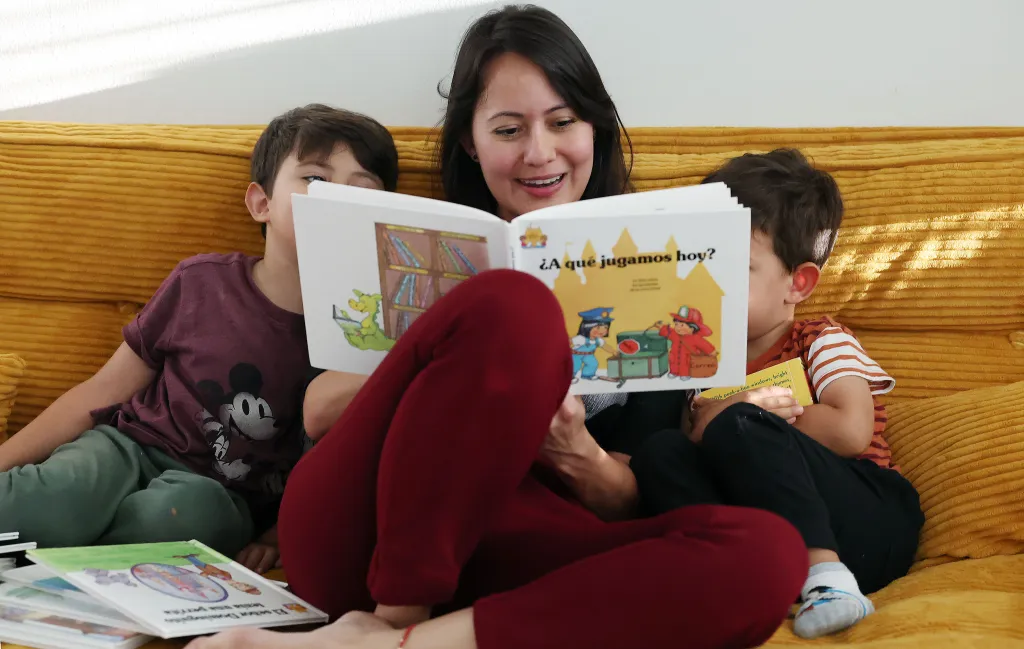
Laura Giraldo was not eligible for maternity leave. So when her first baby was born in 2021, the Windermere mother took two weeks of paid vacation that she’d saved up, then returned to her remote job at a software company.
Read more Today in History: May 16, Queen Elizabeth addresses US Congress
“I’d just walk from my bed to my desk, while also struggling with pumping, the sleepless nights,” said Giraldo, 34. “I really wish I was able to kind of give myself the time that my body and I needed to recover while also trying to meet the needs of my baby.”
America is the only developed country without national paid family leave. While some states have adopted statewide policies, Florida has not. As a result, mothers in the Sunshine State often return to work within months, or even weeks, after delivery. Some, viewing a short leave as undoable, drop out of the workforce altogether.
About 76% of Florida workers currently do not have access to paid leave, according to the Florida Policy Institute.
A new report from the institute makes the case that the state should mandate a paid policy for all Florida workers.
Florida currently loses $2.8 billion in annual wages from parents who quit working because they do not have paid leave, hurting their family budgets but also their communities, which lose their spending power, and businesses, which face increased turnover costs, the report said.
If parents could get up to 12 weeks of paid time off after having a baby, adopting or getting a new foster child, up to 366,000 people would benefit, it added. The leave could be covered by small fees both employees and employers contributed.
“It’s not an outrageous concept because other states have already been doing this,” said Alexis Tsoukalas, senior policy analyst for Florida Policy and author of the report. “And almost all the other states who do this have done it in a similar way.”
Florida, to date, has made small moves to provide family leave, approving a law in 2023 that requires it for some state workers. The law’s passage was viewed as progress by those pushing for leave policies, and Florida is one of a number of Republican-led states that in recent years have passed such laws, the Stateline news organization reported last year.
Republicans traditionally opposed required family leave, worrying it would hurt businesses, particularly smaller ones. President George H.W. Bush, for example, vetoed the federal Family Medical Leave Act twice, though the law, eventually signed by President Bill Clinton, a Democrat, requires only that employees can take time off, not that the leave be paid.
But now economic realities have made leave a more bipartisan issue.
“We’re trying to attract and retain state employees and teachers, and we’re in competition with everyone around us, and the private sector as well,” Alabama Republican state Rep. Ginny Shaver told Stateline last year, after helping to successfully pass a paid leave law for teachers and other state employees in her state.
Time off is key, experts say, as returning to work soon after birth can delay women’s recovery from childbirth, increase the likelihood of postpartum depression and interfere with the critical bonding between parent and child. But without paid leave many parents, who for financial reasons must keep their jobs, go back to work despite the struggles.
Kelly Jarvis said paid leave for her husband, who didn’t get any at his job at a grocery store, would have been a lifesaver. The 36-year-old mother of two quit her job after getting pregnant with her first child because she didn’t have any paid leave. She experienced complications giving birth to that child, including an infected caesarean section wound.
She had to drive 45 minutes each way from her home in Chuluota to Orlando Health Winnie Palmer Hospital for Women & Babies in Orlando every day for four weeks to get her wound cleaned and redressed. Her mother and mother-in-law took turns watching her son while she was at those medical appointments.
“I just felt like we just had this child, and we couldn’t even be there for him,” Jarvis said, noting that the situation led to postpartum depression. “I would literally just stay up at night, like staring at my baby because I was worried that he wasn’t getting the things that he needed or that he wasn’t being taken care of properly.”
Read more Plant Doctor: More help for plants damaged by freeze — next are kaffir lilies, shrubs
After her second pregnancy, her new baby spent two weeks in the neonatal intensive care unit. Her husband still did not have any leave, so Jarvis had to sit in the hospital alone, wishing for his presence and support but knowing he needed to work.
Paid leave is good for the workforce and both parents, experts say.
“The leave is not just about mom recovering postpartum. It’s about this investment in this long-term relationship, and individuals who are caring for this child developing that sense of love and emotional connection to that person,” said Alice Davidson, psychology professor at Rollins College. “Research shows fathers who take paternity leave are more engaged parents long term.”
Paid leave is also politically popular, said Melissa Boteach, chief policy officer for Zero to Three, a Washington D.C. nonprofit advocating for young children.
In April, Virginia became the fourteenth state to enact a statewide paid leave policy. Washington D.C. also has a paid leave policy.
“Politically, it’s a winner,” Boteach said. “When you run on it, you win. And when you enact it, people like it and appreciate it.”
Otherwise, families face the same tough choices Jarvis did.
“It forces these impossible decisions at a time when expenses are rising,” Boteach said. “And it affects long term economic security for the family, too.”
When Giraldo had her second baby a couple years after the first, she only had one week of paid vacation saved up. After that, she tried altering her work schedule to meet her baby’s needs.
“I was working until three in the morning and waking up super early in the morning so that the rest of the day I could spend time with the baby,” Giraldo said. “It was very stressful.”
Her employer, unhappy with her new schedule, fired her, she said, and she sold her house and moved in with family to reduce her expenses.
It took her a few years to get back on her feet. She now works as a legal secretary at a Central Florida law firm. Earlier this year, she moved out of her family’s home and into her own apartment.
Florida Policy Institute’s proposed plan would have all Florida workers, regardless of if they want to have children, pay from $32 to $350 a year in paycheck deductions, depending on their income. Employers would pitch in between $26 and $285 per employee annually, depending on the employee’s wage. Self-employed people would have the option to buy in.
That money would fund a policy that would give families from eight to 12 weeks of paid leave. Both mothers and fathers would be eligible.
“We want to encourage families to have children because, obviously, that’s good long-term for our society and our education and our labor,” Tsoukalas said. “But too often we’re expecting everyone to just kind of do that on their own.”
Read more Commentary: Don’t boo AI like UCF students did. Adapt to it as creative partner