
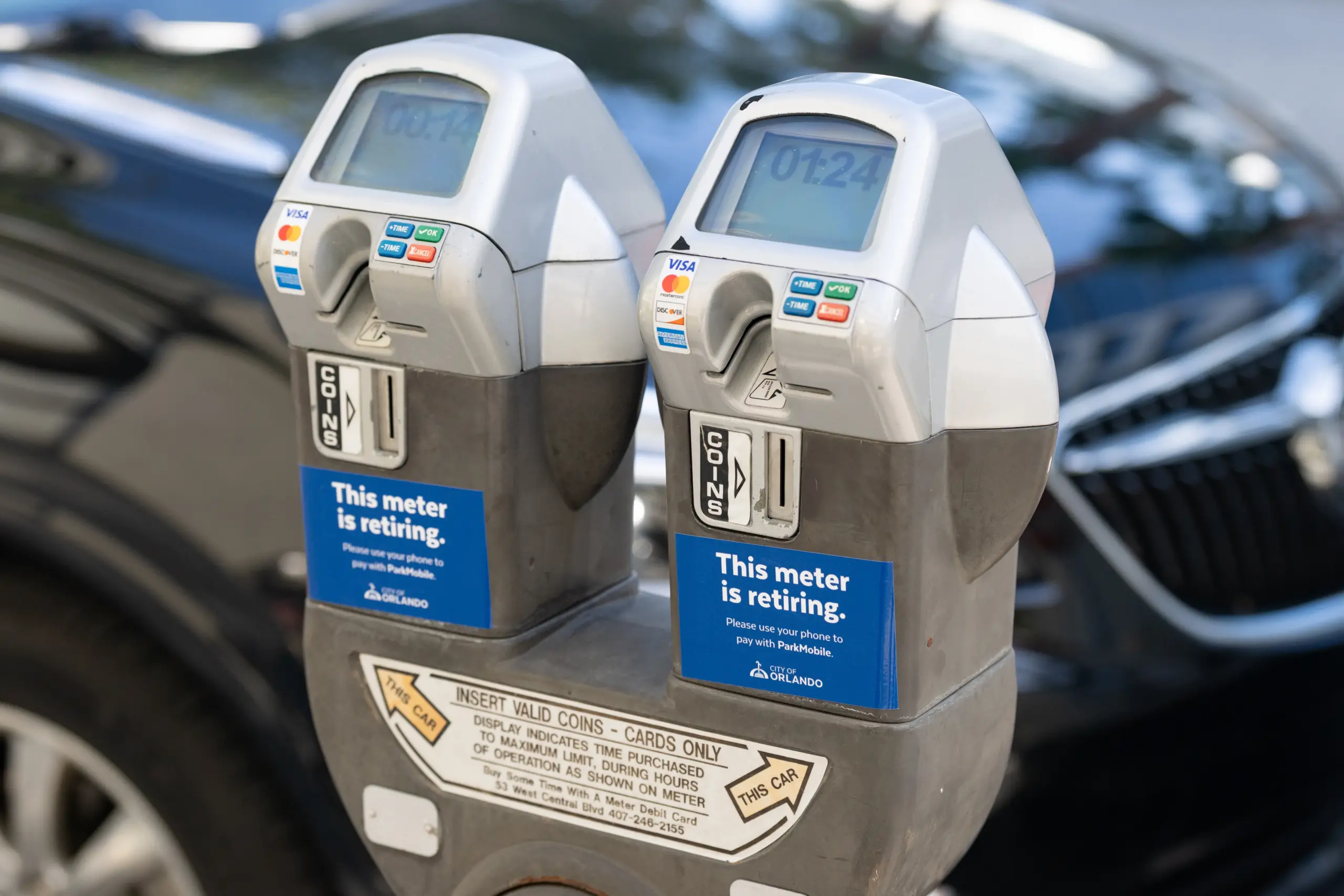
Deon Rhoden has dropped coins into downtown Orlando’s parking meters for most of the 60 years he’s lived here. By fall, he’ll need to keep his change and use his phone.
Read more A lifesaver or ‘extreme’: Orange schools’ planned e-bike ban divides parents
Orlando began removing its about 1,000 coin-operated parking meters this summer, retiring a fixture of downtown curbs in favor of an all-digital system. By Oct. 1, when the city aims to have the last meters out, parking downtown will also cost more, run later into the evening and carry steeper fines for violations.
Asked how he’d pay once the meters are gone, the 74-year-old Rhoden said he’d probably ride his bicycle instead of drive. He isn’t good with apps and doesn’t like relying on his phone.
“If your phone doesn’t work, you’re going to end up paying the bill,” he said.
City officials decided to remove the meters — which were first tried in downtown in 1939 — because the parking system is self-funded, running on the money it collects rather than tax dollars, and needs more to cover rising costs. A recent city study compared Orlando’s parking rates and fines with peer cities and found its prices significantly below market.
Officials projected the change will mean about $5.5 million a year in new revenue and said going digital will cut operating costs about $500,000 annually by ending meter maintenance, biweekly coin collection and cash handling.
The city has had coin-free options available through the ParkMobile company since 2015. But now all payments will be cashless, requiring drivers to use a phone to access the company’s app, call or text to get a secure link to pay online. Signs near parking spots will offer instructions.
Parking rates have not increased since 2009, but starting in October they will at least double.
Currently, each hour on a downtown street costs $1, with the maximum time allowed in a spot varying by location. But soon, it will cost $2 to park for each of the first two hours, then $3 for the third and $4 for the fourth, rising to $6 by the sixth hour.
Parking now is free after 6 p.m., but drivers will soon have to pay until 8 p.m. Sundays and city holidays will remain free.
Orlando residents objected to the city’s first parking meters in 1939 — the nickel-per-hour coin slots were stuffed with chewing gum in protest — and those meters didn’t last a year. But parking meters were back by the 1950s and have remained ever since.
Though no one’s threatening “gum raids” now, plenty of residents and downtown visitors, interviewed on a recent afternoon said they were unhappy with higher costs, a reliance on cell phones or both.
Tiffany Rivera, 25, of Altamonte Springs, slipped her card into a meter on East Central Boulevard. She hasn’t used coins at a city meter since high school, so a digital system doesn’t bug her, but the extended hours for payment do.
“I’m not very much of a nightlife person, so 6 p.m. to 8 p.m., that’s when I’m coming out,” Rivera said. “That does really suck, that it’s not going to be as free or accessible.”
Angela Cruz, 41, visiting from San Francisco, called the new rates cheap compared to the $7 to $9 an hour she pays at home. But she said she has grown wary of using technology, especially scanning QR codes, to pay.
So has Kristina Carmichael, 67, who has lived in Orlando for 24 years, and was pushing her 1-year-old grandson in a stroller around Lake Eola. She prefers a coin meter over an app.
Read more Stadiums, theaters, conventions and the arts: Orange TDT board to hear massive proposals
“I’ve already had my information stolen, and I’m a big fan of cash,” she said.
In a scam known as “quishing” that hit Orlando last year, criminals place fake QR stickers over legitimate signage, redirecting drivers to copycat sites that mimic parking platforms, including ParkMobile. Orlando police issued a warning about the scam in June 2025, stating roughly 200 fake stickers had been recovered from downtown meters.
But the city said its new parking signs will not include QR codes.
Carmichael said she also worried the higher rates will hurt people already stretched thin and looking to enjoy downtown without spending much.
“This is where people come that can’t afford to go to restaurants. They’ll have picnics with their families. Things are very tough right now,” she said.
Drivers who overstay their allotted time will also face steeper penalties, with the cost of meter violations going from $20 to $25.
After feeding coins into a meter, Darien Wharton, 21, of west Orlando, jogged across West Robinson Street to drop something at a friend’s apartment. He said digital meters would probably be easier but doesn’t like the planned price hikes.
“It was just a dollar an hour and now it’s two dollars?” he said. “That’s too much.”
Meter removal will be completed in phases. The first phase is underway in the SoDo neighborhood just south of downtown, and then meters will be pulled from other downtown areas.
During the first three weeks of October, the city plans to warn residents about the new parking rules and costs but won’t issue any fines. It will also leave pamphlets on cars explaining how ParkMobile works.
The new parking revenue will pay for work on aging parking garages, technology upgrades and rising labor costs, the city said.
Downtown Orlando’s original parking meters, called the “Park-O-Meter” system, were installed for a six-month trial period along Orange Avenue nearly 90 years ago, according to Orlando Sentinel articles published at the time.
Business owners and residents objected to “paying for the privilege to park,” according to a March 1939 story. By that October, the meters were gone.
They returned in the 1950s, as coin-operated meters became popular in cities across the country, and later upgraded to allow payment by cards and digital options.
Now the city aims to win over residents to its newest system. “Thank you for your patience and cooperation as we modernize parking operations throughout Orlando,” its website says.
Read more ‘Patriotism on Plant’ celebrates America with fervor and fun | Review