
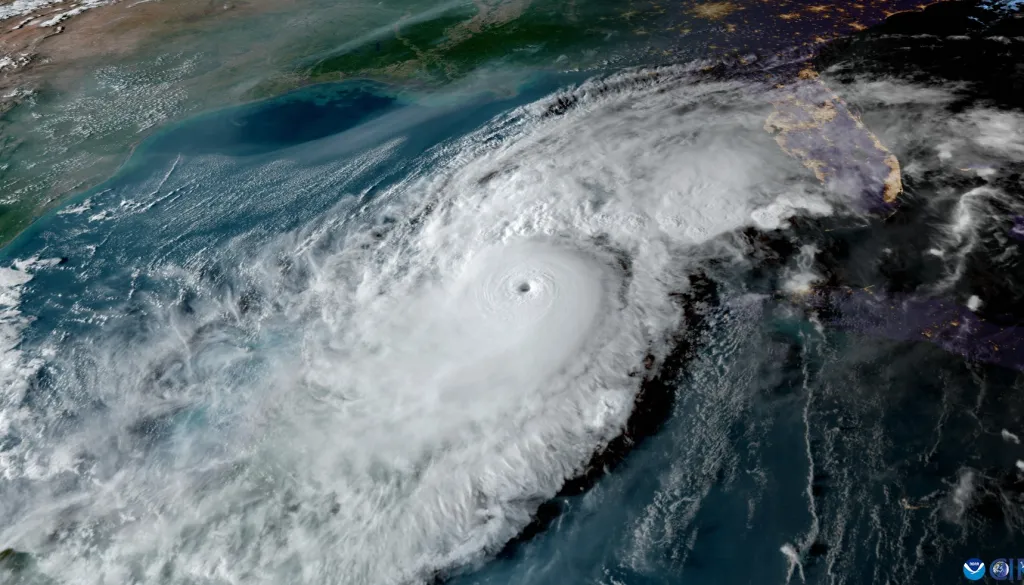
Predictions of a calmer hurricane season than average saw a further downgrade on Wednesday, as researchers at Colorado State University lowered the number of tropical storms expected in the Atlantic from their initial April report.
Read more Royal Caribbean takes delivery of Florida-bound Legend of the Seas
Forecasters now anticipate a “below normal” season, thanks largely to an El Niño emerging in the central Pacific Ocean even stronger than expected.
“Strong El Niño conditions typically generate much higher wind shear across the tropical Atlantic, significantly reducing Atlantic hurricane activity,” said Phil Klotzbach, a senior research scientist at CSU’s department of atmospheric science.
The latest CSU report predicts 11 named storms, including five hurricanes and two major hurricanes, a decline from its April pre-season forecast of 13 named storms and six hurricanes. However, the current report keeps the number of major hurricanes the same as the previous one.
An average hurricane season, which lasts from June 1 through Nov. 30, sees 14 named storms, seven hurricanes and three major ones.
According to the report, there is a 24% probability that at least one major hurricane will make landfall on the east coast of the United States. In an average season, that probability is 43%.
There also is a 14% chance that a major hurricane will slam into the Gulf coast. That’s 13 percentage points below a normal season.
Read more SpaceX wants regular investors to help its stock launch. Here’s what to know before clicking ‘buy’
The university’s forecasts — released annually in April, June, July and August — are among several well-regarded reports closely studied by emergency management officials and forecasters in preparation for hurricane season.
Last month, the National Oceanic and Atmospheric Administration also predicted a “below normal” season, with between 8 and 14 named storms in the Atlantic basin, thanks to the strong El Niño.
AccuWeather has also forecast a below-average season.
During an El Niño year, the waters in the central and eastern Pacific near the equator become warmer, increasing the chances for more powerful storms in that region. In turn, it leads to sinking air and higher pressure in the Atlantic, and also stronger upper level wind shear.
Sea surface temperatures in the western tropical Atlantic are currently near average but cooler than normal in the eastern and central tropical Atlantic.
Still, CSU forecasters urge residents to be prepared, regardless of the sunny hurricane season forecast.
“As with all hurricane seasons, coastal residents are reminded that it only takes one hurricane making landfall to make it an active season,” Klotzbach said. “Thorough preparations should be made every season, regardless of predicted activity.”
Read more Bianchi: In the Summer of 1994, the world and the World Cup fell in love with Orlando